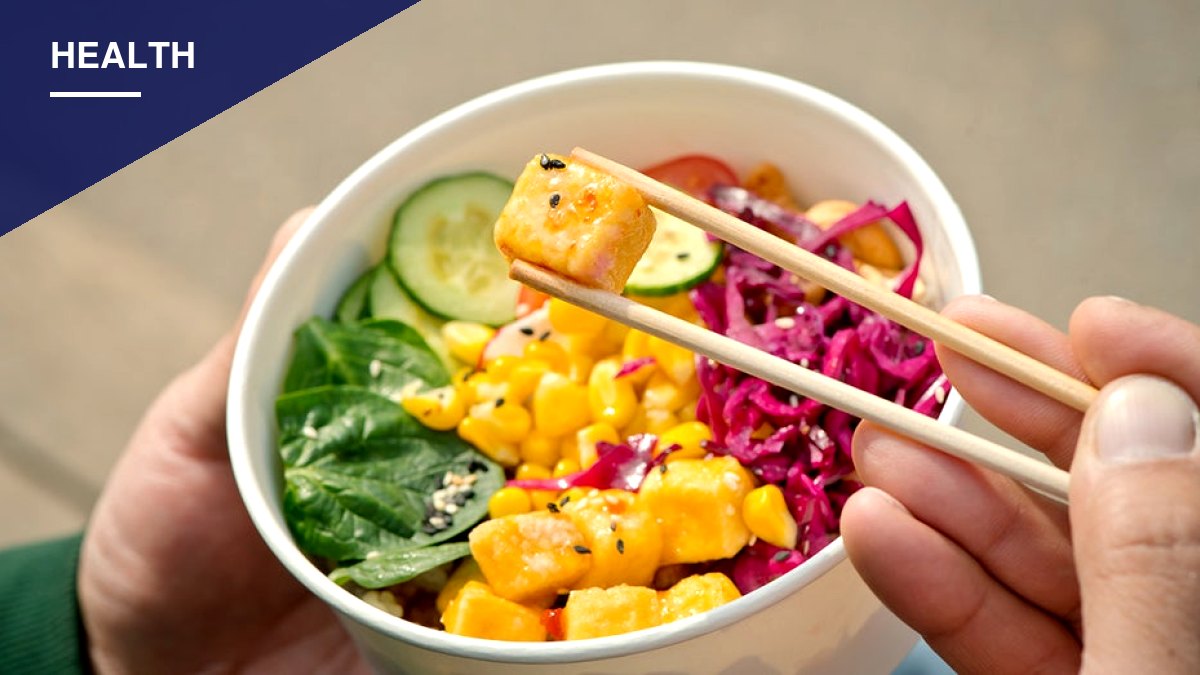
A new scoring system designed to rate protein-rich foods on both nutrition and environmental impact has placed tofu ahead of beef, salmon, eggs and more than a dozen other common sources of protein.
The ranking, called the BPI Score, comes from a paper published in July in the journal Frontiers in Sustainable Food Systems. It was created by University of Cambridge researcher Chris Macdonald along with the Better Protein Institute. The score rates 20 protein sources on a 40-point scale that blends nutritional value, affordability and availability with environmental cost.
Tofu came out on top with 36 out of 40 points. Beans, chia seeds and quinoa followed close behind. At the other end of the list were mozzarella, lamb, beef and cheddar, which ranked among the lowest scorers.
How the Score Works
The BPI Score is built from two parts. A “People Score” looks at sodium, saturated fat, cholesterol, whether a food contains all nine essential amino acids, and how affordable and accessible it is. A “Planet Score” accounts for greenhouse gas emissions, water pollution, land use and freshwater use.
Tofu scored highest on both measures. According to the paper, producing 100 grams of protein from tofu generates about 0.61 kilograms of greenhouse gas emissions, compared with 64.19 kilograms for the same amount of protein from beef. Tofu also required roughly 2 square meters of land to produce that much protein, versus about 211 square meters for beef.
It’s worth noting the comparison is based on the land and emissions needed to produce 100 grams of protein from each food — not a comparison of equal-sized portions you might actually eat.
A First Attempt, Not a Guideline
Researchers caution that the BPI Score is an early scoring system built by one researcher, not the result of a controlled clinical trial, and it draws on grocery data from the United Kingdom. Macdonald himself acknowledged its limits in the paper, writing that “while acknowledging the limitations of this first iteration, the score provides a robust foundation for a more nuanced conversation.”
Corry Matthews, a California-based fitness and nutrition expert and founder of Strength & Grace Fitness, said shoppers should weigh more than a single score when deciding what to eat. She pointed out that protein content varies widely by serving size: three ounces of cooked chicken breast delivers roughly 26 grams of protein, while a half cup of firm tofu provides around 10 to 15 grams, and two tablespoons of chia seeds offer only about 4 to 5 grams.
“That doesn’t make chia seeds a bad food … but I wouldn’t rely on them as my primary protein source if my goal were to get 25 to 30 grams of protein at a meal,” Matthews said.
She noted that animal proteins such as eggs, dairy, fish and lean meats are generally complete proteins and can deliver essential amino acids in concentrated amounts. Tofu is also a complete protein, she said, but people relying mainly on plant-based sources may need to pay closer attention to serving sizes and total protein intake throughout the day.
Ashley Koff, an Oregon-based registered dietitian and founder of The Better Nutrition Program, added that individual tolerance matters too. “Many people do not digest tofu well at all,” Koff said, advising people to pick protein sources they actually enjoy and can get their hands on.
“My advice? Don’t let a ranking do all your nutritional thinking for you,” Matthews said. “Understand what the ranking measures, then choose foods that support your actual goals.”