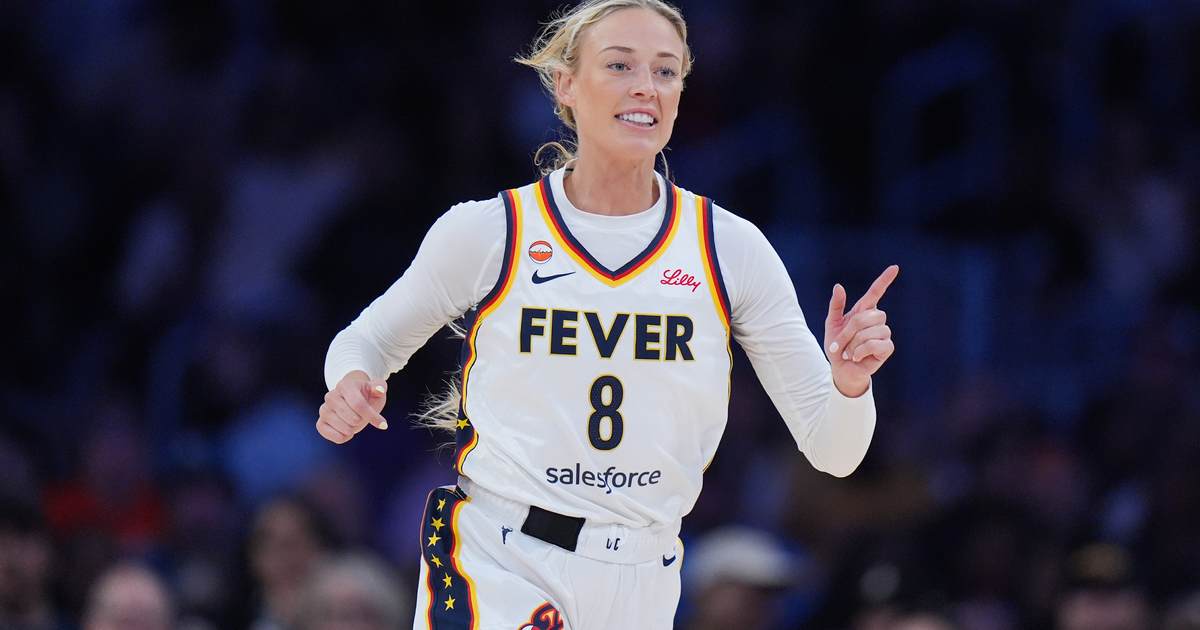
Sophie Cunningham spoke plainly about keeping women’s sports for women, the Indiana Fever publicly distanced themselves, and the episode reopened debate over woke culture in the WNBA and who actually draws fans and revenue.
Sophie Cunningham’s stance that women’s sports should be for women has turned her into a lightning rod, and not because she’s an extremist but because she refuses to cave to performative outrage. Her belief tapped a raw nerve with progressives who treat any dissent as a scandal, yet she kept gaining traction — her new shoe sold out and social media attention only grew. A now-viral on-court pointing incident with DeWanna Bonner helped cement Cunningham’s moment in the public eye.
When criticism ramped up, Cunningham didn’t retreat and the Fever’s leadership chose a different path than defending a player’s right to an opinion. Instead of standing beside their player, the front office issued a careful distancing that felt more like damage control than support. That move didn’t punish her, but it signaled where the organization’s priorities lie when the outrage machine turns up the heat.
https://x.com/TheEXECUTlONER_/status/2069476567659560970
Our players are thoughtful adults with their own perspectives and voices, and those views are their own. We are committed to welcoming fans from every background and treating everyone with respect, and that’s what guides us as an organization.”
The statement reads like a PR template: neutral, noncommittal, and designed to avoid consequences from either side. They could have suspended her and turned it into a bigger fight, or they could have defended her right to a viewpoint that aligns with many fans and athletes. Instead they opted ambiguity, which only highlights the league’s instinct to placate activists rather than its own audience.
This league is increasingly defined by cultural posturing that distracts from on-court product and genuine competition, and that’s a problem for viewership and credibility. Plenty of talented players and personalities could make the WNBA a must-watch product, but headlines about internal woke battles drown out the basketball. When leadership prioritizes optics over clarity, the whole franchise looks amateurish and out of touch with many paying fans.
Caitlin Clark illustrates the contradiction: she is a ratings powerhouse but somehow that star doesn’t earn her complete protection from organizational spin and selective outrage. Fans see Clark’s on-court value and reward it with attention, yet the league’s political instincts still get in the way of straightforward support. The disconnect between who actually brings money and who gets public defense is becoming more obvious by the week.
The reality is the face of the league isn’t the narrative the WNBA keeps trying to sell, and organic stars like Clark and Cunningham are doing more to attract attention than any top-down diversity pitch. One player is getting criticized over how she plays, another over what she says, and both of those storylines are being handled with inconsistent priorities. That inconsistency hurts trust with fans who want clear policies and honest leadership.
If the organization had backbone and stuck to a clear defense of free expression and fairness, it would look far less like it’s bowing to the loudest activists in the room. Instead, fans get the sense that teams and league offices are more worried about headlines than about protecting players or cultivating a stable audience. Until someone competent takes charge and makes decisions that reward talent and common sense, the WNBA will keep making baffling choices that fuel criticism rather than earning respect.