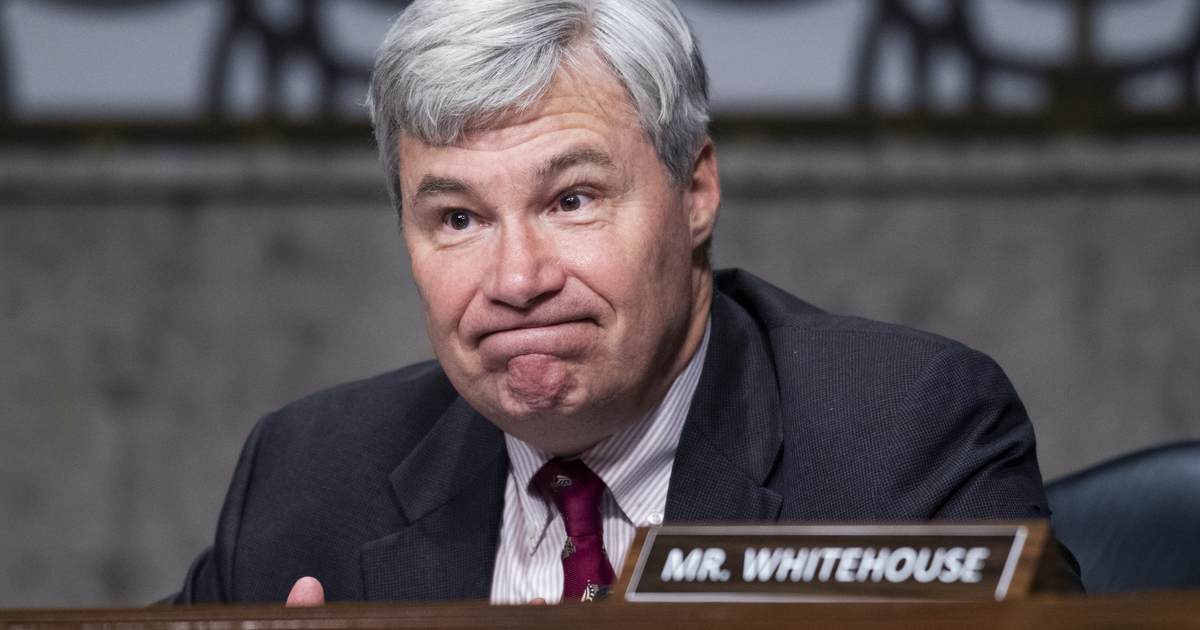
Sheldon Whitehouse criticizes DHS for alleged “white supremacist” ICE recruitment material while keeping membership in a country club with exclusionary history, sparking accusations of hypocrisy and partisan theatrics.
Senator Sheldon Whitehouse has publicly blasted the Department of Homeland Security over what he describes as “white supremacist materials” in ICE recruitment materials, yet he belongs to a private club with a history of excluding minorities. That contradiction has driven a lot of the reaction from conservatives who see this as blatant hypocrisy. The story centers on his letters to DHS officials and the response, or lack of one, from agency leadership.
Whitehouse claims he began receiving reports earlier this year that ICE recruitment content leaned heavily on imagery and language tied to extreme right movements. He says those reports prompted a formal written request for explanation that he first sent on February 23 and followed up on repeatedly. Republicans pushing back argue the accusations are baseless and politically motivated.
“At the beginning of the year, we began to get information that ICE recruitment materials were heavy on right-wing, white supremacist stuff. Songs, imagery, language associated with the white supremacist movement, even back to Nazi times,” Whitehouse said. “So I wrote this letter on February 23 to Secretary Noem saying please explain what’s going on with your recruitment, who’s doing it, and why is this imagery in there. Well, we never got an answer.”
“So Secretary Mullin then took over, and I sent him a polite reminder letter April 1, saying here’s the letter I sent to Secretary Noem, she’s gone now, this should be in somebody’s inbox,” he continued. “I attached the letter and said would you be good enough to explain to me about ICE’s recruitment tactics and why all this weird right-wing, white supremacist stuff seems to be in the recruitment materials.” Those statements press the point that his concern was procedural and pointed at specific materials.
https://x.com/SenWhitehouse/status/2083184876417687756
Whitehouse added that further follow-ups were sent on June 10 and most recently July 29, yet he says he did not receive satisfactory answers. For critics, the absence of a clear reply is less persuasive than the underlying inconsistency between his membership in an exclusionary club and his public denunciations. That tension has become the focal point for critics who label his actions as tone deaf.
Republican voices and conservative commentators responded quickly, arguing the term “white supremacy” has been stretched to cover basic standards of behavior and institutional practices. They point to high-profile examples where normal expectations were rebranded as bias, and use that to suggest the term is being weaponized for political gain. This framing feeds into a broader critique that the Left overuses incendiary language to score partisan points.
Those on the right also highlight controversies around advocacy groups and institutions that have muddied the meaning of extremist labels. They argue that organizations once central to monitoring real hate have been exposed for financial or political conflicts that undercut their authority. That narrative bolsters the claim that accusations need careful scrutiny rather than reflexive acceptance.
Beyond rhetoric, there are real political consequences when a senator publicly accuses a federal agency of harboring extremist recruitment material. The claims have been used to demand investigations and hearings, driving media attention and partisan posturing. Conservatives say that kind of spectacle distracts from policy debates about enforcement, border security, and agency priorities.
At the same time, the personal element of Whitehouse’s continued private membership in a country club with exclusionary practices is a potent political liability. Opponents argue it undermines his moral authority to lecture others about discrimination or to call for reforms. That charge of hypocrisy has been the most resonant critique among Republican commentators.
Public mockery and pushback quickly followed, with critics sharing examples of what they see as his selective outrage. The reaction has been amplified on social channels and in conservative outlets that stress contrast between words and personal choices. That dynamic keeps the story alive beyond the initial letters and statements.
For many on the right, the episode is less about ICE materials and more about accountability and consistency from political leaders. They want decisive answers about recruitment practices, yes, but they also demand that leaders live up to the standards they publicly promote. That double standard, they say, damages public trust and weakens legitimate critiques of real extremism.
Critics say the bigger picture is that Washington too often churns out performative outrage instead of producing actionable solutions on immigration and security. They argue resources should focus on strengthening enforcement and ensuring agency transparency rather than rhetorical attacks. The debate over language, labels, and membership choices is likely to continue as both sides dig in.
Observers on the right see this episode as emblematic of a larger pattern where political elites wield cultural accusations selectively. That perception fuels frustration among conservatives who believe labeling everything as extremist dilutes attention from genuine threats. For many, consistency matters as much as the underlying policy arguments.
The scene has unfolded with no neat resolution, and partisan lines remain hardened as lawmakers trade accusations and demand investigations. Conservatives will keep pressing for clarity and coherence from officials who make serious charges. Meanwhile, the clash over labels, recruitment, and private affiliations will be a recurring theme in the political back-and-forth surrounding immigration enforcement.