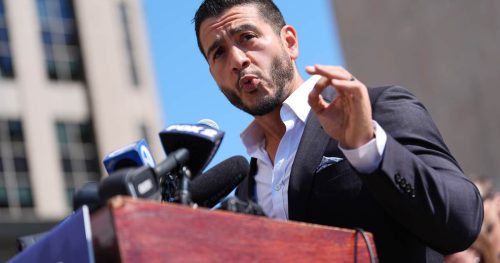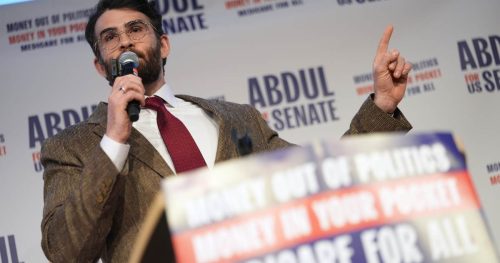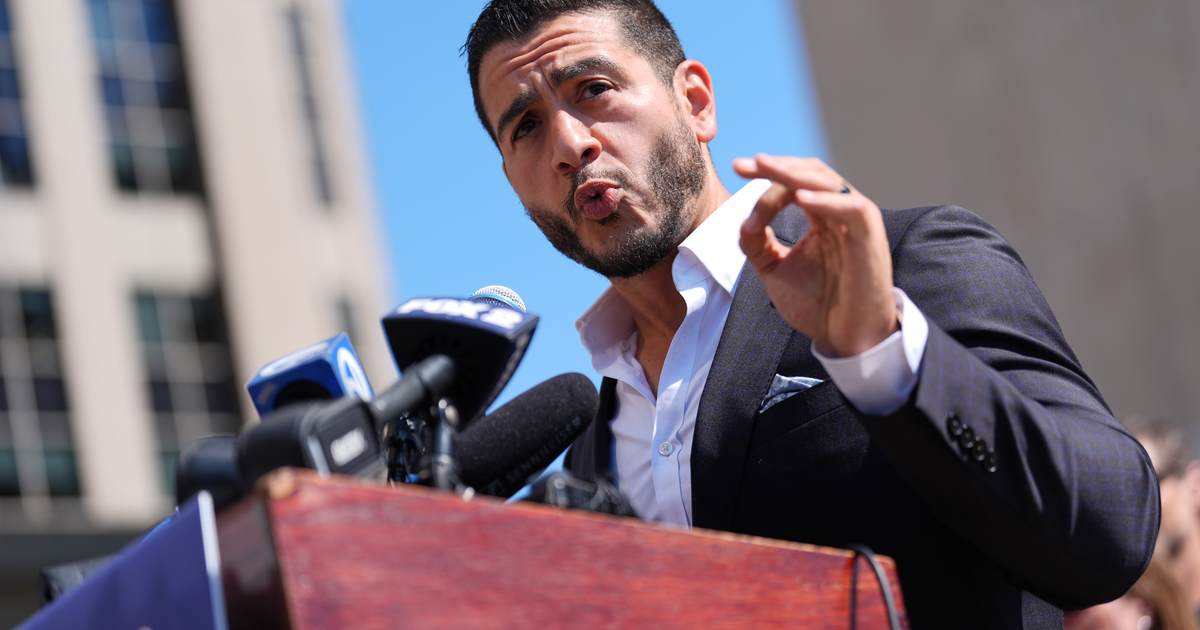
Michigan Senate contender Abdul El-Sayed faced sharp questions after news surfaced that Socialist streamer Hasan Piker once said “America Deserved 9/11,” and El-Sayed refused to rule out continuing to campaign with or court Piker’s large audience despite the remark.
Abdul El-Sayed, running as a Democrat for U.S. Senate in Michigan, was pressed about his ties to Hasan Piker after the streamer’s notorious line, “America Deserved 9/11.” Reporters asked whether El-Sayed would cut ties or stop campaigning with a personality who made that claim, and the exchanges highlighted tensions within the party about tone and tactics.
When NBC’s Kristen Welker pushed him, El-Sayed sidestepped at first and then explained his approach to outreach. He said, “Like I said, I’m a lot more focused on who I’m campaigning to,” El-Sayed said. “I think we have this notion sometimes on shows like this that we cannot or should not talk to certain groups of people.”And I’ll tell you that the three million people who listen to Hasan are people I want to make sure understand that there’s a pathway into our politics around getting money out of politics so we can get money back in pockets and pass Medicare for All. And so I’m going to continue to have the conversations with those folks who we desperately need to reach out.”
That answer made clear his strategy: broaden the tent by engaging with audiences even when their hosts have said offensive things. From a Republican perspective, that stance looks like political calculation over principle, trading a moral line for a platform and listeners. Voters on the right and many independents see a problem when candidates tolerate or shrug off extreme rhetoric in order to pick up followers.
El-Sayed did try to distance himself from Piker’s words by calling the remark a mistake, insisting it was disavowed and taking aim at the media’s tendency toward “gotcha politics.” He said, “Of course, of course,” El-Sayed said. “It was a dumb statement. And, of course, I think Hasan, himself, would say that was a dumb statement. He disavowed it. So yes. America didn’t deserve 9/11. But, you know, to sit here and play gotcha politics with a dumb thing somebody said out of context, that they disavowed themselves, to say, ‘Oh, well, what does that mean about what you think?’ I want to be held accountable for what I say and what I do rather than this idea that we’re so stuck in cancel culture that all of us agreed was a bad idea back in 2020, but we seem to want to bring back.”
That defense raises a straightforward question: when a figure tied to a campaign says something as inflammatory as “America Deserved 9/11,” is distancing enough or should there be clear consequences? Republicans argue that electability and basic decency both suffer when candidates tolerate such figures without making clean breaks. The debate is less about free speech and more about whether ethical boundaries exist for those seeking national office.
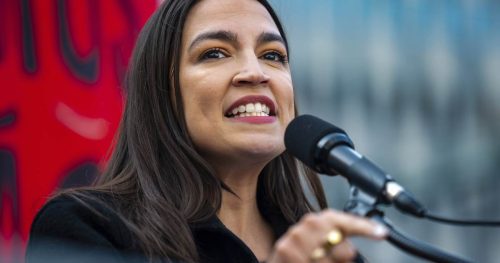
Meanwhile, the same dynamic surfaced with Representative Alexandria Ocasio-Cortez, who declined to say whether Hasan Piker belongs in the Democratic Party and offered a different framing about outreach to young voters. She said, “When we look at our elections that have happened, we have lost young people,” AOC told ABC. “Much hay was made about the fact that we lost young men in the last election. And many of the same consultants that are wringing their hands today were the same ones talking about how we need to go on Joe Rogan, and we need to be not so willing to engage in cancel culture.”
AOC’s response echoed El-Sayed’s focus on winning back younger voters rather than policing personalities, but critics see a pattern: when party leaders excuse or explain away extreme statements, they normalize them. From a conservative standpoint, that normalization creates a slippery slope where radical language gets shuffled into mainstream political conversation without accountability.
https://x.com/RNCResearch/status/2086455727267197342
Voters deserve clarity about where candidates draw their lines. If courting an audience that follows someone who said “America Deserved 9/11” is acceptable, that is a judgment voters should weigh. Republicans pressing for accountability say the choice matters: either you reject incendiary rhetoric outright, or you risk validating it by association, and history shows associations shape both perception and policy.
Questions about alliances and influence will keep bubbling up as the campaign continues, and how candidates respond will influence whether swing voters view them as principled or merely strategic. For many conservatives, this is not about shutting down dialogue but about refusing to normalize statements that cross moral lines and then shrugging them off as political convenience.