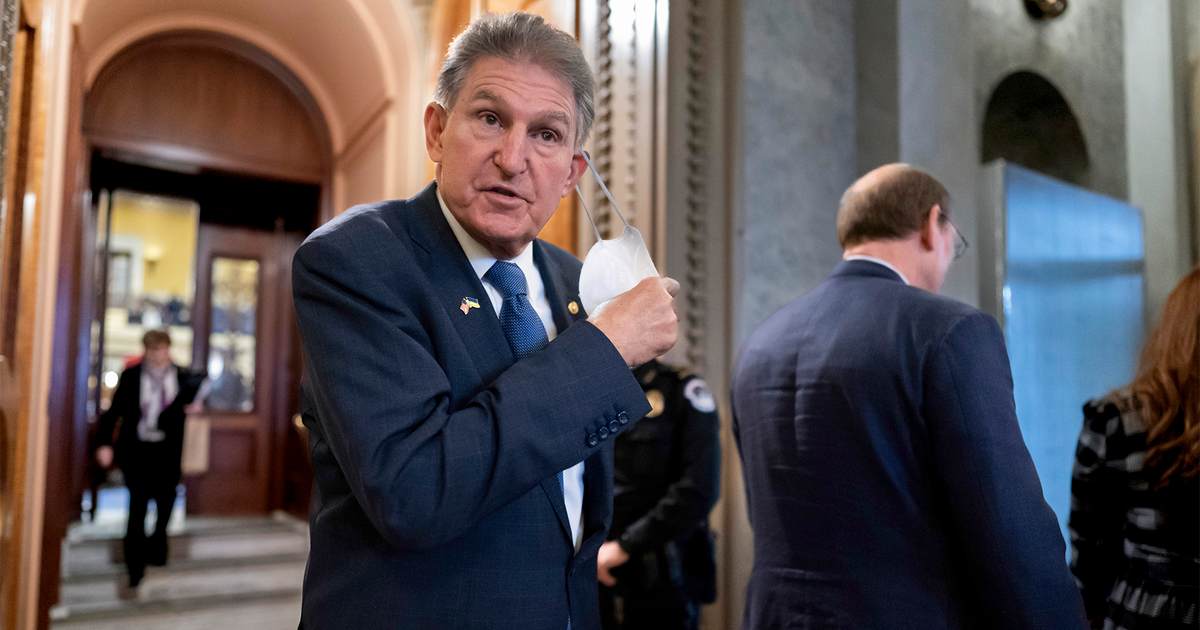
Sen. Joe Manchin has made clear he won’t back a self-described socialist, argued that Democrats need red-state moderates to survive, and slammed the radical parts of the modern Democratic platform in a blunt exchange with CBS News’ Margaret Brennan.
Joe Manchin walked away from another election cycle with a few things on the record: he chose not to run again, he thinks his party needs to temper its extremes, and he believes West Virginia’s political shift since 2010 says a lot about what voters now demand. He’s tired of politics-as-usual and has been candid about the consequences when a party moves too far from the center. That candor makes him one of the more interesting—and increasingly rare—pragmatists who still speaks up inside the Democratic orbit.
Manchin’s decision not to seek reelection wasn’t dressed up as some grand strategic move; it read like realism. West Virginia’s electorate has changed, and the math didn’t favor another campaign for him. From a Republican vantage point, that shift is proof that voters will punish parties that lose touch with working-class priorities, whether in Appalachia or elsewhere.
He’s also been explicit about what he thinks Democrats need to do: embrace moderation in red states or accept steady erosion of power where it matters. That’s a basic political fact, not a partisan dig—electorates in many places favor balance, competence, and security over doctrinal purity. Manchin’s critique lands because it points to tangible policy trade-offs voters notice at the gas pump, on their streets, and in their communities.
So when CBS’ Margaret Brennan asked whether he would ever endorse a self-described socialist, he didn’t mince words. The exchange landed on television and made a few headlines because it exposed a fault line many voters already sensed: mainstream Democrats versus the party’s growing left flank. Manchin’s answer wasn’t polished; it was direct and emphatic.
https://x.com/SteveGuest/status/2083951483658047942
Brennan: “Could you ever support a self-described socialist candidate?”
Manchin: “No. No way. My God, no.”
Brennan: “Even if they have some good ideas?”
Manchin: “I support the good ideas. But how could you support some of the crazy stuff they’re for? Have you seen their platform? They’re for dismantling everything that we know, whether it be, whether it be the structure of government, Congress itself, or the Senate they want to get rid of, and then they start talking about all the crazy things, no police, no this, no this, no that. Are you crazy?
We want, we want, a crime-free area. We have to have police for that. Yeah. We want a strong defense, we want a strong border. But if Democrats can’t say that, and they start lining up with the socialist demands of how… Energy will be gone. There’ll be no energy, okay? We have right now a tremendous amount of energy we’re producing, and the world depends more on us than ever before.”
The clip shows Manchin pushing back on policy positions that, from his view, would dismantle institutions and everyday safeguards. His line about law and order, defense, and border security reads as a fundamentals-first checklist that many voters across party lines would recognize. From a Republican perspective, that kind of pushback is welcome because it forces a public debate over which ideas are sensible and which are reckless.
Manchin’s remarks also underline a broader political reality: rhetoric has consequences. When elected officials flirt with radical overhauls—whether of energy policy or governmental structure—voters notice trade-offs in real time. Conservatives often argue that stability in institutions and a steady energy supply are nonnegotiable, not ideological luxuries, and Manchin’s words mirror that concern.
He didn’t let Brennan rewrite labels either, pointing out that self-identification matters when it drives policy. He called out the notion that someone can be both independent and a modern socialist in practice, and he was unafraid to say what many voters already see: that some leading voices openly embrace socialist ideas. That clarity matters in an era when messaging sometimes tries to soften sharp distinctions.
For Republicans watching, Manchin’s stance is a reminder that pushing back on radical proposals can find bipartisan resonance, especially in states that prize practical results over ideology. Whether you agree with him or not, his critique helps frame the choice voters face between incremental governance and sweeping experiments that carry big risks.
In short, the exchange was less about personality and more about direction: which policies will keep communities safe, energy flowing, and government functioning? Manchin answered in plain language, and that bluntness is part of why his remarks landed where they did. Voters of all stripes will keep weighing those trade-offs as the next cycles approach.