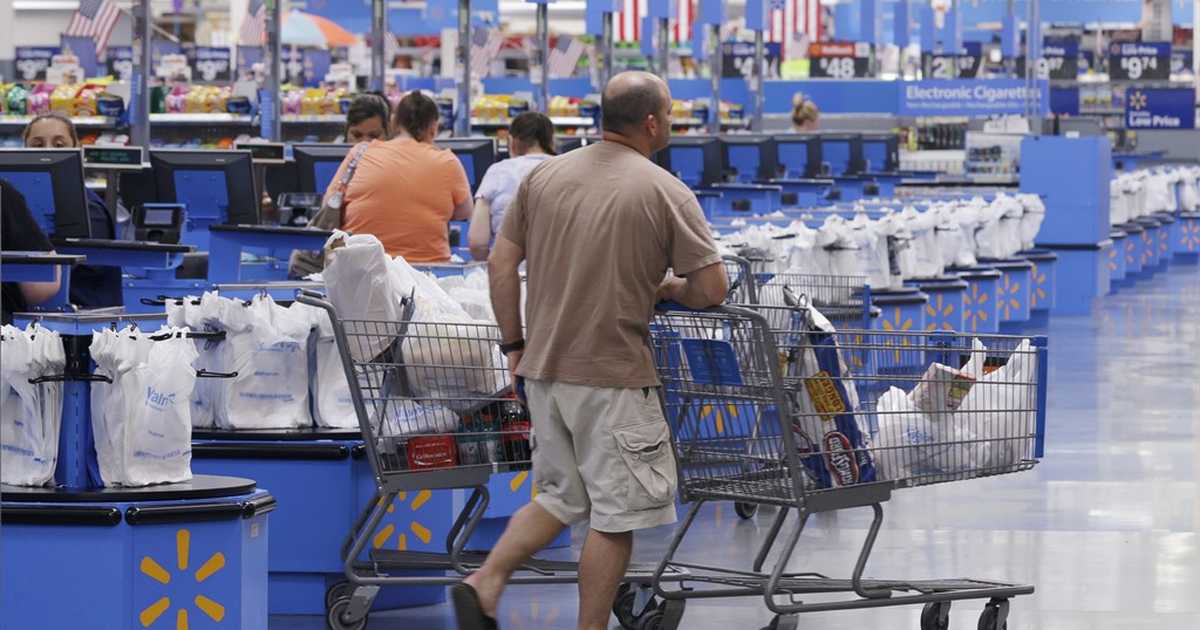
New York Democrats keep promising affordability while passing policies that push prices higher, and the latest push to force a 10 percent self-checkout discount is a perfect example of how well-intentioned ideas become expensive realities.
Promises about making life cheaper get shouted from every podium, but the reality is different when policy meets the market. Over the last few years, choices in Albany and on the left coast have pushed education, housing, and healthcare costs upward, leaving families with less breathing room. Voters hear talk about compassion and fairness, then open their bills and see the opposite.
Now a proposal in New York would require stores that sell food to give self-checkout customers a 10 percent discount. On paper that sounds like savings for shoppers who do the work of scanning and bagging, but it ignores how businesses actually price and operate. When a new mandatory discount appears on the books, companies don’t simply eat the cost; they shift it.
That shift means the bill lands on everyone, not just people who avoid self-checkout. Stores will adjust margins and raise prices across the board to offset the mandated savings, which effectively taxes the non-self-checkout shopper to subsidize those who scan their own groceries. The practical outcome is higher shelf prices and thinner choices for low-income shoppers who can’t or won’t use self-checkout.
Supporters claim the discount corrects an unfair transfer of labor from paid staff to shoppers, and there’s a rhetorical appeal to sharing savings.
A 10% discount could be up for grabs — if you’re willing to work for it.
https://x.com/DemzDeliver/status/2082993522152460556
New York lawmaker, Nikki Lucas, proposed a 10% discount for shoppers who use the self-checkout lane. The bill, which was introduced in May, would only require retail establishments that also sell food to provide the discount.
This means supermarkets or retailers like Target and Walmart. Lucas argued that the money saved should go directly to the shopper and not the company, as customers are now doing the work.
“Retail businesses increasingly rely on self-checkout systems to reduce staffing and operational costs by shifting responsibilities traditionally performed by employees onto consumers,” Lucas wrote in the bill.
“Since customers are effectively completing portions of the checkout labor themselves without compensation, providing a mandatory discount helps ensure fairness, acknowledges consumer participation in store operations, and allows the public to share in the financial savings created by self-service technology,” the lawmaker added.
That argument sounds reasonable until you remember where real costs come from: wages, rent, transportation, supply chains, and regulation. Mandates that force a retailer to discount one group while keeping others at market prices create distortions that firms correct by raising prices or cutting services. The net effect is not a windfall for shoppers but a redistribution that often hits those least able to absorb higher costs.
There’s also the political subtext. Lawmakers who favor higher mandated wages and strict labor rules then turn around and punish automation, even when automation keeps prices down and preserves jobs. If a policy makes it harder for businesses to adopt cost-saving technology, prices and unemployment both go up. For practical conservatives, the choice is clear: support policies that expand opportunity and lower costs, not ones that pretend to protect workers while raising everyone’s grocery bill.
History shows the pattern. When states impose steep minimums without accounting for local markets, businesses respond with fewer hours, fewer hires, and more automation. When politicians then attack that automation, they trap markets between rising labor costs and restricted technological fixes. Consumers lose twice—first in job opportunities, then at the checkout line.
Democrats who champion these ideas might mean well, but means don’t cancel out consequences. Policies that demand discounts, mandate staffing ratios, or ignore market incentives end up delivering higher prices, reduced choice, and fewer entry-level chances for the young and unskilled. The rhetoric of fairness becomes the reality of higher bills and fewer pathways upward, and voters notice the gap between slogans and what actually lands in their shopping carts.