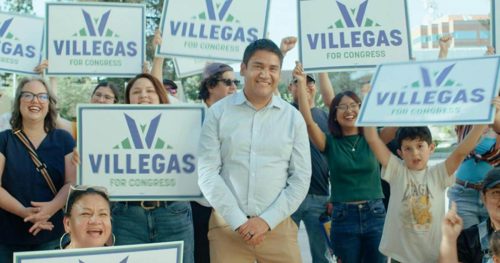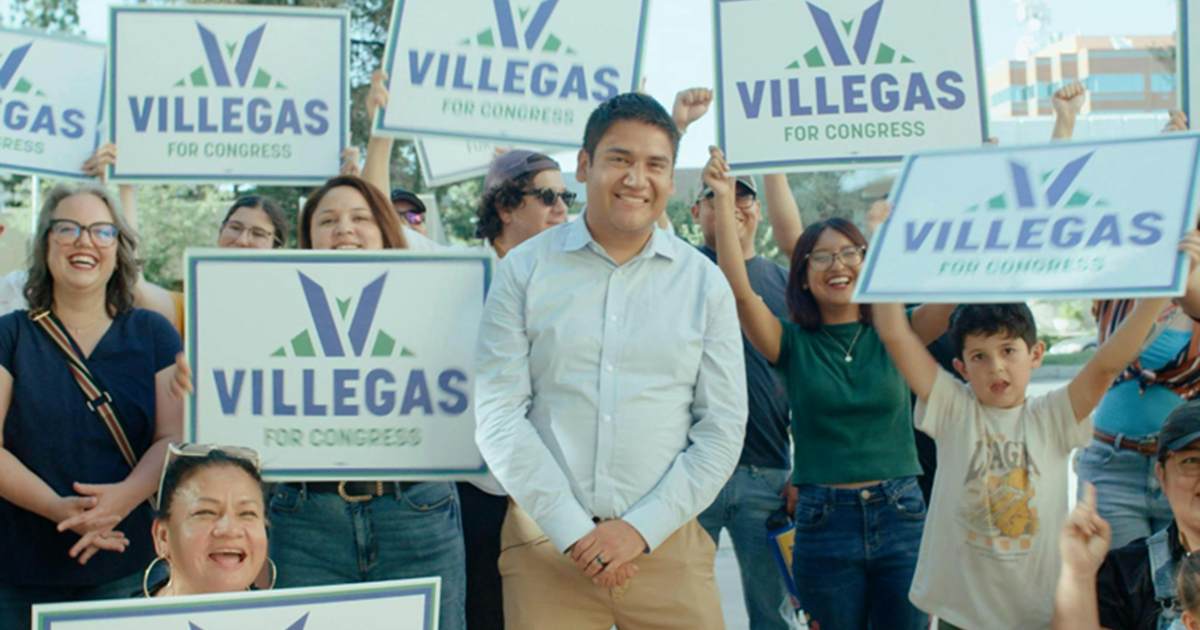
Randy Villegas presents a working-class mechanic image while serving as a high-paid professor and activist, with a record of student organizing, alliances with the Democratic Socialists of America, and ties to Mi Familia Vota that promoted programs described as increasing turnout and seeking to “expand the electorate.”
Villegas markets himself as a mechanic with blue-collar roots, but his public record tells a different story: he is a professor earning more than $170,000 a year and a self-declared socialist with a political agenda. That agenda has included campus programs that placed teenagers alongside activists and a platform that aligns with well-known progressive priorities. The contrast between his image and his resume is hard to ignore.
He appears in the California chapter of the Democratic Socialists of America voter materials, which describe him and list that “his platform includes Medicare for all, taxing the 1%, regulations on AI, universal childcare, and other DSA-aligned policies.” Those are explicit policy commitments, and they place him firmly on the far left of the ideological spectrum. For many voters, that affiliation matters as much as any job description.
In 2019 Villegas helped organize what he labeled the “Central Valley Freedom Summer,” embedding high school students with activist groups to engage in community outreach and voter contact. Students were trained to educate residents on LGBT+ and Latinx issues and to perform phone banking and turnout operations, and organizers credited the effort with boosting turnout on a targeted voter list from 33 to 46 percent. Those are measurable effects, and they came from blending education with partisan organizing.
One key partner in that work was Mi Familia Vota, a national Latino voter-mobilization organization that has been part of litigation over voting rules in Arizona. That group has publicly stated a goal to “expand the electorate” and to seek pathways to citizenship for undocumented immigrants. Those policy goals and legal fights make the intent of voter mobilization unmistakable rather than purely civic education.
Villegas knew of Mi Familia Vota’s positions before he launched his program and elsewhere has associated his work with broader activist causes. He acknowledged earlier advocacy for “sanctuary school” policies in 2017 and later framed his efforts as part of a “History of Resistance.” The project was not presented as neutral research or a nonpartisan civics program but as overtly political engagement with students.
That posture extends into his academic work. In his doctoral dissertation he described the voters of CA-22 using the phrase “racist descendants of the KKK” who “perpetuated a ‘white-dominated political structure fueled by racism.'” He also argued that political biases “can actually be assets” in engaged research and called neutral content an “ethical violation.” Those are direct statements about methodology and motive that favor activism over balanced inquiry.
Students who took part in Villegas’ programs have gone on to visible activism, including organizing youth events and drag performances across the Central Valley. The program received funding from UC Care, which is sponsored by the University of California, and Villegas accepted a stipend for his role. That direct involvement of public-university resources in political training raises questions about the line between taxpayer-funded education and partisan mobilization.
The cumulative picture is of a candidate who leverages university platforms and civic programs to advance a left-wing political agenda, recruit new activists, and partner with groups explicitly seeking to alter the electorate. The combination of academic credentials, activist tactics, and alliances with national organizations committed to expanding voter rolls creates a clear profile of priorities. For those focused on policy and process, the record is revealing rather than reassuring.
Details such as his salary, the turnout figures tied to the Central Valley project, and his explicit statements about research and political strategy deserve scrutiny on their own terms. The mix of public funding, youth outreach, and declared goals to create new pathways to citizenship brings practical consequences for how communities are engaged during elections. These are not abstract academic debates but concrete operational choices with political outcomes.
Observers and constituents can read the filings, program descriptions, and his dissertation to see the language and figures for themselves. That record shows a deliberate approach to building political power through education and organizing, and it explains why his private resume and public messaging have prompted intense scrutiny from across the political spectrum.