Retired military aide Robert “Buzz” Patterson says the real danger in the secret Turkey flight is not the tactic but the leak itself, arguing that only a handful of insiders could have revealed those move‑by‑move security details and that such exposure puts presidents and their protectors at risk.
The White House Correspondents’ quarrel with the Trump White House over the covert Turkey departure has sharpened a rarely discussed point: leaks, not tactics, often create the real threat. A retired officer who handled national security logistics watched the story unfold and called out the source of the problem—someone with intimate knowledge of the operation. This is not about theater or games; it’s about whether those who understand how protection works are spilling secrets they should not.
Lt. Col. Robert “Buzz” Patterson, who once carried the nuclear football for President Bill Clinton, weighed in with both admiration for the execution and alarm at the exposure. He praised the deception for its craftsmanship while warning that revealing the methods frees adversaries and endangers lives. The way the episode has been reported shows how quickly sensitive practices can become public, and that speed is what troubles veterans who’ve kept those methods under lock and key.
“It was brilliant,” retired Lt. Col. Robert “Buzz” Patterson told Fox News Digital. “I wish I had been a part of it. That’s how well done it was.”
https://x.com/FoxNews/status/2087957892812910778
But Patterson is warning that exposing the vital national security secrets behind such operations could put presidents, military personnel and the White House press corps in danger for years to come.
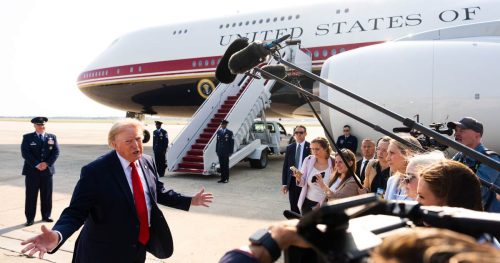
Patterson served as Clinton’s senior military aide for a period of two years and was responsible for the president’s emergency satchel, and in a 20-minute interview Wednesday, he explained how presidential decoys, aircraft swaps and other acts of deception are longstanding tools used to protect the commander in chief, his senior officials and the “privileged” Air Force One press corps.
What alarms him, Patterson said, is not that Trump’s security team used the tactic — including the catering truck sleight of hand he was intimately a part of during the Clinton administration — but that details of how it was done are now spilling into public view.
“I hope that they prosecute this to the fullest,” Patterson said. “Whoever leaked that, in my opinion, and having been involved in this, was highly placed in that process.”
“There’s only a few people who actually know exactly what’s going down, and that’s by design,” he added. “So if somebody leaked it, it was somebody involved in the process, and that scares the hell out of me.”
Patterson’s background matters because he lived these procedures. He oversaw the emergency satchel and coordinated close protection logistics, so his judgment about how information flows inside the bubble carries weight. When someone with that level of access says a leak was likely “highly placed,” voters should pay attention. This isn’t speculation from the sidelines; it’s a former insider describing how limited and compartmented these operations are by design.
The facts are straightforward: the president was in Turkey last July for a NATO summit and left the country on a military jet after a disguised departure that included hiding in a catering truck. Reports also noted a credible assassination threat from Iran, which gave the security team every reason to mask movements. Those steps are standard practice when threats are real, not because the White House is trying to exclude reporters from minor updates.
Critics in the media treat transparency as an absolute, but national security has its own hierarchy of needs. The president’s safety and the protection of senior staff and protectors must come before satisfying a press corps that would likely leak operational details. When the reporting itself risks informing hostile actors, restraint becomes a security imperative, not a question of journalistic privilege.
That reality underlies the anger Patterson voiced about the leak. What he found “brilliant” in execution becomes dangerous if the playbook is exposed. The debate should not be about whether deception was used; it should be about whether those who betrayed the trust of a tightly held process face consequences. From his perspective, prosecution is the reasonable remedy when classified or sensitive methods are disclosed to the public.
The episode also highlights a stubborn tension: modern media hunger for access vs. the long-standing military instinct for operational secrecy. There are sound reasons for compartmentalization, and the people who know the procedures are often the very ones tasked with keeping them secret. When that trust is broken, it creates immediate tactical risks and long-term vulnerabilities that future presidents will inherit.
Whatever one’s view on the president or the press, the core issue remains simple and stark—revealing how protection works hands tools to enemies and complicates protecting those in the line of fire. The source of that leak, according to a seasoned former aide, appears to have been close to the action, and that is the part that alarms those who have carried the responsibility of safeguarding the commander in chief.