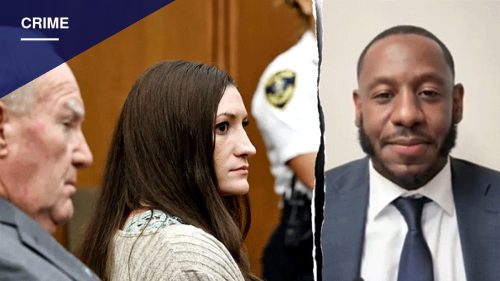
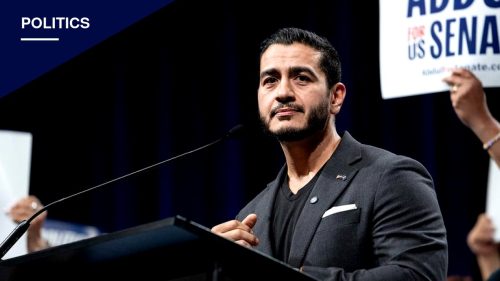
Democrat Senate candidate James Talarico publicly defended convicted killer Karmelo Anthony, framing the verdict as evidence of a racially biased criminal justice system and pointing to jury makeup as proof of unfairness.
James Talarico took his defense of Karmelo Anthony onto a popular platform, arguing the verdict reflects deeper problems in the courts rather than the facts of the case. He appeared on The Breakfast Club and used the moment to criticize how justice is administered in Texas. His stance immediately turned a local criminal matter into a political flashpoint.
On the show Talarico insisted the system is failing certain communities, casting doubt on the jury’s verdict and the process that produced it. “Right now we’ve got a system that doesn’t serve all Americans equally,” Talarico said. That line framed his entire argument and set the tone for his defense of Anthony.
He drove the racial angle hard in subsequent remarks, arguing unequal outcomes prove bias rather than exploring trial details. “We know that black Texans have not gotten the justice they deserve.” Those words were meant to signal a broader grievance, not a narrow legal critique.
https://x.com/realBrandonGill/status/2090259492302696475
Talarico then singled out jury composition as the smoking gun proving the system is broken. “I know that there were no black members of the jury,” Talarico continued. “To me, that’s all of the evidence that you need to prove that this system is not working for black Texans.”
The facts of the case remain stark and specific: in April 2025, Karmelo Anthony stabbed high school track athlete Austin Metcalf at a track meet after a confrontation. Witnesses reported Metcalf had asked Anthony to leave his team’s tent roughly 15 times, and prosecutors described the attack as a “sneak attack” in which Anthony allegedly used a concealed knife. Prosecutors also said Anthony threatened Metcalf by saying “touch me and find out” while his hands were inside his backpack.
A jury ultimately found Anthony guilty in June and imposed a 35-year sentence with parole possible after serving half the term. That outcome followed testimony, witness statements, and deliberations that weighed the prosecution’s version of events. For many observers, the conviction and sentence reflected the seriousness of the attack and the harm to the victim.
Talarico’s claim about the jury conflicts with documented details about the selection process and the larger pool from which jurors were drawn. The record shows a 589-person jury pool that included multiple prospective black jurors, and prosecutors say some were dismissed after they acknowledged they could not be impartial. Those strikes and challenges are part of routine jury vetting, even if critics portray them as proof of systemic racial exclusion.
Anthony’s defense team is pursuing appeals and asking for a retrial while contesting aspects of the original process, and Judge John Roach Jr. has been recused from the appeals proceedings. Those procedural moves are standard in serious criminal cases and will be sorted through the appellate courts. The legal system provides a route for review without immediate political grandstanding.
From a Republican viewpoint, Talarico’s public embrace of Anthony’s claims looks like political posturing that sidelines the victim and the criminal conduct alleged at the scene. Turning a violent stabbing into a campaign line risks minimizing the real safety concerns of communities and the trauma suffered by Austin Metcalf and his family. Political leaders should be careful about rushing to defend those convicted of violent crimes before the appeals process runs its course.
Accusations of systemic bias deserve scrutiny, but they also require real evidence rather than quick soundbites. Jury selection can be messy and imperfect, but claiming outright racial exclusion in the face of a documented 589-person pool and multiple prospective black jurors stretches the narrative. Courts are the place for those disputes, and the appeals process exists to test whether trial errors actually affected the verdict.
What remains clear is that a young athlete was killed, a man was convicted and sentenced, and the case is now part of a legal record that will be reviewed. Political figures can comment, but using the episode primarily as a partisan cudgel undermines trust in institutions and sidesteps the practical questions about how to improve fairness without excusing violence. The appeals process will move forward, and the facts of the crime, the trial record, and the law will decide what happens next.