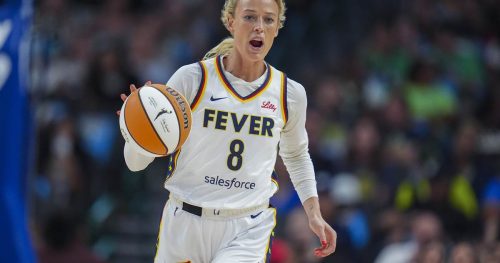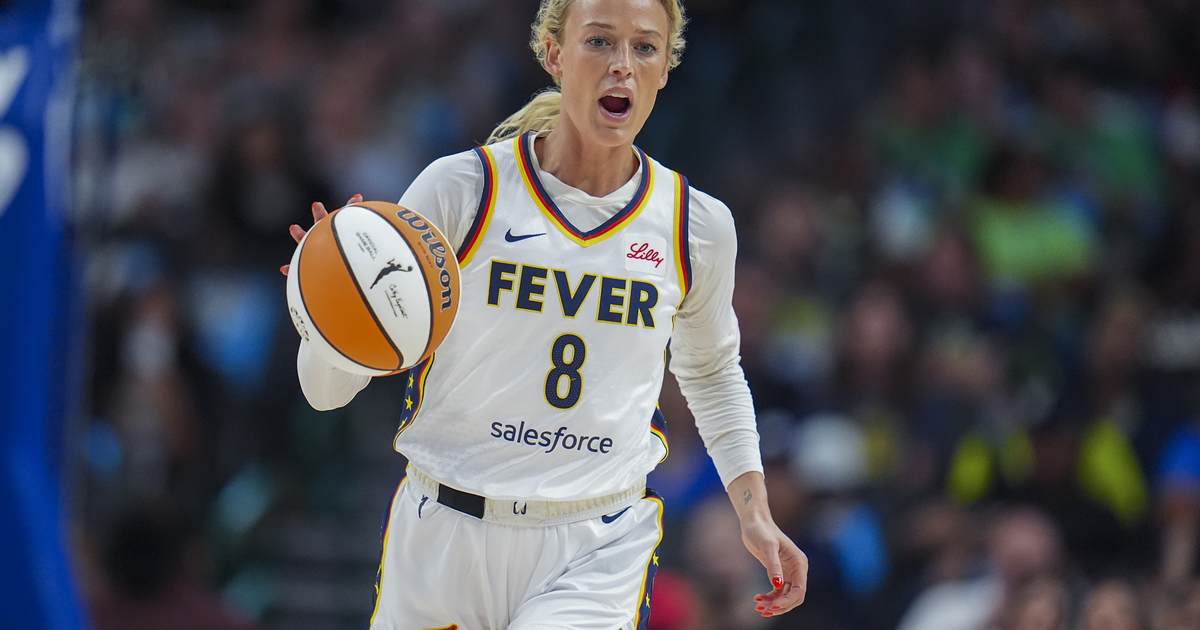
Indiana Fever guard Sophie Cunningham was hit hard by a Chicago Sky player, the play drew an ejection and public accusations of bias, and the incident has reignited debate over transgender participation and league policy.
The incident happened Saturday during the Fever-Sky game when Sophie Cunningham was finishing a fast break and absorbed a dangerous foul. It was called a Flagrant 2, the most serious in-game penalty for contact, and the Sky player was ejected on the spot. The moment quickly became a flashpoint on social media and in locker-room talk.
DiJonai Carrington delivered the clothesline that led to the Flagrant 2, a play that looked intentional and left Cunningham shaken. Officials reviewed and enforced the rules, which is what the game requires when a player endangers another. Ejections are meant to protect players and deter reckless behavior, not to be political statements.
After being tossed, Carrington accused the referees of racism, asserting that the call was motivated by bias rather than the action on the court. The player, identified as a black woman, then posted the date of the teams’ next meeting on August 23, a move some saw as menacing. That sequence fed the story beyond the sport and into cultural and racial arguments.
https://x.com/Sudharsan_ak/status/2086178717177385044
Cunningham has already been in the middle of heated exchanges this season because she has spoken up about men competing in the WNBA. Her stance—pushing for boundaries that preserve single-sex competition—has made her a target for taunts from opponents, criticism from some fans, and scrutiny from parts of the media. Those attacks have blurred the line between normal competitive rivalry and targeted harassment against a player for expressing a viewpoint.
The play and the reaction to it also reopened the broader question about the league’s policies on participation. Players and observers on all sides are talking about fairness, safety, and how rules should apply when biological sex and gender identity conflict. This is not just a locker-room spat; it touches on who gets to compete in women’s sports and how the league interprets that mission.
The league has that it will begin investigations into “what a woman is” to settle the matter, a phrase that highlights how deep and awkward the dispute has become. Officials face pressure from activists who want inclusivity and from conservatives and many athletes who insist on preserving opportunities for biological women. Trying to adjudicate identity in a sports setting is messy and politically charged, and the WNBA is now stuck between competing priorities.
For players, the immediate concern should be safety and consistency of officiating, not who is louder in the debate off the court. When an on-court action risks injury, referees must make the call quickly and without fear of political fallout. Fans and media can argue about policy all they want, but the referees are there to keep players safe in real time.
This episode underlines a larger point: sports leagues that avoid clear-cut rules on sex and competition invite controversy and resentment. If a league wants to be both a political actor and a sports organization, it will have to accept that both roles bring fights, legal challenges, and public outrage. The simplest path to fewer scandals is clearer, consistent rules that everyone understands and trusts.