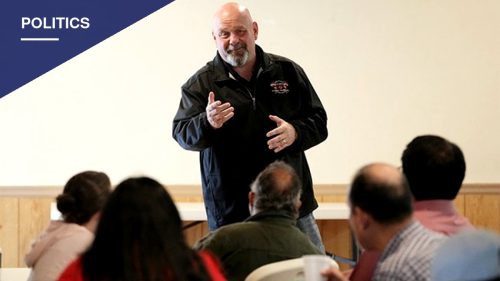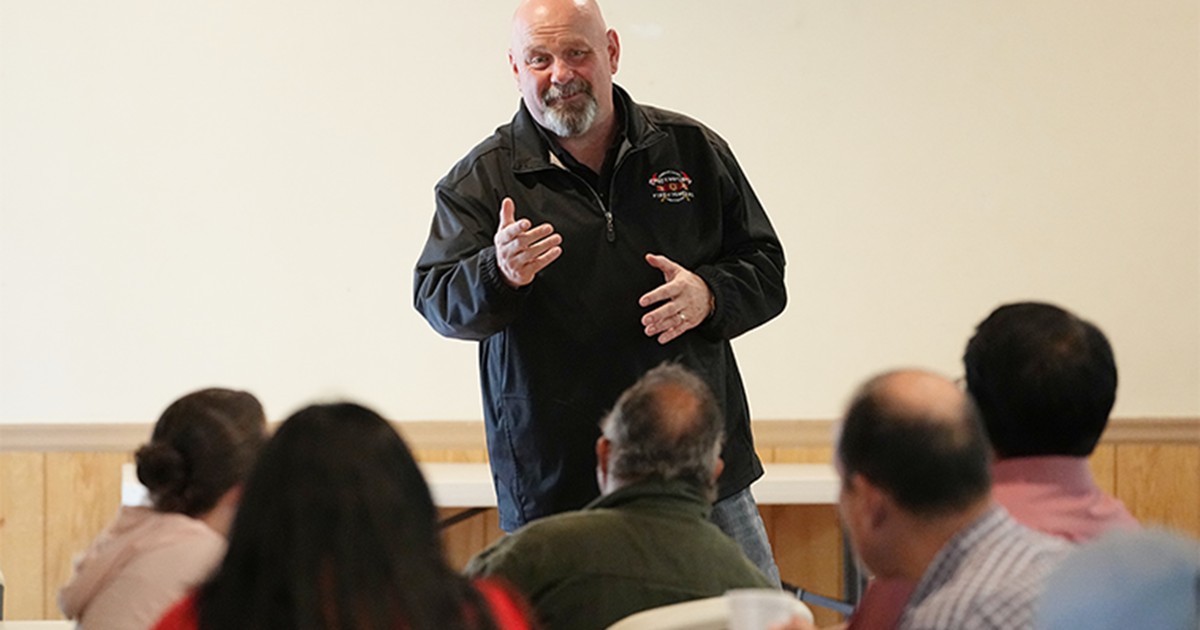
Summary: A close look at court records, financial filings, and campaign behavior raises questions about Bob Brooks’s past, his disclosures, and his willingness to face voters before the election.
Recent reporting flagged suspicious campaign donations and a property transfer tied to a $130,000 judgment involving Bob Brooks and his former in-laws. Those revelations opened a wider look at public court records and debts that stretch back decades across county and federal filings. The basic pattern: liens, foreclosures, collection judgments, and a big court-ordered debt that keeps growing as litigation continues.
Court documents show a lien filed June 16, 2004, by Blue Eagle Custom Builders, Inc. against Robert Brooks, released the same day for reasons not detailed in the record. Brooks later sued Blue Eagle in October 2005, a case that was disposed in 2007. Those early entries are the first sign of a longer, messy financial trail that surfaces more clearly in later filings.
In 2012, Wells Fargo initiated a foreclosure action against Brooks that was discontinued without prejudice in 2018, and that same year a Midland Funding lien for $5,480.84 was filed and remains a point of contention. A 2019 filing showed a court order directing the sheriff to garnish assets to satisfy at least some creditors, which indicates collection actions escalated beyond simple paperwork. A separate 2012 judgment tied to FIA Card Services for $7,872.59 later reported as satisfied in 2024, but these pieces together show repeated brushes with creditors over time.
U.S. Bank filed another foreclosure against Brooks in June 2016, a case that closed in December 2016, and those closures do not erase the string of liens and judgments that continue to orbit his finances. The most consequential item remains the $130,000 court-ordered judgment brought by his former in-laws, a debt that now exceeds $162,000 as interest and fees accumulate while the lawsuit works its way through the courts. On August 5, a Northampton County judge ruled that the fraud lawsuit against Brooks may proceed, and Brooks has denied any wrongdoing in that matter.
His federal financial disclosure filings add more concern: his original 2025 disclosure failed to list that judgment on that disclosure. One of Brooks’ Democrat opponents, Ryan Crosswell, publicly called him out for the omission and for how the debt came to light. “Because he didn’t include it in his previous disclosures, voters only learned about it when his mother-in-law filed a fraud lawsuit against him in February,” Crosswell wrote. “Only then did his campaign admit they intentionally didn’t disclose this debt in their House Ethics filing.”
Beyond court judgments, Brooks has talked about a pension from his time as a firefighter with the city of Bethlehem but did not list that pension on disclosures. Brooks said “I personally have a good pension from 20 years of working for the City of Bethlehem as a firefighter, but I’m one of the lucky ones. Every hardworking American, especially young people, should be afforded the opportunity to get a pension, and that starts by passing the PRO Act and giving everyone the chance to join a union.” Divorce records also indicate he had a 457 retirement account through the City of Bethlehem.
With the election roughly two months away and mail-in voting ramping up, voters in Pennsylvania’s 7th Congressional District are getting fragments of a financial history that includes foreclosures, liens, and mixed court outcomes. Those records are public, and they raise straightforward questions about judgment listings, timing of disclosures, and how campaign donors were vetted. Transparency around basic financial responsibility is a legitimate voter concern.
On the campaign trail, Brooks has declined or ignored multiple debate invitations from Republican Rep. Ryan Mackenzie, who has agreed to several September debates to let voters compare positions live. Instead, Brooks proposed a debate arrangement that would leave part of the forum unaired until immediately before Election Day, a format that denies timely scrutiny. From a voter perspective, that reads like delay and obfuscation rather than openness.
Brooks’s pattern of omissions on disclosures, combined with ongoing litigation and a patchwork of past financial judgments, all deserve clear answers in public settings. The district’s voters need to see candidates faced with direct questions and accountable to the record in real time. What they do not need is arrangements that hide parts of the conversation until after ballots are already set to land.
Editor’s Note: The 2026 Midterms will determine the fate of President Trump’s America First agenda. Republicans must maintain control of both chambers of Congress.
https://x.com/Ryan_Crosswell/status/2055292723679129894?ref_src=twsrc%5Etfw