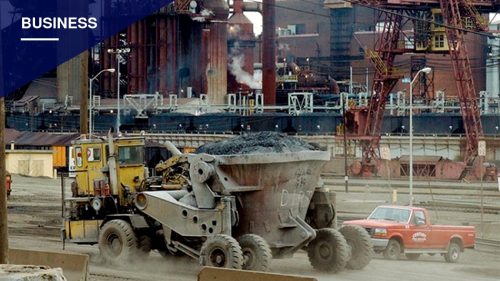
America’s share of global manufacturing output has dropped from 25% in 1997 to 15% today, and could fall to 11% by 2030 without changes, according to an opinion column published by Fox News. The piece argues that the decline is not due to a lack of talent, capital or technology, but to regulatory barriers that make it difficult to build factories, pipelines, refineries and other facilities in the United States.
The column, written by Katherine Boyle, a general partner at Andreessen Horowitz and co-lead of its American Dynamism practice, identifies the National Environmental Policy Act (NEPA) as the central obstacle. Unlike laws such as the Clean Water Act and Clean Air Act, which set substantive environmental standards, NEPA is primarily procedural, requiring analysis and disclosure of environmental impacts before major federal actions take place.
Boyle writes that over time, added regulatory layers and aggressive legal interpretation have turned NEPA from a straightforward review process into a major roadblock for projects with any federal connection, affecting semiconductor plants, munitions and battery factories, rare earth production, natural gas pipelines, oil refineries and medical manufacturing facilities alike.
The Numbers Behind the Delays
According to the column, the median NEPA review in 2024 took 26 months. More demanding environmental impact statements averaged 3.8 years to complete, while environmental assessments — often described as a faster track — routinely took a year or more. Boyle notes that none of these timelines are legally mandated; they result from a combination of bureaucratic caution and unlimited litigation.
Cost is also a factor. Department of Energy data cited in the piece put the mean cost of preparing an environmental assessment at more than $300,000, while environmental impact statements averaged $6.6 million — figures that do not include legal fees, staff time or litigation costs.
Boyle argues that while large companies can absorb these costs, the delays can be fatal for smaller businesses, such as a 50-person drone manufacturer, a battery startup, or a defense technology company that has won a Pentagon contract but needs to begin production before its funding runs out.
Proposed Fixes
The column calls for two main reforms. First, it urges federal agencies to enforce existing permitting deadlines and limit prolonged litigation, arguing that once permits are complete, there should be finality for manufacturers and investors, with permit revocations allowed only in cases of documented, imminent and irreparable harm.
Second, Boyle recommends that Congress require agencies that finance or permit manufacturing to share and adopt categorical exclusions — pre-cleared categories of routine actions that don’t require a full environmental review — from one another, something a 2023 law already allows but which agencies have largely not done.
Boyle states that these changes would not weaken existing environmental protections under clean air, clean water or endangered species laws, which she says would remain fully intact. Instead, she describes the reforms as removing procedural burdens unrelated to those protections.
The column notes bipartisan interest in overhauling the permitting process, pointing to negotiations involving Senate Environment and Public Works Chair Shelley Moore Capito, R-W.Va., Energy and Natural Resources Chair Mike Lee, R-Utah, and ranking members Sheldon Whitehouse, D-R.I., and Martin Heinrich, D-N.M.
Boyle concludes that reforming NEPA would benefit workers and the broader economy through job creation and greater supply security, framing the current moment as an opportunity for Congress to act.