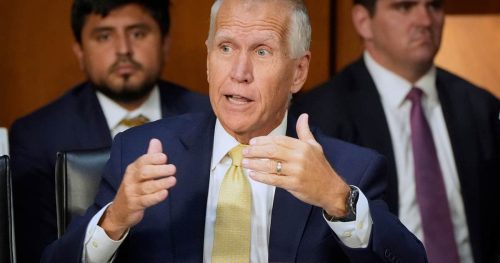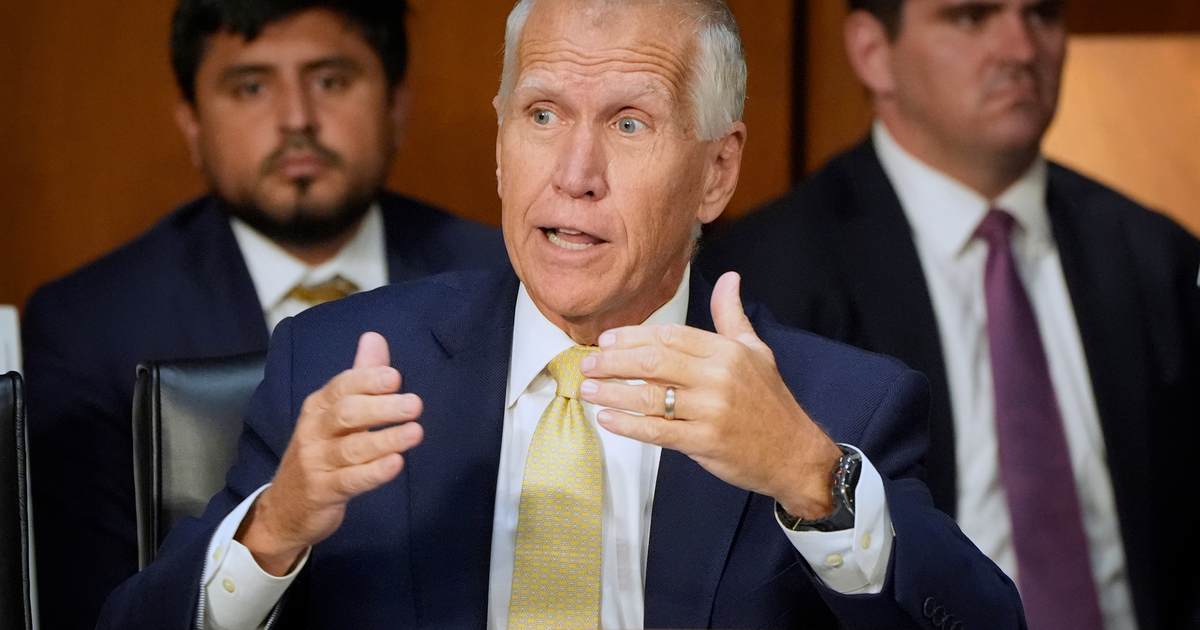
Senator Thom Tillis drew sharp fire for railing against the current SecWar and for how he framed the resignation of Army Secretary Dan Driscoll, a move that looked like a political misstep and stirred anger across the spectrum.
Thom Tillis weighed in publicly as Army Secretary Dan Driscoll stepped down, and his words landed harder than he probably expected. The criticism targeted Pete Hegseth, the sitting Secretary of War, and it read like a statewide airing of internal GOP grievances. For a Senate Republican with a long record on the Armed Services Committee, the post came off as both personal and political.
There is a sharp irony here: Tillis supported Hegseth’s confirmation at the end of the day. He reportedly tried to block the nomination at one point, but when that effort failed he ultimately voted to confirm. That sequence makes a blistering public rebuke feel less like principle and more like a political calculation gone wrong.
Our understanding and assumptions of warfare are being challenged in places like Ukraine and Iran, and Dan understands the old way of doing business no longer applies. He and General George began a transformative period of innovation in how we array our forces and equip our Soldiers. He challenged our legacy approach to manning and procurement. Most of all, he cared deeply about the men and women in our Army formations and quickly earned their respect.
https://x.com/SenThomTillis/status/2095175195648512020
If we had a @SecWar [Hegseth] who maintained the same priorities and forward-thinking, he would be fighting to retain talented leaders like Dan and the many flag officers he has forced into retirement. Instead, he is creating a leadership void at the top of our military ranks.
I served on Senate Armed Services for 8 years and as chair or ranking member of the Personnel and Readiness subcommittee. I have never witnessed more inept management of the brave men and women who serve our country. He is intimidated by competence and retreats to ginning up culture wars instead of soberly attending to the vital work of our national defense and the health and well-being of our fighting force.
Those quoted lines pack a punch and they were meant to. But Republicans should expect internal disagreements to be handled with care, not amplified in a way that looks like public shaming. The GOP’s message is stronger when it’s unified on major issues like national defense, and this kind of spectacle undermines discipline at a moment when voters want toughness and clarity.
It’s not just optics. When a senator who once fought a nomination ends up denouncing the officeholder he helped confirm, voters notice. Conservative activists and base voters remember loyalty, and they also remember when leaders fall into the habit of posturing rather than building durable policy wins. That erosion of trust has real political costs.
There’s also the practical side. Military leadership and morale are sensitive matters. Public calls that frame personnel moves as the result of petty infighting can make careers and institutions harder to manage. For Republicans who care about a strong armed force, airing this dispute on a national stage risks turning internal policy debate into a public distraction.
From a party perspective, the larger problem is erosion of credibility. When conservative voters see Republican officials attacking each other, it hands Democrats an easy talking point about dysfunction. That does not help the cause of conservative governance, and it makes the job of defending nominees and reforming institutions tougher.
Tillis’s approach also exposed him to counterattacks from both the left and the right. Democrats were never going to give him a pass, and many conservatives felt betrayed after seeing him push back against positions their side values. That double exposure is poor strategy for any Republican trying to hold a fragile coalition together.
There is a narrower lesson here about the use of rhetoric. Words matter in politics, and especially in matters related to our military. Accusing a sitting cabinet official of creating a leadership void or being intimidated by competence is harsh language with lasting consequences. Republicans need to balance blunt truth-telling with tactical restraint.
If the goal was to steer the debate about how the Pentagon adapts to modern threats, there were quieter, more effective paths. Committee hearings, private conversations, and targeted oversight all move policy without turning a personnel dispute into a viral moment. Public rebukes are sometimes necessary, but they should be chosen deliberately, not thrown off the cuff.
The bottom line is simple: political actors pay a price when they misjudge how a message will land, especially inside their own party. Tillis’s tweet and follow-up commentary created a political headache that could have been avoided with a steadier hand. The fallout is now part of the record, and Republicans who value unity and clear defense policy will be watching how this plays out.