Federal prosecutors say they tore open an illicit Chinese-run marketplace that helped funnel billions from American victims, seized crypto linked to the operation, and exposed networks that used forced labor and U.S. platforms to mask fraud.
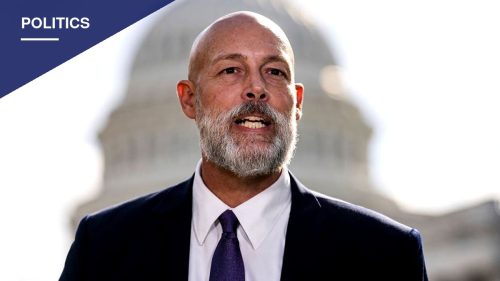
U.S. Attorney Jeanine Pirro announced that the Justice Department’s Scam Center Strike Force disrupted a sprawling, transnational scam network tied to Chinese-language marketplaces. The operation targeted platforms that law enforcement says turned Americans into targets and turned stolen funds into clean cryptocurrency. Officials call this an industrial-scale criminal effort that relied on U.S. infrastructure and online services to operate.
Pirro warned these transnational criminal organizations “are stealing, conning, and scamming Americans out of their life savings.” She said investigators have been able to map out how these groups recruit, run, and monetize massive fraud campaigns aimed squarely at everyday people. Her tone left little doubt she sees this as a direct assault on American households and their finances.
At the press conference Pirro added that the DOJ has “made enormous strides in fighting a previously unknown and unidentified network of overseas criminals who are focused on us and our money.” She framed the work as a focused campaign that finally has the resources and legal tools to break open these schemes. That progress is being credited in part to recent policy moves and sharper coordination across agencies.
Pirro described the criminal model bluntly: these groups use U.S. platforms, banks, and victims as the product and characterized it as “a generational wealth transfer from Main Street America to Chinese organized crime.” She emphasized that the harm isn’t abstract financial loss but a steady extraction of savings and trust from ordinary Americans. The language underlined how the DOJ views the activity as systemic theft, not isolated scams.
She did not mince words about the labor behind the scams: “And they are staffed with human trafficked labor,” she continued. “These are not basement scammers. These are factories. They are compounds that have quotas, shifts. They beat the people working there, and they even have balance sheets.” That account painted a picture of industrialized crime operating like a business, complete with exploitation of vulnerable workers.
Now, President Trump made this a priority in March of 2026 when he signed an executive order making it clear that he wanted to combat cybercrime and fraud and predatory schemes against American citizens, and he has given us the ability and the resources that we need to fight this particular kind of blight. And if you don’t think this affects you, a little primer: seven out of 10 adults globally have encountered a scam one way or another. They are repeatedly trying to rip you off. They are in Southeast Asia, and there are hundreds of, as I said, industrial-scale scam compounds. And the estimates put their earnings at about $40 billion a year.
The Strike Force worked with Treasury to secure a court warrant, seize Telegram channels used by the operation, and take control of two cryptocurrency wallets holding about $12 million tied to Xinbi Guarantee. Prosecutors also moved to restrict 47 additional wallets connected to the same network. Those actions are being presented as concrete steps to cut off the flow of stolen funds and to unmask the infrastructure behind the laundering.
Xinbi Guarantee is described as a Chinese-language online marketplace that cropped up on Telegram in 2022 and functioned as a kind of escrow service for crypto transactions. Investigators say it presented itself as a middleman to protect traders, but it became an enabling platform for laundering and other illicit services. Authorities portray Xinbi as central to how scammers paid, hid, and moved ill-gotten gains through the crypto ecosystem.
In practice, Xinbi held payments and released them after deals, ostensibly to prevent fraud between criminals. That escrow function made it useful to fraud rings that wanted a trusted third party to move money without leaving an obvious trail. Prosecutors say platforms like this let sophisticated schemes scale up and coordinate across borders with minimal friction.
https://x.com/FoxNews/status/2097689558418629029
These marketplaces also linked buyers and sellers for services that keep large scam networks running: money-laundering tools, stolen personal data, fake identification, and systems used to reach and manipulate victims. Law enforcement officials argue that breaking those connections is essential to stopping the fraud at scale. The complaint paints a picture of a marketplace ecosystem deliberately built to fuel criminal enterprises.
“Xinbi Guarantee has served as a giant, purportedly US-incorporated illicit online marketplace for online scams that primarily offers money laundering services,” Elliptic cofounder Tom Robinson told WIRED. His view aligns with investigators who see these platforms as the backbone of many modern scams. That independent assessment reinforces the DOJ narrative about how structurally harmful these operations have become.
Pirro earlier that “We have charged Chinese bosses who ran a scam compound in Burma where thousands were trafficked, enslaved, beaten and then forced to steal from Americans… They were ordered to pose as U.S. banks, as the New York City Police Department, to steal Americans’ life savings.” She stressed that charging leaders of these operations is meant to disrupt leadership and deter follow-on activity. For Republicans and many law enforcement supporters, the move underscores a commitment to defend citizens and hold foreign criminal enterprises to account.