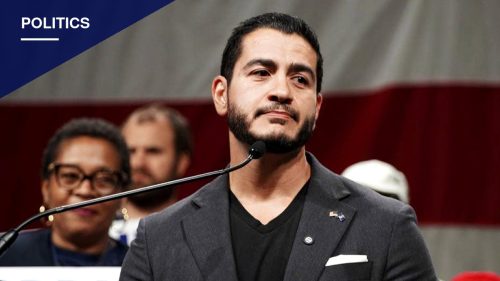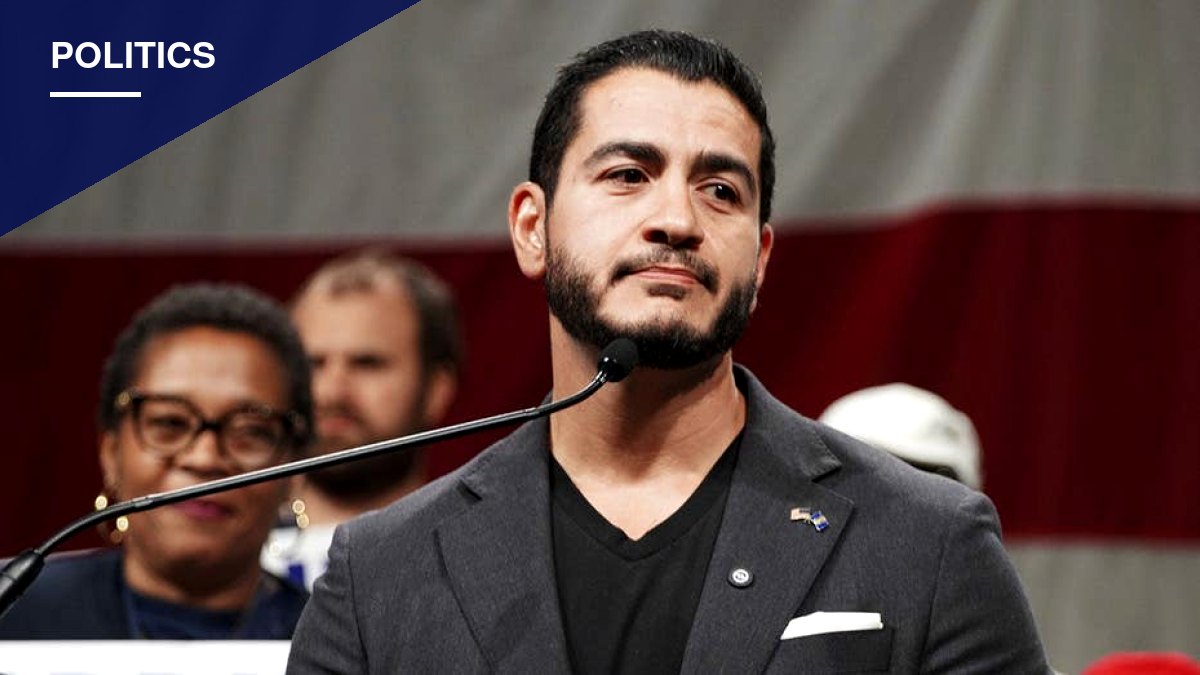
Michigan Democratic Senate nominee Abdul El-Sayed spent roughly an hour answering pointed questions Tuesday night in Detroit about his ties to streamer Hasan Piker, his stance on Israel, campaign donations and his relationship with democratic socialist groups — after Republican rival Mike Rogers declined to show up for the scheduled debate.
Rogers had accepted an invitation from the station along with El-Sayed on Aug. 5, the day after Michigan’s primary, but did not formally back out until the morning of the debate, citing objections to moderator Roop Raj, whom he called biased. That left El-Sayed alone on stage to take questions from Raj, viewers and the studio audience.
Raj pressed El-Sayed on whether he could “completely, 100%” disavow offensive comments made by Piker, a streamer with millions of followers whom El-Sayed has appeared alongside. The question came two days after El-Sayed had sidestepped similar questioning on CBS News’ “Face the Nation.”
“Absolutely,” El-Sayed said Tuesday. “When Hasan made these comments about Jewish Americans and Jewish Michiganders, I disavowed them entirely.”
When Raj pushed further, citing Piker’s remarks about 9/11 and Jewish Americans, El-Sayed said there were “many, many things” Piker has said that he disagrees with. But he defended engaging with Piker at all, arguing that talking to someone doesn’t mean endorsing everything they believe, and said he wanted to give Piker’s audience “a pathway back into our politics.”
On Israel, El-Sayed would not give a yes-or-no answer when asked whether the United States should continue recognizing it as a Jewish state. He said he believes in “equal rights to peace, dignity and self-determination for Palestinians and Jewish Israelis alike.”
“People ask this question about the right of the state that actually exists to exist, but I never get asked about the right of the state that does not exist to exist,” El-Sayed said. “I don’t get asked about whether or not the state that exists has a right to use our tax dollars to do heinous things. I don’t get asked about whether or not the kids in Detroit have a right to their tax dollars, so I just think the premise of the question is built around trying to ask people to agree to the current status quo that we have seen become a deeply unstable, deeply violent equilibrium.”
The exchange grew tense when El-Sayed was asked whether he would return campaign contributions from individuals affiliated with the Council on American-Islamic Relations, or CAIR. Fox News Digital has reported El-Sayed’s campaign took in more than $115,000 from at least 41 people who worked for, previously worked for or held leadership roles at CAIR. The group has long faced scrutiny over alleged ties to Hamas, was named an unindicted co-conspirator in the 2007 Holy Land Foundation terrorism-financing case, and has been designated a terrorist organization by the United Arab Emirates as well as formally labeled as such in Florida and Texas.
Rather than answering directly, El-Sayed defended CAIR as a civil rights organization and accused Rogers of trying to make the race “about the color of my skin or how I pray,” saying his opponent was attempting to turn the contest into a culture war over his ethnicity and Muslim faith.
“I believe in an America that is big enough for all of us: Mike Rogers, Donald Trump, JD Vance,” El-Sayed said. “They believe that some people are more American than others. They think that if you pray a different way, your family comes from a different place, that somehow there’s an asterisk on your American identity.”
Raj responded by noting that Vance is the father of children with an Indian-American mother and that the second lady is an Indian woman who immigrated to the U.S. El-Sayed replied, “I think there is diversity amongst that party.”
El-Sayed also faced questions about his relationship with the Democratic Socialists of America. “I’m not a part of the organization,” he said, going on to argue that corporate consolidation, not government regulation, is the bigger threat to free markets. “We don’t live in capitalism. We live in corporatism,” he said. “You don’t have to be a socialist to believe that people deserve health care. You don’t have to be a socialist to believe that we need good roads.”
El-Sayed has consistently rejected the socialist label and calls himself a capitalist. DSA did not endorse his campaign, though some prominent democratic socialists have supported or been affiliated with his candidacy. Fox News Digital has previously reported that El-Sayed spoke at six DSA chapter events between 2017 and 2020, including as a keynote speaker at a 2019 fundraiser, and that organizers have called him a “longtime friend of Detroit DSA.” El-Sayed told the Wall Street Journal in July he was “not technically or practically DSA.”
The two candidates are next scheduled to debate Oct. 8 at WOOD-TV in Grand Rapids, followed by another debate Oct. 21 at WXYZ in Detroit ahead of the November general election.