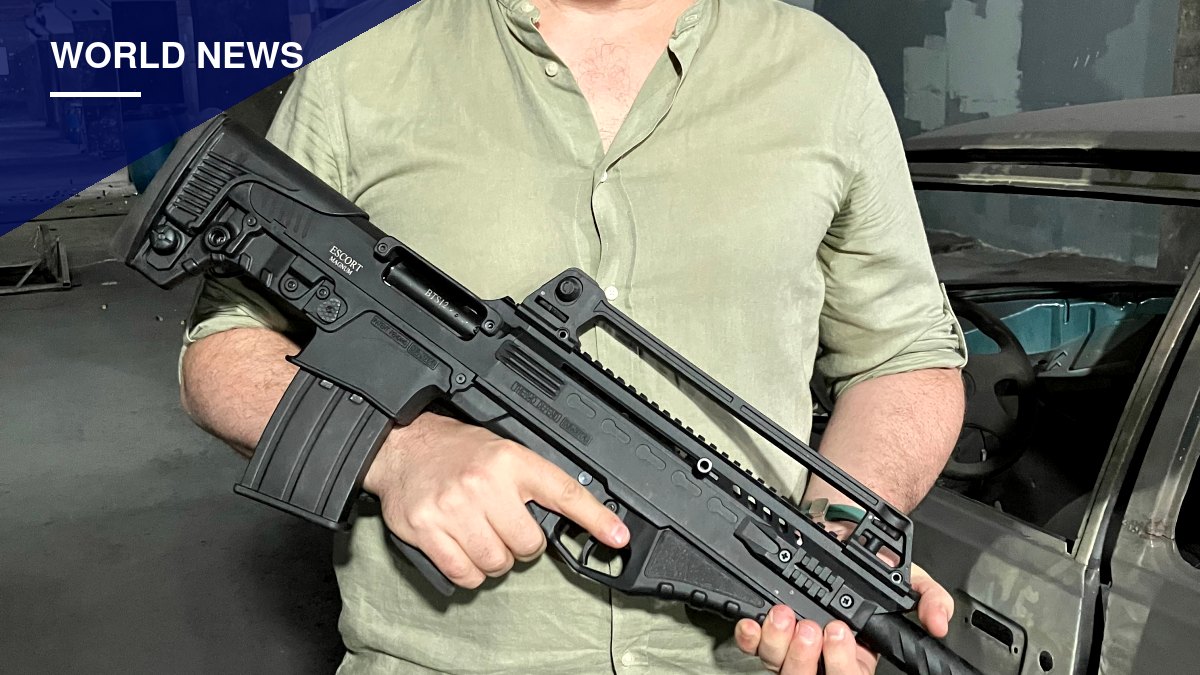
In Zaporizhzhia, a city of 750,000 people on the River Dnipro, demand for semiautomatic shotguns has surged this summer as Russian FPV (First-Person-View) drones increasingly target civilians, not just soldiers on the front line.
Volodymyr Sukhomlyn, 46, runs a shooting range and gun store in the city and says the weapon of choice has shifted. “When the war first broke out, it was mainly rifles that people wanted,” he said. “Now it’s shotguns that are in demand. If you train properly, your chances of bringing an FPV down are quite high. Although it may come for you while you try to shoot it, so you need a very steady nerve.”
Zaporizhzhia has been a strategic target since the start of the war, but Russian troops remain roughly 20 miles to the southeast. Instead, the city faces near-constant aerial attacks — from FPV drones to missiles and Iranian-made shaheed drones, gasoline-powered UAVs known for a distinctive engine whine.
Last week an overnight shaheed strike hit a mile from a downtown hotel, destroying a shopping mall — the third mall in the city struck in two months. Gas stations, coffee stands and private homes have also been hit.
Farmers, Bus Drivers and Cabbies Arm Up
Sukhomlyn’s underground shooting range, set in a former Soviet industrial building, has become a training ground for both soldiers and civilians, since outdoor rifle ranges are considered too exposed to drone attack. The floor is scattered with shotgun cartridges, evidence of how central the weapon has become to countering the drone threat. Shotguns fire pellets that spray over a wide area, giving users a better chance of striking a fast-moving target than a single rifle round would.
“To start off, it was mainly people living in the countryside on the southern outskirts of Zaporizhzhia who were buying shotguns,” Sukhomlyn said. “A lot of them are farmers, and some even keep one in their tractor or combine harvester when they’re out in the fields. But more recently it’s been bus drivers and cabbies buying them, too — anyone who is out on the streets a lot.”
The shift reflects how the war has reached ordinary daily life in the city. Earlier this month, an FPV attack injured several people at a supermarket. Another struck the upper floors of a government building downtown.
“I heard it coming and we had to hide in a shop when it exploded,” said Julia Sologub, 31, a local resident. “It used to be just a problem for soldiers — now it’s one for civilians, too.”
A Difficult Target
Some Ukrainian shooting ranges now offer VR-based simulation training specifically for shooting down FPVs. But hitting one is far from simple — the drones can weave, dive and travel at speeds of 100 mph or more. Striking one at close range also risks detonating its payload.
At Sukhomlyn’s downtown store, a drone brought down by a local resident is mounted on the wall as a kind of trophy. But not everyone recommends the attempt. A U.S. military volunteer serving with Ukraine’s Armed Forces, known as “Pip,” described being chased by an FPV while driving away from the battlefield — one of the most frightening moments of his time in the country.
“We were just about to reach for our shotgun, but then luckily the drone ran out of battery and crashed to the ground,” he said. “You can bring one down with a shotgun, but it’s certainly not easy. It all depends on the distance, the skill of the enemy pilot — and your own nerves.”