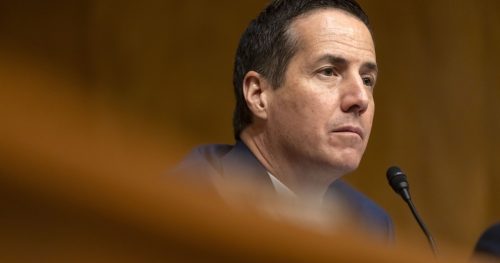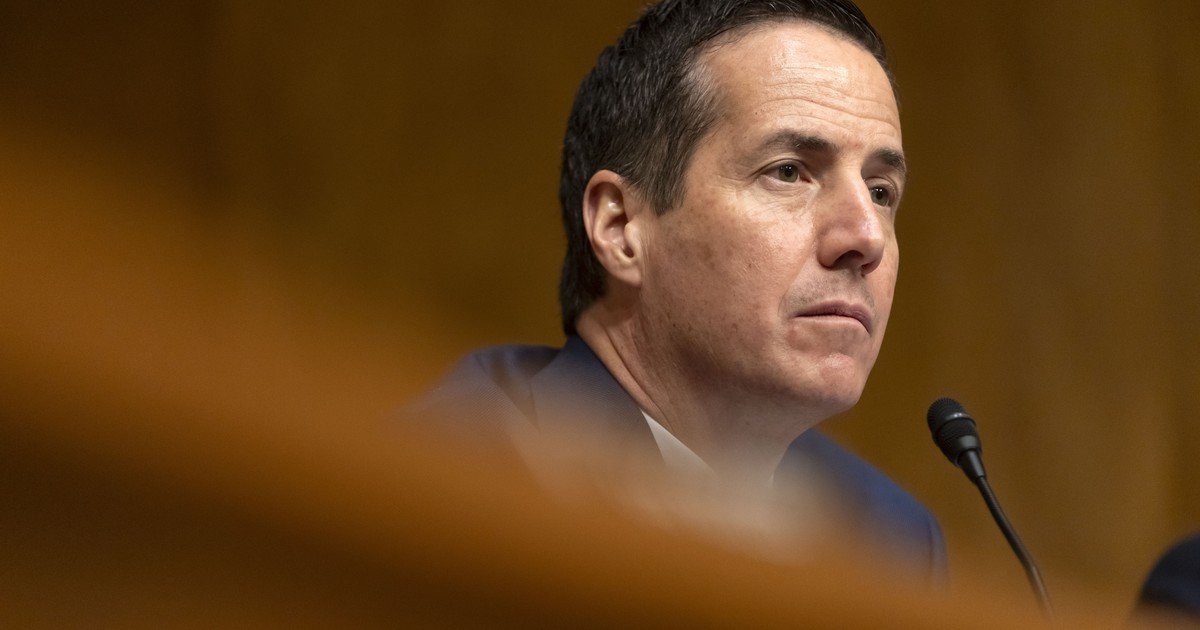
Senator Bernie Moreno pressed Connecticut and USTR over two separate fights: why a state-issued driver’s license went to an illegal alien who then killed an Ohio resident, and why South Korea is allegedly targeting American companies unfairly.
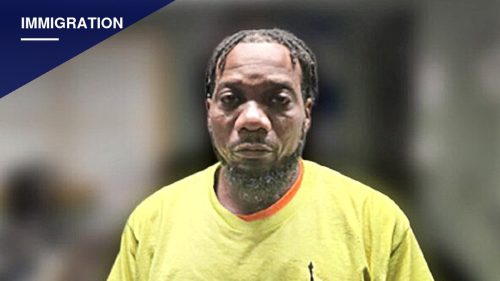
Senator Moreno has stepped into a raw issue of public safety and accountability, asking Connecticut’s governor for answers after an Ohioan was killed by a driver in the state who reportedly held a Connecticut driver’s license while in the country illegally. He framed this as part of a broader pattern of state policies that, in his view, make communities less safe and shield some people from consequences. Moreno’s tone is direct and unforgiving, demanding explanations and accountability.
It gets worse: Connecticut has issued some 60,000 licenses to illegal aliens, a number Moreno highlighted to underline scope and seriousness. He asked Gov. Ned Lamont to explain how this policy allowed someone without lawful status to hold state identification that played a role in a fatal crash. Moreno also sought an apology for the affected family, a request he expects Lamont to refuse but that he believes the public deserves.
Republicans argue these permissive policies are political calculations, not safety-minded choices, and they point to predictable, tragic outcomes. Families like Marcus Coleman’s have been left with irreversible damage after collisions involving drivers without proper legal standing, and advocates on the right say those consequences are avoidable. That argument aims to force a conversation about liability, enforcement, and state responsibility.
https://x.com/berniemoreno/status/2094940301416632773
Beyond Connecticut, Moreno pushed the trade envelope by writing to U.S. Trade Representative Jamieson Greer about South Korea’s treatment of American businesses. He warned that Seoul’s recent regulatory tactics appear aimed at U.S. companies and said Washington should respond firmly to protect American interests. Moreno’s letters blend sharp political voice with specific requests for official action.
“Reciprocity is not optional. I respectfully request that USTR initiate a formal investigation under available authorities, including Section 301 if warranted, pursue consultations under our trade agreements, and prepare proportionate countermeasures to restore fair treatment for American companies,” wrote Senator Moreno. He also wrote, “The United States has stood by South Korea through war and reconstruction; I will not stand by while Seoul ungratefully weaponizes its government against the very innovators who help power both our economies.”
The Honorable Jamieson Greer
United States Trade Representative
Office of the United States Trade Representative
600 17th Street NW
Washington, DC 20508
Dear Ambassador Greer,
I write to urge immediate action by the Office of the United States Trade Representative (“USTR”) to address the sustained and aggressive targeting of American companies by the Government of the Republic of Korea (“South Korea”). Seoul is currently conducting a campaign of open hostility toward foreign enterprises through onerous compliance requirements, excessive monetary fines, criminal prosecution of business executives, and biased regulatory enforcement. Alarmingly, South Korea’s aggression is disproportionately directed at American companies, undermining our longstanding alliance and trade agreements. In their own words, American companies in South Korea face “lack of due process and procedural unfairness.” This is unacceptable and cannot continue unanswered.
More than 70 years ago, the United States lost nearly 37,000 lives in the Korean War defending the people of South Korea from communist aggression. American forces, alongside our Korean partners, stopped the advance that would have extinguished freedom on the peninsula. In the decades that followed, the United States provided the security umbrella, economic assistance, open markets, technology cooperation, and investment climate that allowed South Korea to rise into one of the world’s leading economies. For over half a century, the United States has underwritten the presence of nearly 30,000 troops, extended nuclear deterrence against the North Korean threat, funded joint defense capabilities, and maintained preferential market access that has enabled South Korean industry to flourish. Today, the United States continues to financially bolster South Korea and the greater region’s security through forward-deployed forces, intelligence sharing, and advanced weapons systems—costs singularly borne by tax-paying American families.
Thus, it is outrageous that South Korea has repaid this partnership with systematic discrimination against American companies. One particularly damning example is the regulatory crusade waged against Coupang Inc. and its South Korean subsidiary (“Coupang”). Coupang, headquartered in the United States and operating as the largest online retailer in South Korea, referred to as the ‘Amazon of Asia,’ is a shining example of joint American-South Korean innovation. However, Coupang has recently faced a regulatory “whole-of-government assault.” Following a data breach in 2025, Coupang has been forced to endure sweeping investigations from ten different government agencies, threats to suspend operations, and government portrayals of Coupang as a criminal organization. Disturbingly, South Korea also imposed on Coupang the largest monetary fine it has ever levied on a single company, and several of Coupang’s executives, including American citizens, are facing criminal charges in South Korea.
This specific data breach deserves investigation and may warrant even-handed enforcement. However, the larger pattern emerging in South Korea is cause for intense concern. Seoul has weaponized a small incident into a pretext for widespread weaponization against American enterprise. This practice, well documented outside the Coupang case study, is deeply unfair to American businesses, workers, investors, and exporters. Such conduct also violates the spirit and letter of recently negotiated bilateral trade understandings, which prohibit discriminatory regulatory practices.
Reciprocity is not optional. I respectfully request that USTR initiate a formal investigation under available authorities, including Section 301 if warranted, pursue consultations under our trade agreements, and prepare proportionate countermeasures to restore fair treatment for American companies. The United States has stood by South Korea through war and reconstruction; I will not stand by while Seoul ungratefully weaponizes its government against the very innovators who help power both our economies. Thank you for your attention to this urgent matter. I look forward to your prompt response and to working with you to defend American interests.
Sincerely,
BERNIE MORENO
United States Senator
Moreno’s messaging links two themes: secure borders and fair economic treatment for American firms abroad. Both letters press for concrete responses from officials tasked with enforcement, and both push a Republican argument that policy should protect citizens and companies first. The questions he raises about state licensing practices and foreign regulatory aggression are likely to keep this story in play as officials respond.