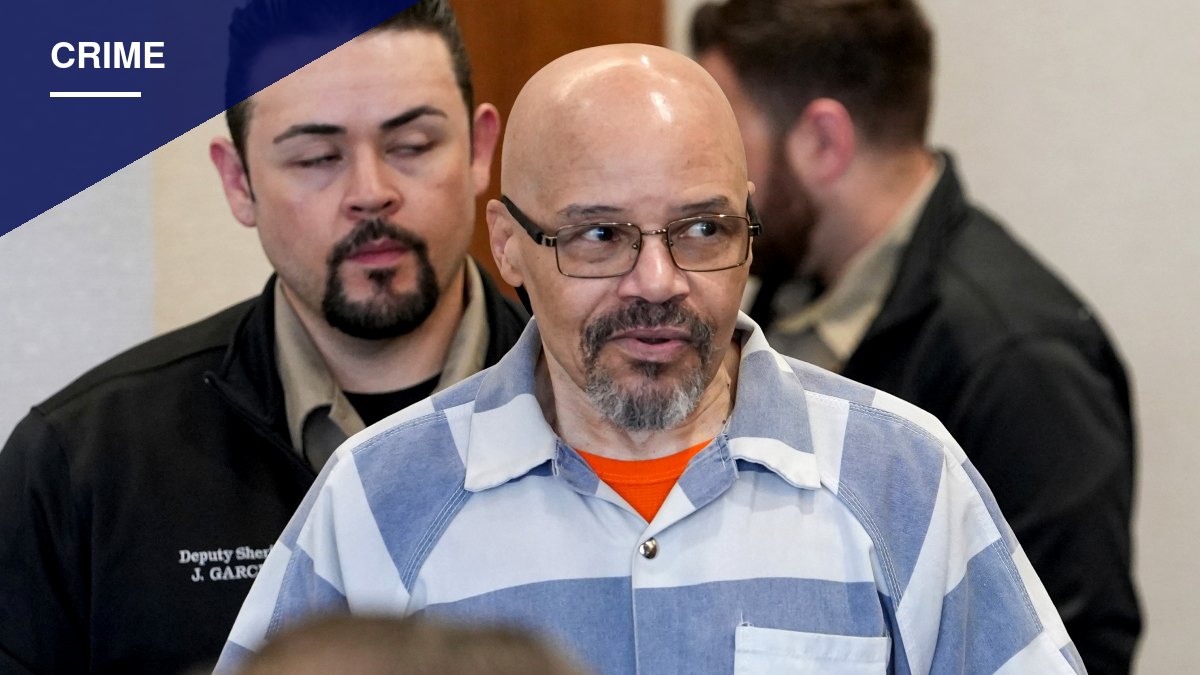
Utah County prosecutors have withdrawn their bid to seek the death penalty against Douglas Stewart Carter, a 71-year-old Provo man who has spent decades on death row for the 1985 killing of Eva Olesen, after new DNA testing failed to match him to evidence from the crime scene.
Carter was sentenced to death in 1985 after a jury convicted him of murdering Olesen, the aunt of a former Provo police chief. No physical evidence tied him to the scene at the time; the conviction rested on a signed confession and testimony from two witnesses who said Carter had bragged about the killing. Olesen was white; Carter is Black.
Last year the Utah Supreme Court ordered a new trial, citing misconduct by investigators. Carter remains in custody and maintains his innocence. A retrial is scheduled to begin next July and is expected to last eight weeks.
Utah County Attorney Jeffrey Gray told the court in a Wednesday filing that the state is withdrawing its earlier notice of intent to seek the death penalty. Gray said DNA results received Tuesday excluded Carter as a match to blood found on a doorknob and to material recovered from the handle of the knife used to stab Olesen, who was also shot. He said prosecutors are reevaluating how to proceed with the case.
Gray was careful to note that the new DNA findings “does not necessarily exonerate Carter of the murder,” pointing out that the handgun used in the shooting was never recovered and that Carter had confessed.
Judge Derek Pullan has set a bond hearing for Monday. Defense attorney Neal Hamilton said he expects Carter to be released pending trial.
“It’s not time to try to save face and continue with a tainted prosecution,” Hamilton said. “They know they don’t have a case. The moral obligation is to dismiss.”
Coerced confession and coached witnesses, defense says
Carter has long said his signed confession was coerced. The two witnesses who said he bragged about the killing — a couple living in the United States without legal status — later said police and prosecutors had offered to pay their rent, coached them to lie in court, and threatened them and their son with deportation if they refused to implicate Carter.
Carter’s attorneys also say witnesses saw a white man fleeing the scene, and that an investigator suppressed evidence pointing to other suspects, including Olesen’s husband, Orla Olesen. The defense alleges prosecutors were close to filing charges against the husband but that a Provo police lieutenant asked them to hold off so he could keep investigating — and that Carter was identified as a suspect soon after. Orla Olesen, who died in 2009, had told police he found his wife dead in their home, partially undressed with her hands tied behind her back.
Family awaits answers
Members of Olesen’s family testified at a hearing last month that they believed Carter could pose a safety risk to them if released. In a statement issued Thursday through the Utah County Attorney’s Office, the family said they “will not comment on the guilt or innocence of any individual” while prosecutors determine next steps.
“The latest developments have raised difficult questions and once again left our family without the sense of resolution we had hoped for after so many years,” the family said.