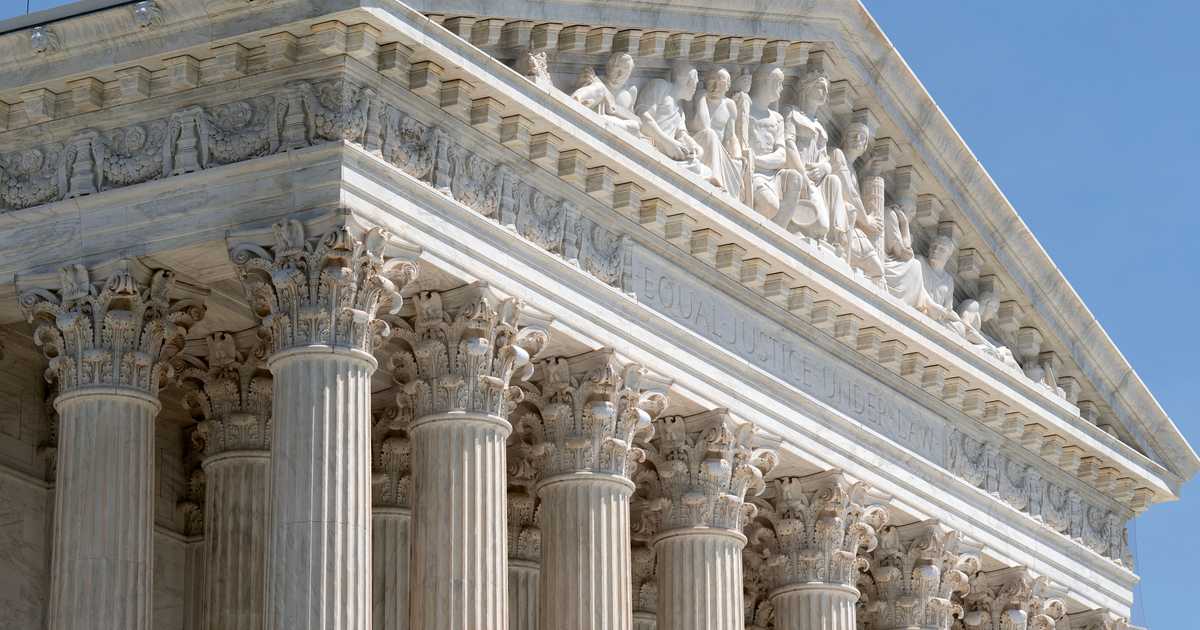
The Supreme Court’s refusal to clear Missouri’s contested congressional map has sent the state back to its 2022 lines, injected chaos into the run-up to the midterms, and opened the door for more courtroom fights and a possible ballot initiative on whether the new map should ever take effect.
The high court declined to take up Missouri’s bid to install a new congressional map that would have given Republicans one additional House seat, and that decision immediately reshaped the battlefield for candidates and voters. Republicans who had expected the adjusted lines to ward off expensive and uncertain contests now face renewed uncertainty as campaigns scramble to adapt. The timing could not be worse with the midterms approaching, and conservative operatives are already calling for clearer rules from the courts to avoid election-day confusion.
The decision to not take up the case, made by Justice Brett Kavanaugh, forced the state to revert back to the 2022 congressional map but allowed for Missouri to include a ballot initiative to decide whether or not the state should implement the new map going forward in future elections. That compromise means voters might get a direct say in future cycles, but it also leaves this year’s contests stuck between two rulings and competing legal logic. The Missouri Supreme Court had earlier tossed the 2025 map in favor of the 2022 map, setting the stage for the current tangle.
Complicating the picture further, minutes after Kavanaugh’s move, Judge Stephen Clark issued an order saying the state could proceed with the 2025 map for the midterms, arguing that changing maps after the primary would nullify ballots and harm voters. That ruling directly contradicted the immediate effect of the Supreme Court’s refusal to intervene, and it created a split in authority that campaign lawyers will race to resolve. The back-and-forth leaves election officials with a near-impossible task of preparing under shifting judicial orders.
https://x.com/scotus_wire/status/2097439652600820034
The dueling decisions almost guarantee more litigation as parties seek formal clarity with Election Day looming just 56 days away, and Republicans will press the point that voters deserve a stable, predictable map. From a conservative perspective, these last-minute twists are the kind of mess that undermines confidence in elections and hands advantage to whoever can exploit the confusion. Expect appeals and emergency filings to dominate headlines while candidates try to keep their ground operations focused on turnout rather than legal minutiae.
This episode unfolds amid a wider legal environment that has generally favored Republican positions on midterm-related disputes, including recent changes to the Voting Rights Act and a failed attempt to redraw Republican seats in Virginia. Those wins do not make this mess any less urgent, but they do signal that conservative legal teams remain competitive in defending maps and seat counts nationwide. Still, piecemeal rulings and conflicting orders hurt the party as much as they help when they inject unpredictability into key races.
For campaigns, the map uncertainty changes where resources flow, how volunteers are deployed, and which voters are targeted in the final stretch. Fundraising pitches that promised safe Republican pickups must now be recalibrated, and candidates in swing districts face the prospect of running under contested lines that might be overturned. That operational chaos benefits no one who wants fair, orderly elections, and Republicans will argue loudly that courts should move swiftly to settle the record so campaigns can get back to talking about issues.
From a governance standpoint, the split between a federal justice declining to intervene and a state judge ordering the use of a different map exposes weaknesses in how election law is resolved under pressure. The patchwork of rulings highlights the need for clear, enforceable rules about when maps can change relative to primaries and general elections. Conservatives worried about ballot integrity will emphasize that last-minute changes create the perception of manipulation, which does real damage to public trust.
As the next steps unfold, higher courts are likely to be asked to step in to provide a uniform directive, and the ballot initiative option means voters could ultimately have the final say in future map selection. Meanwhile, candidates and party operatives will operate in this gray zone, trying to convert uncertainty into advantage while warning voters against complacency. The legal and political fallout from these decisions will play out in litigators’ briefs and campaign memos over the coming weeks, shaping which districts are truly in play and how the GOP defends its House prospects.