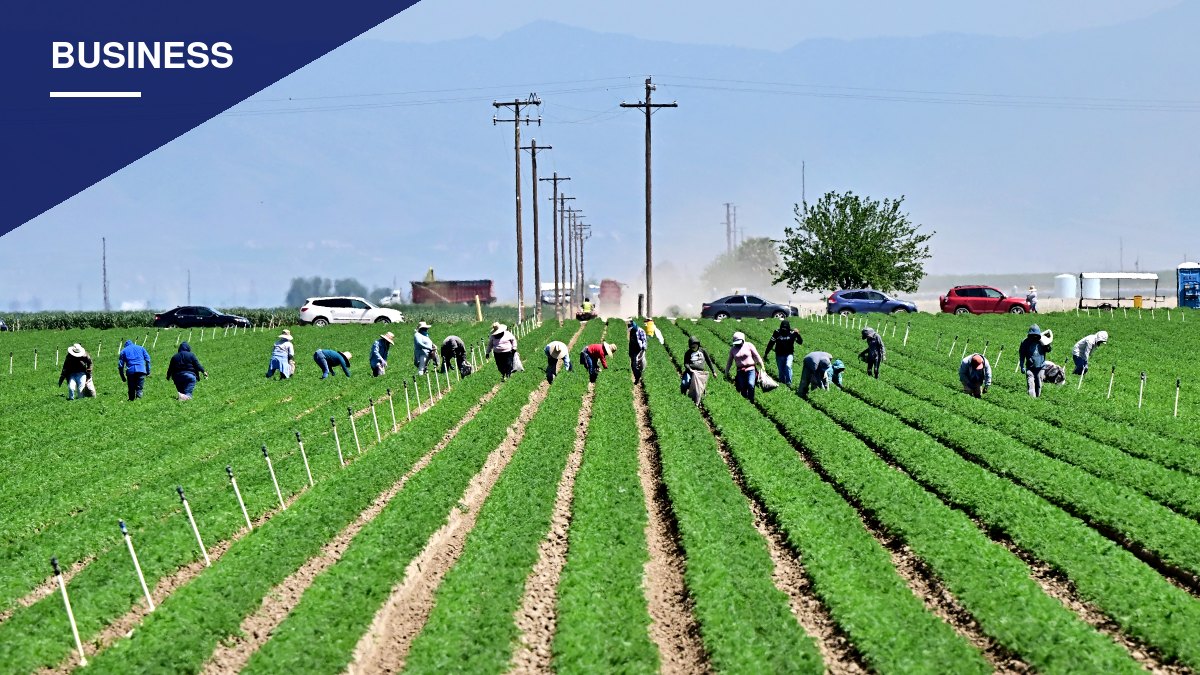
A new California law will raise the minimum wage for many farmworkers to $19.75 an hour starting next year, up from $16.90, but Fresno County growers say the increase could end up costing consumers at the grocery store.
The law applies to workers brought into the state through the federal H-2A guest worker program, which allows foreign laborers to fill temporary or seasonal farm jobs, as well as to domestic farmworkers performing similar work.
State lawmakers who backed the bill said it was meant to help some of California’s lowest-paid workers, many of whom they say are already struggling to get by despite long hours and early mornings.
“This is a bottom-line wage that’ll help our farmworkers who bring so much to California,” said Assemblymember Maggy Krell (D), the bill’s author. “The truth of the matter is that those who are doing the hard work, waking up before dawn, and working on those farms are barely getting by, and some are not getting by at all.”
But Joe Del Bosque, a longtime Fresno County farmer who employs about 150 seasonal workers during the summer, told ABC 30 that the timing couldn’t be worse. Farms are already contending with rising costs for fuel, fertilizer and other supplies, he said, and the wage increase adds another expense on top of those.
“People are complaining about affordability. They’re complaining about the cost of food. They’re complaining about job loss and businesses moving out of the state, and then they come up with this bill that is no doubt going to increase the cost to farmers and eventually to consumers,” Del Bosque said.
Del Bosque said he expects the higher labor costs to move through the supply chain and ultimately show up in prices consumers pay for food.
Farmers’ associations that opposed the measure made similar arguments before it became law. The Western Growers Association and other groups wrote in a letter to lawmakers that the new mandate would make it harder for California producers to compete with farms in other states and countries, and could threaten jobs in rural communities.
Del Bosque warned that some farms may respond by cutting jobs or reducing hours, which he said would ultimately hurt the same farmworkers the law is meant to help.
The $19.75 wage floor won’t be fixed going forward — the law requires annual adjustments tied to inflation and cost-of-living changes.
The Western Growers Association said in an Oct. 2 post that it is considering legal action against the new law.