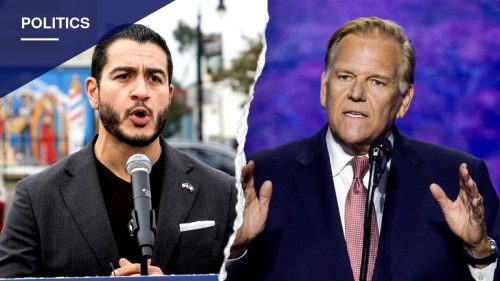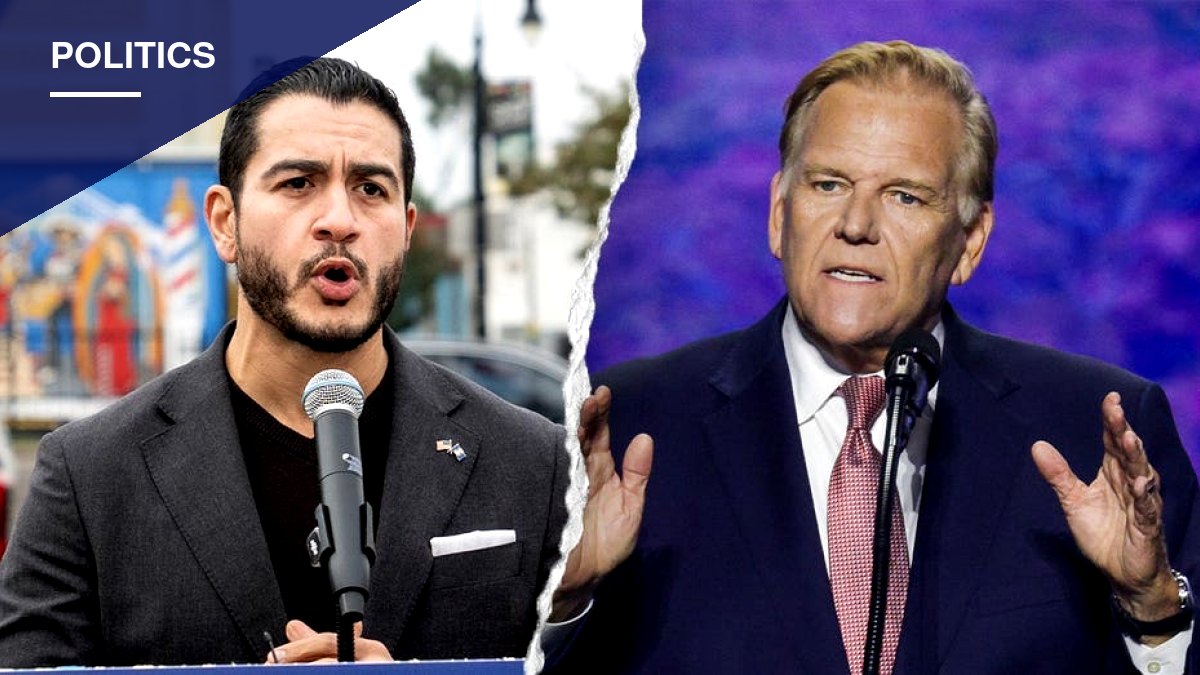
Republican Mike Rogers and Democrat Abdul El-Sayed met face-to-face for the first time Thursday night in a Grand Rapids debate that quickly turned personal, with the two U.S. Senate candidates trading accusations over credentials, finances and foreign policy rather than sticking to policy specifics.
The event was the first debate between the two candidates ahead of the November election. Rogers had skipped an earlier debate last month hosted by FOX 2 Detroit, saying he had concerns about the moderator’s impartiality.
What started as a question about affordability quickly turned into a shouting match. Rogers repeatedly questioned El-Sayed’s medical credentials and accused him of misleading voters, while El-Sayed accused Rogers of profiting from corporate connections since leaving Congress.
“He’s lying. So he lied about being a physician. He lied now about being an Egyptian citizen or not being an Egyptian citizen,” Rogers said. “That’s a con-man.”
El-Sayed, who holds a medical degree from Columbia University, pushed back and argued Rogers was trying to change the subject.
“He wanted to make this about him or me. But the question is about you,” El-Sayed said. “Can you afford your gas? Can you afford your groceries under this guy who’s going to rubber stamp everything Donald Trump tells him to rubber stamp?”
The two also argued over their personal finances. El-Sayed repeatedly brought up a Florida property and alleged yacht ownership by Rogers, which Rogers denied. Rogers, in turn, questioned El-Sayed’s investments and alleged property holdings in the United Arab Emirates, and criticized him for accepting money from billionaires while campaigning against corporate PAC donations.
The back-and-forth grew heated enough that moderator Rick Albin stepped in several times.
“Look, here’s the situation. We’ve got dozens of questions we want to get to. You can’t litigate all of these with 14 different rebuttals,” Albin told the candidates.
After a commercial break, Albin said that in 30 years of moderating debates, he had never seen candidates keep arguing through a commercial.
Divide Over Israel and Iran
Personal attacks aside, one of the clearest policy splits of the night came over Israel and Iran. Asked whether he’d support sending defensive weapons to Israel if it were attacked by Iran or another state, El-Sayed said no, repeating his opposition to using taxpayer money to fund foreign militaries.
“I don’t want our tax dollars buying weapons for other countries. I don’t know what’s so hard about that,” El-Sayed said.
He declined to say whether Israel or Iran posed a bigger threat to the United States despite being pressed by the moderator.
“I think both of them have proven dangerous in their own way,” El-Sayed said. “One at risk of attacking us, one getting us into wars. We have no business fighting.”
Rogers said he would support sending defensive weapons to Israel and reaffirmed his support for the country, while accusing El-Sayed of ties to individuals and groups supportive of terrorist organizations — allegations El-Sayed disputed.
The two also disagreed on whether the broader conflict could end while Iran retains the ability to produce a nuclear weapon and control over the Strait of Hormuz. El-Sayed blamed the conflict for rising gas prices and said Rogers backed an unnecessary war, arguing diplomacy could work even if Iran kept its nuclear capability. Rogers said Iran’s nuclear program had already been significantly weakened and that the war should end, but insisted Iran can’t be allowed to get a nuclear weapon.
Gas Prices and Health Care
On the economy, El-Sayed said he’d be open to federal price controls on domestically produced oil, calling high gas prices an emergency. “Look, I definitely think that’s something we should consider,” he said. Rogers rejected price controls and instead proposed temporary gas tax relief, diesel rebates and a pause on diesel exports.
Health care brought another sharp divide. El-Sayed defended his Medicare-for-all plan, saying people who want to keep private insurance could do so. Rogers argued the plan would wipe out existing private coverage and raise taxes significantly on families.
The debate comes in one of the most closely watched Senate races in the country. A late-September Fox News poll had El-Sayed ahead of Rogers 50% to 49% among likely voters, a statistical tie. The seat is being vacated by retiring Democratic Sen. Gary Peters, with Republicans hoping to flip it and Democrats working to hold on to it.