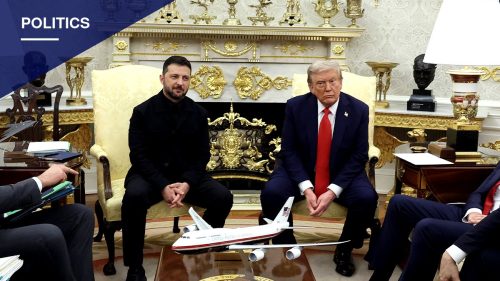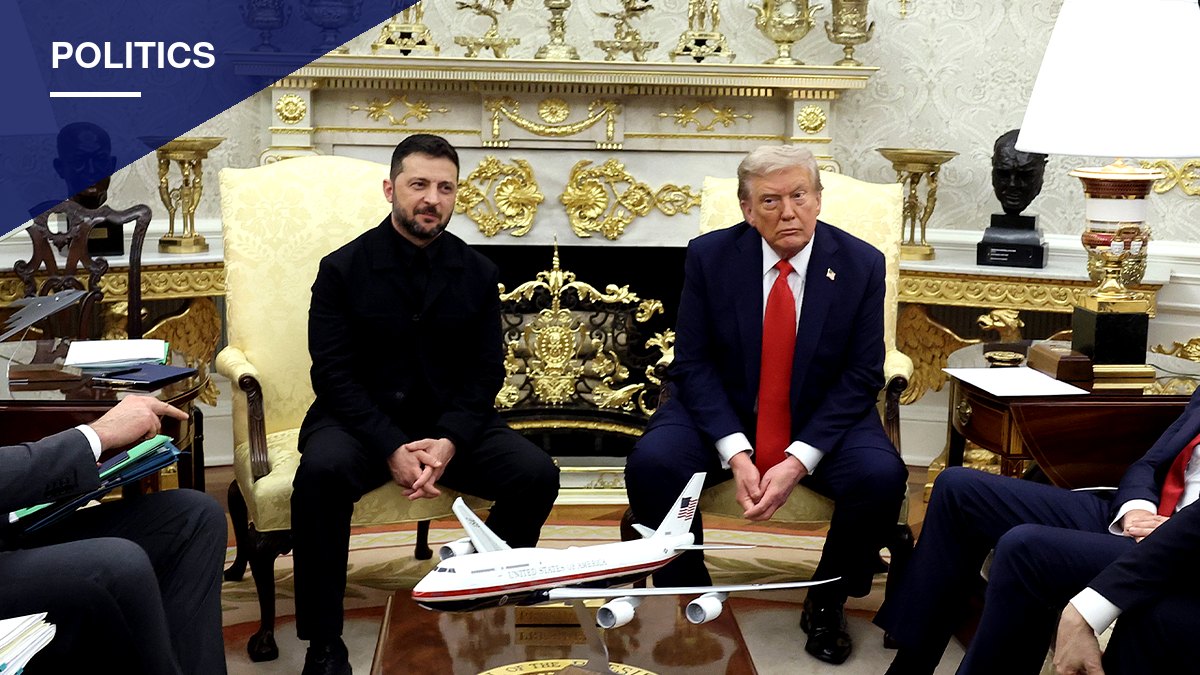
Former U.S. Ambassador to the European Union Gordon Sondland argues that President Trump’s approach to the war in Ukraine is driven less by a desire to simply end that conflict than by a broader strategic goal: freeing up American resources to focus on China.
In an opinion essay, Sondland, who served as ambassador to the EU during Trump’s first term, writes that Russia’s invasion of Ukraine remains “unequivocally” unjustified, calling Vladimir Putin the aggressor and Volodymyr Zelensky the defender of his country. But he argues that beyond that moral clarity, Trump is pursuing a much larger project of reshaping America’s global strategic priorities for decades to come.
Sondland’s central argument is that China, not Russia, represents the United States’ only truly consequential long-term rival. He describes Russia as a “declining power” with an economy dependent on natural resources and facing deteriorating demographics, whose ambitions are largely regional. China, by contrast, has the industrial capacity, financial resources and strategic patience to challenge American leadership globally for generations.
A Resource Problem
According to Sondland, the core dilemma facing Trump is that Europe is not yet capable of containing Russia on its own, leaving the U.S. responsible for devoting weapons, money and attention to European security that he argues would otherwise go toward deterring China. He writes that Trump’s apparent goal is to help Russia become a more “normal, economically engaged country” rather than a permanent adversary that drifts further into China’s orbit.
Sondland describes Putin as motivated by two things: money and territory. He argues Trump is positioned to offer Russia economic incentives while making territorial expansion too costly to pursue — calling this balancing act “the needle Trump is trying to thread.”
Advice for Zelensky
Sondland writes that while Ukraine’s strikes on Russian oil refineries make military sense — since petroleum revenue funds Putin’s war effort — such attacks can also complicate Trump’s broader negotiations, disrupt energy markets and create domestic political problems for the administration.
He argues Zelensky should shift his approach with Washington, moving away from requests for aid and toward asking how Ukraine can support Trump’s wider objectives while preserving its sovereignty. Sondland, who says he worked directly for Trump, stresses that the president places significant weight on personal relationships and access in his decision-making, citing diplomat George Ball’s remark that “nothing propinks like propinquity.” He suggests Zelensky should be in near-daily contact with Trump — not just when requesting weapons packages — to build the kind of trust that translates into influence.
Sondland notes that even Trump’s close aides Steve Witkoff and Jared Kushner, despite near-constant access to the president, are sometimes surprised by his decisions, underscoring what he calls Trump’s unusually personalized and fluid decision-making style.
Political Pressures on Both Sides
The essay also addresses the political stakes for each leader: Trump needs Republicans to hold the Senate in November’s elections, while Zelensky needs Ukraine to survive the coming winter. Sondland argues Zelensky should not intervene in American politics but should look for ways to help demonstrate that Trump’s foreign policy is producing results.
At the same time, Sondland insists any arrangement must be reciprocal. He writes that Zelensky cannot be expected to hold back from striking Russian energy infrastructure while Russia continues attacking Ukraine’s power plants and civilian infrastructure, and that any restraint from Ukraine must be matched by real restraint from Russia — not just more pressure on Kyiv to be patient.
Sondland argues that temporary measures, such as a diesel arrangement or sanctions reprieve, should not be mistaken for genuine normalization, which he says requires verifiable Russian behavior and real consequences if Russia resumes aggression.
Europe’s Role
Sondland closes by arguing that Europe must speed up its own military buildup so the United States is not left permanently underwriting European security while trying to prepare for a larger challenge from China. He frames the ultimate goal not as a single agreement or announcement, but as a Europe capable of defending itself, a Russia deterred from crossing its borders, and an America able to focus its strategic resources on China.
His summary message: Zelensky should help Trump succeed in his larger geopolitical goals while insisting Ukraine’s survival remain part of that success, and Trump should give Zelensky reason to trust that cooperation will not cost Ukraine its sovereignty.