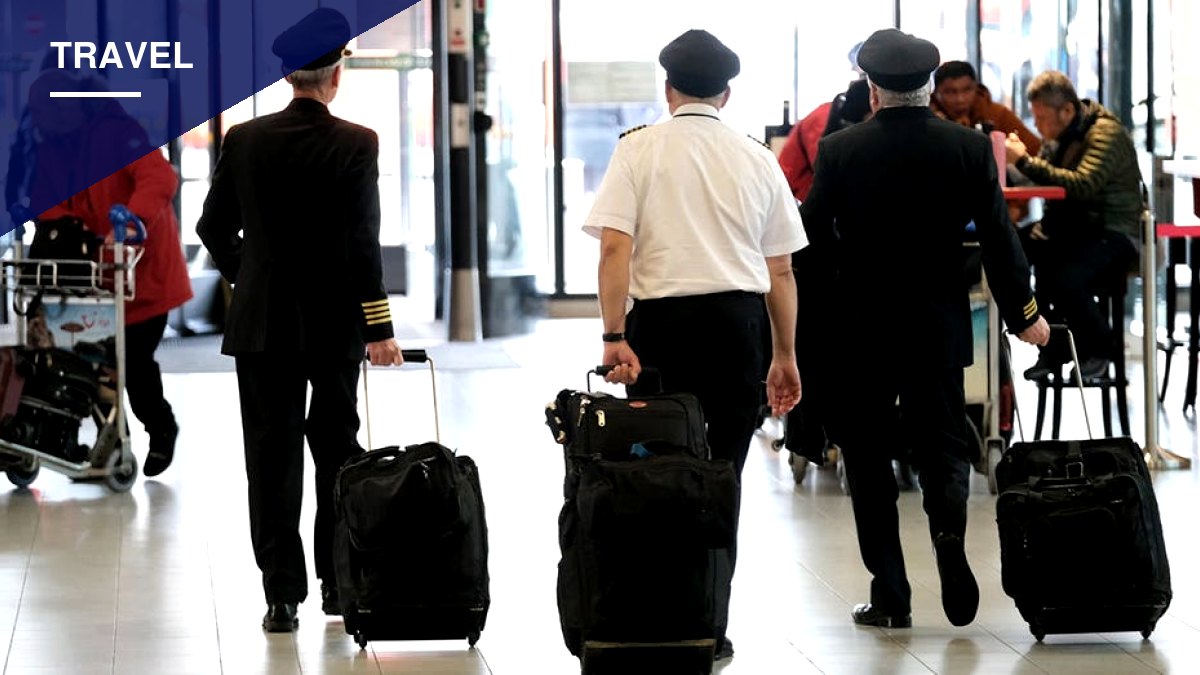
A new survey has revealed that more than three in four European pilots have experienced at least one “microsleep” episode while flying an aircraft in recent weeks. The findings come from aviation consultancy Baines Simmons, based on responses from 7,200 pilots across 32 European countries.
The results were published by the European Cockpit Association (ECA), a body representing more than 44,000 pilots across Europe.
The survey also found that fatigue is a persistent issue beyond momentary lapses into sleep. Nearly 39% of pilots said they usually or always did not get enough rest to prevent fatigue from building up over time.
Perhaps more concerning is the apparent reluctance among pilots to report when they are too tired to fly safely. Only 37.2% said they typically report fatigue when it affects their fitness to fly, while 24.2% admitted they do not report it and fly regardless.
Capt. Coen George, an ECA board director, said the pattern points to a culture where speaking up carries professional risk.
“When pilots fear career consequences, fatigue goes unreported, and the risk returns to the cockpit,” Capt. Coen George said.
He warned that this silence could leave airlines with an incomplete picture of how widespread fatigue actually is among their flight crews.
How Rules Differ Elsewhere
In the United States, the Federal Aviation Administration introduced stricter pilot rest and duty regulations in 2012 specifically to tackle fatigue and improve safety. Under those rules, pilots must have at least 10 consecutive hours of rest before a duty period, including the chance for eight uninterrupted hours of sleep. Any pilot who feels unfit to fly due to fatigue must report it and be stood down by the airline.
Fatigue tends to be hardest to manage for crews working overnight shifts or flying across several time zones. Matthew “Whiz” Buckley, a former U.S. Navy F/A-18 Hornet pilot who went on to fly for American Airlines and FedEx, has previously said that simply having time off scheduled doesn’t guarantee proper rest.
“It’s just unnatural to sleep during off-hours,” Buckley said.
He noted that pilots often land at a hotel early in the morning and then must try to sleep during daylight hours, while long-haul routes further disrupt normal sleep cycles. Crossing multiple time zones, particularly travelling east to west, is where the body is hit hardest, he said.
Buckley also stressed that responsibility ultimately rests with individual pilots to judge whether they are fit to fly.
“At the end of the day … you know who determines if a pilot is fit to fly? You,” Buckley said.
What It Means for Passengers
Bobby Laurie, a travel expert and former flight attendant, said the nearly 77% figure in the survey was striking but should not be read as a sign that pilots are routinely asleep mid-flight.
“It’s definitely an alarming number, and the industry does need to take note of this,” Laurie said. “But it’s not necessarily a warning sign that the flight that you’ve been on had a pilot or both pilots asleep.”
Laurie said passengers should view crew-rest delays as a safety measure rather than an inconvenience. “If you find yourself at the airport, and the departure board is saying you’re delayed due to crew rest … you need to realize that the delay is posted for safety reasons. You might not have gotten to your destination in one piece if those crew members did not get the rest they needed,” he said.
Rest requirements have also been under scrutiny for flight attendants in the US, where a proposed nationwide rule would stop state and local governments setting their own meal and rest-break requirements for cabin crew and pilots. Major flight attendant unions have opposed the plan, arguing that some crew members already go hours without proper breaks to eat, drink or use the restroom.