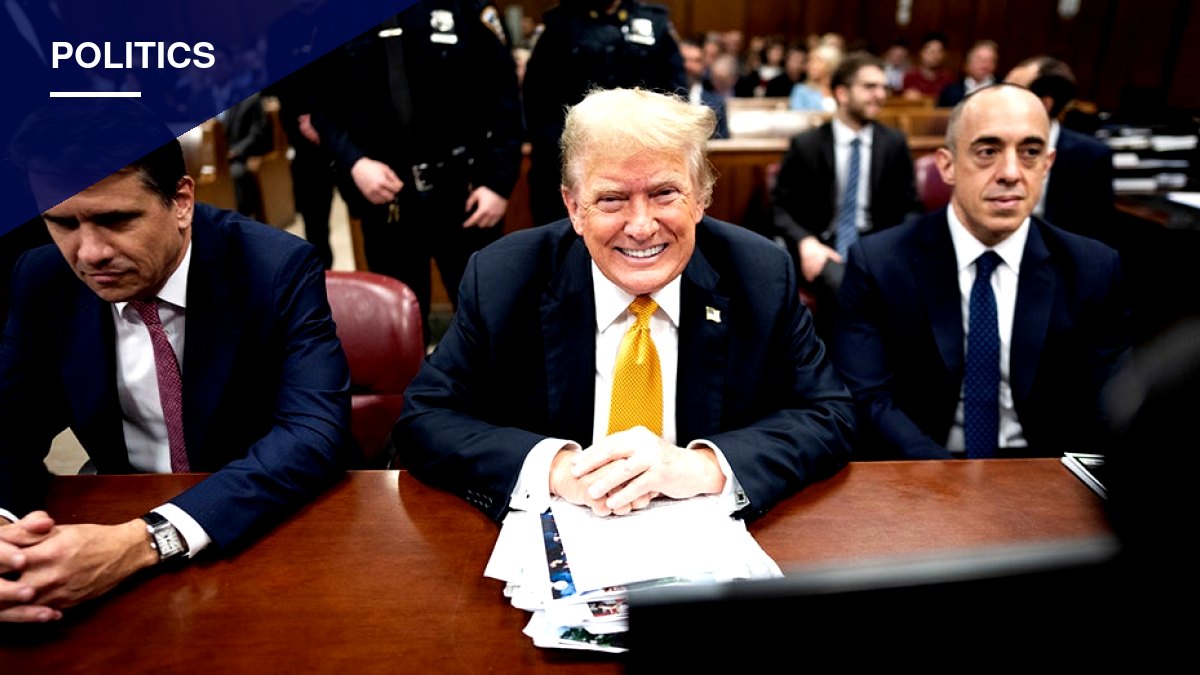
A federal appeals court has given President Donald Trump a fresh opening to move his New York hush money case out of Manhattan state court and into federal court, reviving a legal fight that could ultimately affect his felony conviction.
The 2nd U.S. Circuit Court of Appeals ruled Monday that an August decision by the late U.S. District Judge Alvin Hellerstein, who denied Trump’s second attempt to transfer the case, was improper. Hellerstein, a Clinton appointee, died in October.
The underlying case stems from Trump’s reimbursement of his former attorney Michael Cohen, who paid adult film actress Stormy Daniels $130,000 before the 2016 election to prevent her from speaking publicly about an alleged sexual encounter with Trump years earlier. Trump has denied the encounter. In May 2024, a jury found him guilty of 34 felony counts of falsifying business records in connection with the payments.
At his sentencing in January 2025, days before his second inauguration, Trump received an unconditional discharge, meaning no prison time or fine. The felony conviction, however, remains on his record.
A three-judge appellate panel found two errors in Hellerstein’s ruling: that a federal official can still seek removal of a case even after conviction, and that Trump had shown “good cause” to file a second removal notice.
“We disagree with the district court,” the panel wrote, in an opinion signed by Circuit Judges Raymond J. Lohier Jr., José A. Cabranes and John M. Walker Jr.
The judges said a full written opinion would follow “in due course.”
What Trump’s lawyers argued
In a September brief, Trump’s attorneys said the legal landscape had shifted since his first transfer attempt in 2023, pointing to the Supreme Court’s July 2024 decision on presidential immunity. They argued Manhattan prosecutors had used evidence of Trump’s official presidential activities at trial that the Supreme Court later ruled off-limits.
Trump attorney Robert Giuffra Jr. argued that keeping the case in New York’s court system could delay Trump’s ability to appeal to the U.S. Supreme Court for years.
Manhattan prosecutors had pushed back, telling the appeals court that Trump engaged in “strategic delay” by first testing his immunity defense in state court and only seeking removal once he believed he would lose there. They also argued that falsifying business records to cover up a personal payment had nothing to do with Trump’s official duties as president.
What happens next
The case now returns to U.S. District Judge Lewis J. Liman, who took over after Hellerstein’s death, to decide whether federal jurisdiction applies. The appellate panel also asked New York state courts to pause any further proceedings while the jurisdiction question is resolved.
If Liman grants the transfer, the case would move into federal court, which would then have to decide whether the conviction must be thrown out under the Supreme Court’s immunity standard. Even if the case moves to federal court, Trump could not pardon himself over it, since the charges remain New York state offenses that fall outside presidential pardon power.
Fox News Digital reported it reached out to the Manhattan District Attorney’s Office and Trump’s legal team for comment but had not received a response by publication time.