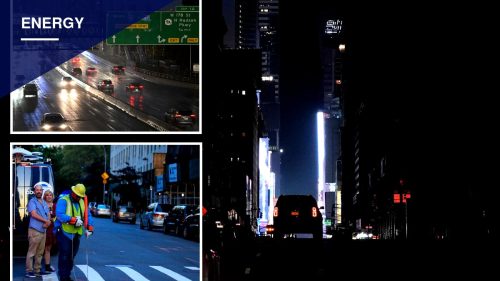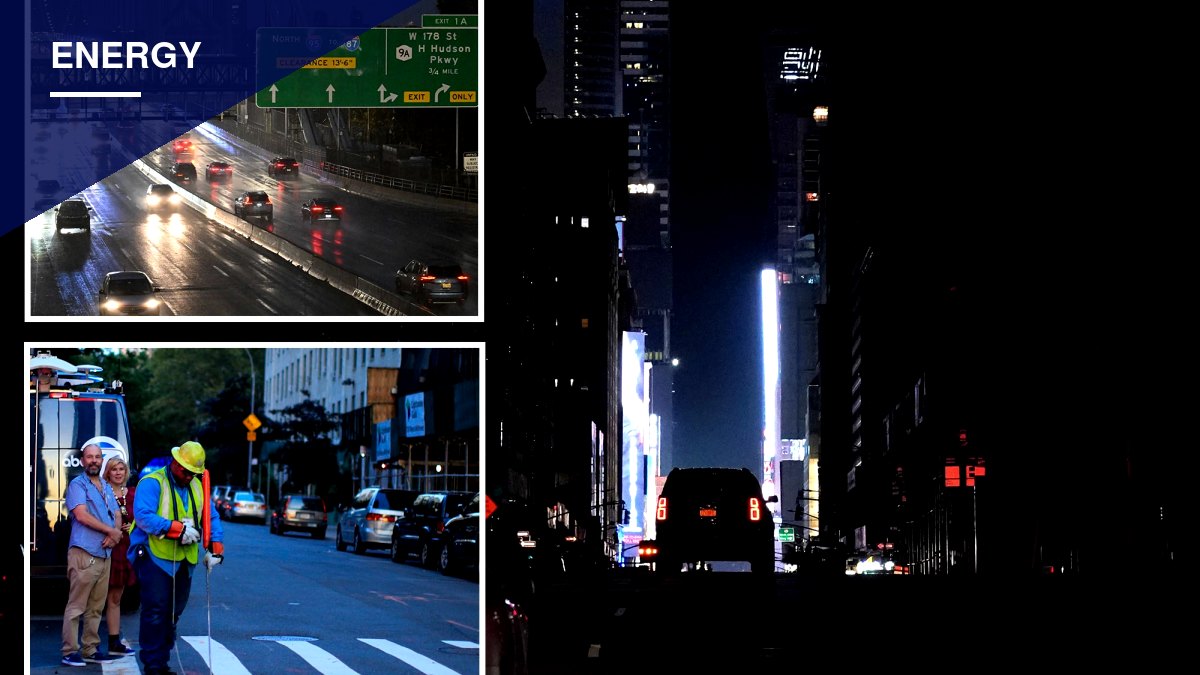
New York’s power grid could fall short of meeting demand within five years, raising the prospect of planned blackouts in New York City and the Hudson Valley, according to a new report from the New York Independent System Operator (NYISO) released Wednesday.
The report projects a “statewide resource deficiency” by 2032, driven by aging infrastructure and the 2021 closure of the Indian Point nuclear plant in Westchester County. If the gap isn’t closed, utilities could be forced to schedule blackouts across the city and Hudson Valley during peak demand periods, such as overnight during heat waves.
By 2036, NYISO projects the statewide shortfall will grow to 1,850 megawatts, which would require either new power generation or imported electricity from other states or Canada. That figure is close to the roughly 2,000 megawatts Indian Point used to produce before it shut down.
“New York’s reliability needs are no longer a distant concern,” said Zach Smith, senior vice president of NYISO, the nonprofit that runs the state’s bulk electric grid. “Electricity demand is growing as the availability of reliable power is increasingly uncertain. New generation and transmission resources take years to plan, permit, and build, so the reliability needs identified in this report must be addressed today.”
The warning lands as New York’s electricity prices already rank third-highest in the country, behind only Hawaii and California. Customers are facing rate increases of 10.4% between this year and 2028.
Indian Point’s shadow
Indian Point was closed under former Gov. Andrew Cuomo. His successor, Gov. Kathy Hochul, has opposed reopening it, even as rising costs have forced her to scale back parts of her green energy agenda. Still, those green initiatives — including large-scale wind farms and a move away from fossil fuel plants — are expected to continue shaping the state’s energy mix over the long term, adding further strain to the grid.
Ken Girardin, a fellow at the Manhattan Institute, said the state’s own policies have contributed to the squeeze. “The state has been blocking new power plants from opening and that’s left New York relying on older, less reliant, less efficient and dirtier units,” Girardin said. “Too much of New York City’s electricity comes from power plants that were built when Dwight Eisenhower was president.”
Hochul has pointed to the Trump administration’s blocking of wind projects off Long Island as a factor in New York’s energy struggles. Her administration also unveiled a “master plan” Wednesday aiming to develop 1,000 new megawatts of nuclear power generating capacity.
That plan runs more than 1,000 pages across 12 technical studies produced by the New York State Energy Research and Development Authority, but it does not include a timeline for bringing any new power plant online. Hochul’s office did not provide one when asked.
Even if new generation capacity were built upstate, NYISO’s report notes that New York City’s core problem is a bottleneck in transmission — meaning new power plants elsewhere in the state would not, on their own, solve the shortfall facing the five boroughs.