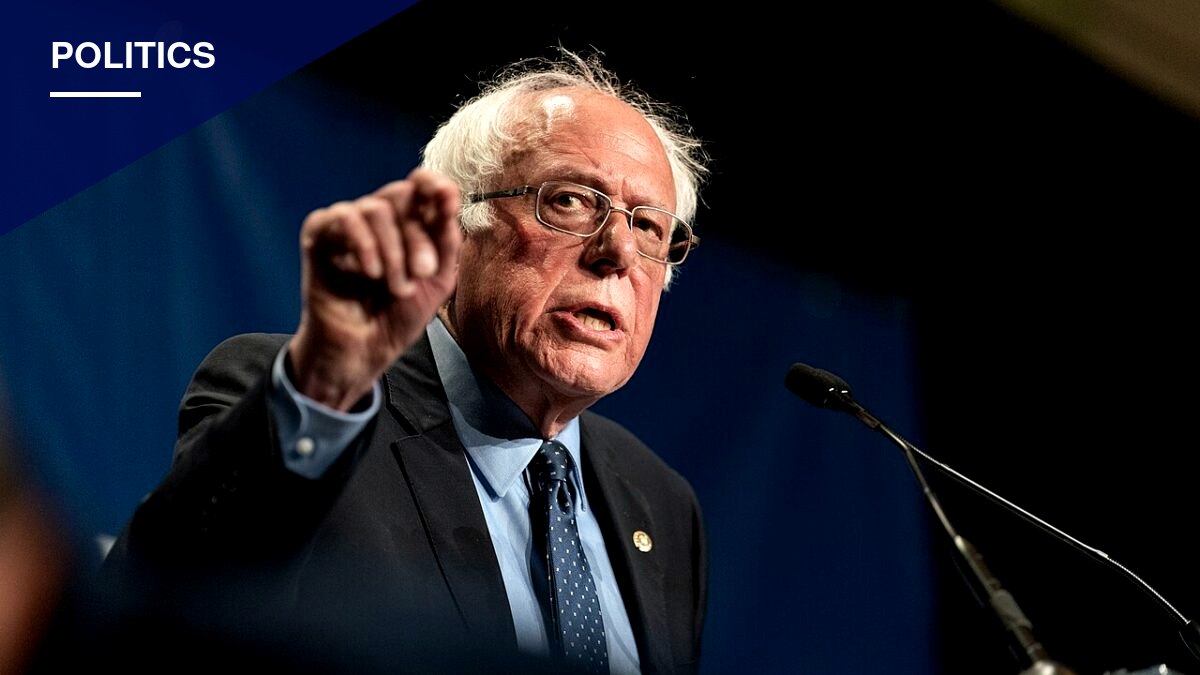
After last Tuesday’s election results, Sen. Bernie Sanders, I-Vt., urged fellow senators to take up his “Medicare for All” legislation once Democrats take control of Congress next year. But a close reading of the bill’s text shows it would not expand the existing Medicare program — it would terminate it and replace it with a new system that happens to share the same name.
According to Section 901(a)(1) of the Medicare for All Act that Sanders introduced last April, found on pages 100-101 of the bill, the legislation ends the current Medicare benefit established under Title XVIII of the Social Security Act once the new program takes effect. Section 701(d), on page 96, directs that all funds in the existing Medicare Trust Funds — the ones covering hospital spending under Part A and outpatient spending under Parts B and D — be transferred into a new fund to finance the replacement program.
Howard Gleckman, an analyst at the left-leaning Urban Institute, made a similar point in a 2019 article titled “Medicare for All Has Nothing to Do with Medicare. Call It Something Else.” He wrote:
What Sanders is proposing is not Medicare for all. It is far more generous — and more expensive. It would be funded much differently. And its relationship with private insurance would be nothing like today’s Medicare. Sanders would, in fact, replace the current Medicare program. … You can call it [i.e., the Sanders bill] many things — from ambitious to unrealistic. But please don’t call it Medicare.
One notable difference between the current program and Sanders’ proposal: existing Medicare includes means testing, requiring wealthier seniors to pay a larger share of their Part B and Part D premiums. The Sanders bill contains no such means-testing provision, meaning higher earners would receive the same coverage as everyone else under the new system.
This is not the first time Medicare’s trust funds have been tapped for other purposes. Congress redirected hundreds of billions of dollars from Medicare to help fund the Affordable Care Act in 2010, and did so again more than a decade later to help pay for an expansion of Obamacare subsidies. In 2021, then-House Speaker Nancy Pelosi, D-Calif., proposed using Medicare funds to help pay for an infrastructure package.
A number of prominent Democrats have at various points sponsored legislation that would end the current Medicare program, including President Biden, Vice President Harris, Pelosi, Senate Minority Leader Chuck Schumer, House Minority Leader Hakeem Jeffries, and California Gov.-elect Xavier Becerra. Incoming Senate Finance Committee Chairman Ron Wyden, D-Ore., is also a co-sponsor of the Sanders bill.
With Democrats signaling they intend to push the measure again once they control Congress, the debate over what Sanders’ bill would actually do to the existing Medicare program is likely to resurface in the coming session.