President Trump announced the seizure of a Venezuelan oil tanker as part of a broader pressure campaign on Caracas, following recent actions targeting narcotics networks and a formal designation of Tren de Aragua as a terrorist organization.
The United States moved decisively off the coast of Venezuela, and the operation is being framed as a concrete step to choke illicit funding streams that support authoritarian rule and transnational crime. This action follows a series of measures aimed at Maduro’s regime and its criminal enterprises, including targeted strikes on narcotics vessels in the Caribbean. The administration has signaled that it will keep applying pressure until those who exploit Venezuela’s resources for criminal gain face consequences.
Washington labeled Tren de Aragua a terrorist group, a rare and necessary move to treat transnational gangs as the threats they are. That designation paved the way for more aggressive enforcement options, now including maritime seizures aimed at disrupting oil flows that help sustain Maduro and his allies. From a Republican perspective, this is the kind of clear, no-nonsense foreign policy that protects American interests and punishes bad actors who traffic drugs and enable regional instability.
🚨 BREAKING: The United States just seized an oil tanker off the coast of Venezuela. @POTUS says "other things are happening so you will be seeing that later."
— Townhall.com (@townhallcom) December 10, 2025
The U.S. has seized a Venezuelan oil tanker, President Donald Trump announced Wednesday, marking a sharp escalation in tensions with Caracas.
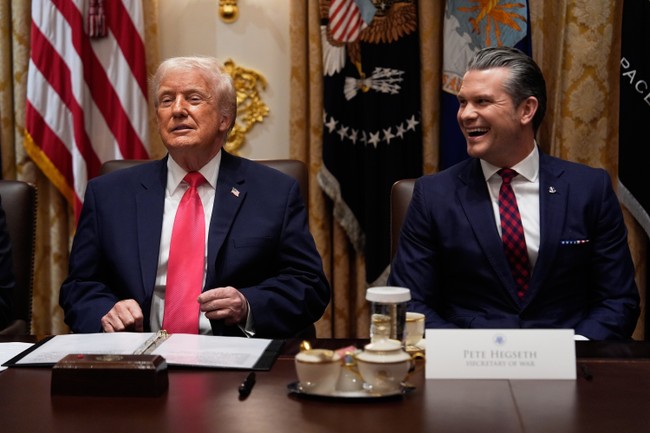
“We’ve just seized a tanker on the coast of Venezuela,” Trump said at a White House roundtable. “Large tanker, very large. Largest one ever seized action. And, other things are happening. So you’ll be seeing that later. And you’ll be talking about that later with some other people.”
The move is likely to further strain relations with Nicolás Maduro’s government, which already is subject to extensive U.S. sanctions targeting Venezuela’s oil sector. It comes after U.S. military strikes have targeted alleged narcotraffickers near Venezuela at least 22 times since September, killing 87 people.
The Trump administration is considering launching land strikes on Venezuelan territory in an effort to further ramp up pressure on Maduro, who the U.S. views as the illegitimate leader of Venezuela and the leader of the Cartel de Los Soles drug trafficking cartel.
Trump recently said Maduro’s “days are numbered” and refused to rule out a ground operation in the South American country.
“I don’t want to rule in or out. I don’t talk about it,” Trump told Politico Tuesday.
The seizure was presented as part of Operation Southern Spear, which the administration describes as a coordinated campaign to cut off criminal revenue and hold violent networks accountable. Republican leaders argue that targeting tankers and narco-ships is a direct, effective way to hit Maduro where it hurts and to deprive cartel-linked elites of cash. These steps also send a message to allies and adversaries that the U.S. will act when international law and regional security are at stake.
There have been at least 22 strikes against narcotrafficking targets near Venezuela since September, with reports of 87 people killed during those operations. Those figures are part of the context President Trump cited when announcing the tanker seizure, underscoring how the administration links narcotics interdiction to broader regional strategy. For conservatives who prioritize law and order, these numbers justify robust use of naval and military assets to disrupt transnational crime networks.
Caracas predictably responded with bluster, and state media has shown defensive drills and warnings in recent days. That theater should not obscure the reality that Maduro’s government has long profited from smuggling and corruption, turning national resources into a piggy bank for cronies and criminal networks. Seizing a tanker is a practical step to challenge that model and cut off another channel of illicit funding.
Officials say the move could inflame tensions, and indeed escalation risks are real when U.S. forces confront hostile regimes. But the alternative—allowing authoritarian leaders and cartels to operate with impunity—carries its own costs, from increased drug flows into the United States to destabilization across Latin America. The administration frames this as a targeted, strategic squeeze rather than an indefinite intervention.
There is also talk that further options are being reviewed, including the possibility of strikes on land targets if necessary to dismantle cartel infrastructure tied to the regime. Republican policymakers tend to view a full toolkit as essential when confronting hybrid threats that mix state power with criminal enterprise. Planning and readiness, they argue, deter worse outcomes and create leverage without immediately committing to wide-scale occupation.
Domestically, supporters see the tanker seizure as a sign of consistent, tough leadership that refuses to ignore the nexus of drugs, corruption, and authoritarianism. Critics will call it provocative, but the administration’s point is straightforward: if Maduro and his allies use oil revenue to bankroll a criminal enterprise, the U.S. will strike at that revenue. In this view, seizing illicit assets is not escalation for its own sake; it is a method to restore some measure of accountability in a lawless environment.
For now, details beyond the president’s announcement remain limited, but the message is clear and intentionally blunt. The Biden-era soft line was rejected in favor of decisive measures, and Republicans will tout this kind of assertive action as proof that America can and should defend its security interests in the hemisphere. The situation will likely evolve quickly, and the administration has made it plain that more steps may follow.