The Treasury has moved to choke off cash and cover for Nicolás Maduro’s circle by sanctioning close relatives, a business partner, and several shipping firms tied to Venezuela’s oil trade, while naming vessels that used deceptive practices and continued hauling oil in 2025.
The Office of Foreign Assets Control announced designations targeting three nephews of Cilia Flores, a businessman linked to the regime, and six shipping companies operating in Venezuela’s oil sector. The action also identifies six vessels accused of deceptive and unsafe practices that helped funnel revenue to Maduro’s government. These steps are aimed at cutting financial lifelines for a regime Washington calls illegitimate.
Two of Cilia Flores’ nephews, Efrain Antonio Campo Flores and Franqui Francisco Flores de Freitas, were arrested in Port-au-Prince in November 2015 while allegedly finalizing a deal to ship hundreds of kilograms of cocaine to the United States. They were convicted in November 2016 on narcotics charges and later received clemency in October 2022 from President Joe Biden. After returning to Venezuela, OFAC says they resumed drug trafficking activities as of 2025.
“Nicolas Maduro and his criminal associates in Venezuela are flooding the United States with drugs that are poisoning the American people,” said Secretary of the Treasury Scott Bessent. “These sanctions undo the Biden Administration’s failed attempt to make a deal with Maduro, enabling his dictatorial and brutal control at the expense of the Venezuelan and American people. Under President Trump’s leadership, Treasury is holding the regime and its circle of cronies and companies accountable for its continued crimes.”
OFAC designated Campo and Flores de Freitas under Executive Order 14059 for engaging in or attempting to engage in activities that materially contribute to the international proliferation of illicit drugs or their means of production. These designations impose blocking measures on their U.S. property and interests, and on entities they control. The designations are meant to prevent the flow of funds and logistical support that sustain transnational narcotics operations tied to the regime.
Carlos Erik Malpica Flores, the third nephew named, had been designated in July 2017 and removed from OFAC’s SDN List in 2022 as part of negotiations the Biden administration pursued to try to restore democratic processes in Venezuela. That negotiated path failed to deliver genuine elections, and Maduro continues to deny democratic values and refuse to recognize the will of the Venezuelan people. For that reason, OFAC redesignated Malpica under Executive Order 13692 as a current or former official of the Government of Venezuela, reinstating sanctions tied to his alleged roles in state institutions.
The move expands a list of family and associates already blocked, which includes Nicolás Maduro, Cilia Flores, Nicolás Maduro Guerra, and Flores’ sons Walter Gavidia Flores, Yosser Gavidia Flores, and Yoswal Gavidia Flores. The intent is to isolate a familial web OFAC describes as built on corruption, nepotism, and narco-trafficking. By widening the SDN roster, Treasury aims to choke off both the political and commercial networks that enable the regime.
Ramon Carretero Napolitano, a Panamanian businessman, was also designated for profiting from contracts with the Maduro regime and for facilitating petroleum shipments on its behalf. OFAC applied Executive Order 13850 to Carretero for operating in Venezuela’s oil sector. That designation targets intermediaries who have helped sustain PDVSA revenue streams despite earlier U.S. actions.
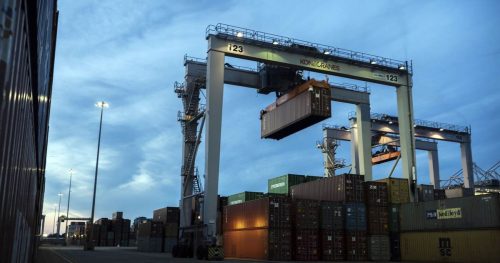
Treasury specifically targeted Venezuela’s oil sector because it continues to underwrite the regime. OFAC previously designated Petroleos de Venezuela, S.A. (PDVSA) under E.O. 13850 on January 28, 2019, and PDVSA was blocked under E.O. 13884 on August 5, 2019. The new measures name shipping companies and individual vessels that are alleged to have loaded and moved Venezuelan crude in 2025 while obscuring their locations.
- Myra Marine Limited, registered in the Marshall Islands, is identified as owner and manager of WHITE CRANE (IMO: 9323429), which reportedly loaded oil in Venezuela as recently as October 2025 and used deceptive location transmissions; WHITE CRANE is designated as blocked property under E.O. 13850.
- Arctic Voyager Incorporated, registered in the Marshall Islands, is listed as the owner of KIARA M (IMO: 9285823), which loaded Venezuelan oil in September and October 2025 and was headed to Asia; KIARA M is identified as blocked property under E.O. 13850.
- Poweroy Investment Limited, registered in the British Virgin Islands, is named as owner of H. CONSTANCE (IMO: 9237773), which loaded Venezuelan oil in October 2025 and repeatedly manipulated transmissions; H. CONSTANCE is identified as blocked property under E.O. 13850.
- Ready Great Limited, registered in the Marshall Islands, is designated as owner of LATTAFA (IMO: 9245794), which made multiple oil shipments through 2025 to Asia while obfuscating its location; LATTAFA is identified as blocked property under E.O. 13850.
- Sino Marine Services Limited, registered in the United Kingdom, is named as manager and operator of TAMIA (IMO: 9315642), which loaded and transported Venezuelan oil to Asia in June 2025 and manipulated its transmissions; TAMIA is identified as blocked property under E.O. 13850.
- Full Happy Limited, registered in the Marshall Islands, is listed as owner and manager of MONIQUE (IMO: 9311270), which loaded and transported Venezuelan oil to Asia in late May 2025; MONIQUE is identified as blocked property under E.O. 13850.
The sanctions block any property or interests in property of designated or blocked persons that are in the United States or in the possession or control of U.S. persons, and they extend to entities owned 50 percent or more by blocked individuals. Unless authorized by OFAC, transactions by U.S. persons or transactions in the U.S. that involve blocked property are prohibited. These rules force banks, shippers, and service providers to choose between compliance and risk exposure.
Violations can bring civil or criminal penalties, and OFAC may pursue civil fines on a strict liability basis. OFAC’s Economic Sanctions Enforcement Guidelines outline how penalties are assessed and enforced, and institutions that touch designated parties risk enforcement action. Financial and commercial actors now face heightened scrutiny when dealing with Venezuelan oil-related commerce and associated networks tied to the regime.
By relisting key figures and naming shipping operators and vessels, Treasury’s action is designed to disrupt revenue streams and operational cover for Maduro’s government. The designations aim to make it harder for the regime to monetize oil exports, to raise the cost of doing business with its cronies, and to signal continued pressure until meaningful political change occurs.