The article reports that a person of interest in the Brown University shooting has been identified and tracked, investigators used cell phone geolocation to locate him, and authorities are probing whether a specific classroom was targeted.
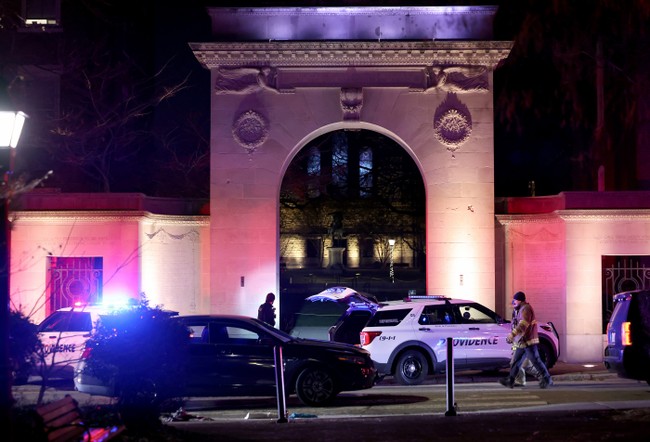
The man identified as a person of interest in the Brown University shooting is Benjamin Erickson, 24, listed as from Wisconsin. The incident left two people dead and eight others wounded, and investigators are treating the case with urgency as they piece together motive and movement.
Authorities say cell phone geolocation played a key role in finding Erickson, leading officers to a hotel in Coventry roughly 20 minutes from the university. That tracking reportedly allowed law enforcement to narrow the search quickly and focus resources on the suspect’s last known location.
Public details are limited as investigators continue interviews and forensic work, but officials have confirmed the casualty numbers and are coordinating with campus leadership. Brown University and local law enforcement have been communicating updates to students and residents while keeping sensitive investigative details under wraps to protect the probe.
🚨 BREAKING: The Brown University “person of interest” who has been detained by law enforcement has been identified as 24 year old Benjamin Erickson, per NBC
Erickson, born October 10, 2001, has a potentially extensive mental health history, and may have a connection to Brown,… pic.twitter.com/BOX1ZdgVlr
— Nick Sortor (@nicksortor) December 14, 2025
There are reports that the attack may have specifically targeted a classroom led by a Jewish economics professor, which would shift the investigation toward possible motive and intent. Officials are exploring whether the selection of that classroom was deliberate or incidental as they question witnesses and review footage.
Investigators believe Erickson traveled from Wisconsin, a journey of more than 1,000 miles to reach Providence, which raises immediate questions about planning and how he arrived on campus. Understanding his travel route and who, if anyone, assisted or harbored him will be central to reconstructing the timeline that led to the shooting.
Law enforcement agencies from different jurisdictions are coordinating their efforts in the wake of the shooting, sharing evidence and tracking leads across state lines. That collaboration reflects standard practice for incidents that cross geographic boundaries and involve multiple potential crimes, from homicide to weapons violations.
Community response has been swift: campus officials activated emergency notifications and counseling resources, while local leaders urged calm and cooperation with police. The emotional fallout on a college campus is intense, and universities typically deploy trauma support teams alongside investigators to help students and faculty process the event.
Details about the suspect’s background, criminal history if any, and possible connections to the campus or its communities remain scarce in public filings. Authorities have asked anyone with information to come forward and discouraged the spread of unverified social media claims that can hinder the investigation.
Media coverage has focused on both the human toll and the mechanics of the investigation, including how digital tools like geolocation can accelerate suspect tracking. That capability is increasingly common in major inquiries, but it also raises questions about privacy and the balance between quick resolution and civil liberties.
Officials have not yet released a full timeline of events or a detailed account of evidence linking Erickson to the scene, and prosecutors will likely wait until charges are filed before making additional disclosures. The judicial process ahead will determine how the case is prosecuted and what charges, if any, are formally brought.
Campus safety protocols and emergency responses are also under renewed scrutiny after the shooting, with calls for audits of training, communications, and prevention measures. Universities nationwide often review policies after major incidents to see what lessons can be applied to protect students and staff going forward.
Local and federal agencies will continue their inquiries, including forensic analysis, interviews with witnesses, and examination of digital records. As the situation develops, officials have emphasized their priority is a thorough, evidence-based investigation that preserves due process while seeking accountability.
Editor’s Note: Do you enjoy Townhall’s conservative reporting that takes on the radical left and woke media? Support our work so that we can continue to bring you the truth.
Join Townhall VIP and use the promo code FIGHT to get 60% off your VIP membership!