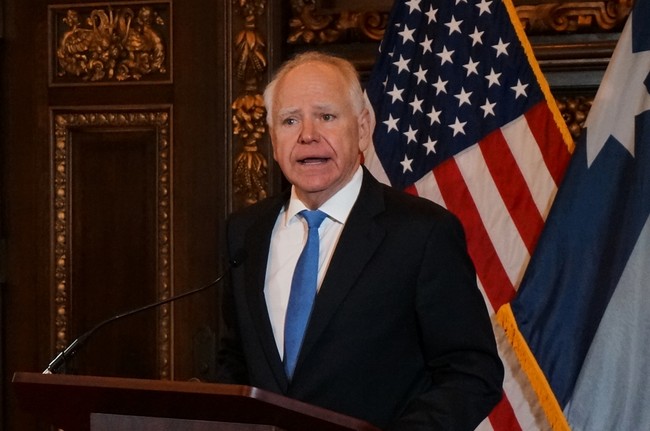
The FBI has served grand jury subpoenas to several Minnesota government offices as part of a federal probe tied to ICE operations, touching the governor’s office, the attorney general’s office, and the mayor’s office and prompting sharp reactions from local leaders.
The FBI recently served subpoenas to multiple Minnesota government offices, including those of Governor Tim Walz, Attorney General Keith Ellison, and Minneapolis Mayor Jacob Frey. Officials say the subpoenas are connected to a federal inquiry into alleged efforts to impede or coerce federal law enforcement during Immigration and Customs Enforcement operations. This move has escalated tensions between state and local leaders and federal authorities. The development has drawn quick public statements and pushback from the targeted officials.
In response to the subpoenas, Governor Walz issued a short, pointed message on X that included the line “see our values in action.” That post underlined his stance that local practices reflect the state’s principles, framing the conversation as one about values and governance. At the same time, Walz criticized the investigations with strong language, calling them “authoritarian tactics.” Those comments signal a hard-edged political response rather than a subdued legal defense.
🚨BREAKING: The FBI Just served SEVERAL SUBPOENAS to the offices of leaders in Minnesota — INCLUDING Tim Walz and Jacob Frey.
They should and will testify for their despicable actions. pic.twitter.com/LUB5M5qjrD
— Townhall.com (@townhallcom) January 20, 2026
— Fox News (@FoxNews)
Here’s more:
Sources told Fox News that the Department of Justice served grand jury subpoenas on Tuesday to five Minnesota government offices — including the Governor’s Office, the Attorney General’s office and the Minneapolis Mayor’s Office – as part of a federal investigation into alleged conspiracy to coerce or obstruct federal law enforcement during ongoing U.S. Immigration and Customs Enforcement (ICE) operations in Minnesota.
The sources said the FBI served the subpoenas, seeking records and communications.
An hour ago, Walz issued a statement on X inviting the President to “see our values in action.” That exact phrase was used to push back against the federal scrutiny and to rally public sympathy behind state and local policies. The choice to put it on a national social platform suggests a desire to shape the narrative beyond Minnesota. It also elevates the dispute into a broader political theater that national audiences will notice.
Attorney General Keith Ellison’s office is among those that received a subpoena, with the FBI reportedly seeking documents and communications tied to operations involving ICE. That step signals the investigation is looking at coordination and decision-making at the highest levels of state government. From a Republican viewpoint, such subpoenas raise concerns about selective enforcement and potential politicization of federal probes. Conservatives will watch closely for equal treatment and transparent procedures.
Mayor Jacob Frey pushed back loudly, calling the subpoenas “an obvious attempt to intimidate me for standing up for Minneapolis.” His quote frames the action as retaliation for local policy positions and casts the federal inquiry as a blunt instrument. Whether one agrees with his politics or not, the mayor’s reaction highlights how subpoenas can be presented as political pressure. That framing will likely deepen partisan divides and complicate cooperation between the city and federal law enforcement.
The pattern of scrutiny is being tied to a broader narrative about federal enforcement and local reluctance to cooperate with ICE. Critics argue the Department of Justice is overreaching and using grand jury tools to send a political message. Supporters of the subpoenas say they are routine investigative steps when questions arise about alleged obstruction or coercion. Either way, the legal process is poised to produce documents that could clarify what happened and who knew what.
Those following the story should expect additional disclosures as subpoenaed offices respond and as investigators collect records and communications. For now, the focus is on whether the documents reveal coordination that would justify the subpoenas or whether the action will be remembered as another episode of politicized enforcement. The tension between federal authority and local policymaking remains front and center. Observers on the right will be especially attentive to signs of selective targeting and to how the Justice Department justifies its tactics.
As this situation unfolds, it will test the limits of federal investigative power and the resilience of state and local officials under scrutiny. The exchanges already show how quickly legal actions become political narratives in today’s climate. Republican readers will interpret these events through a lens of guarding civil liberties and pushing back against perceived weaponization of the justice system. The coming days should clarify whether the subpoenas lead to formal charges, narrow document reviews, or further political fallout.