Air Canada’s CEO announced his retirement after criticism over a condolence video that was delivered mostly in English following a deadly LaGuardia crash, sparking debate about language, leadership, and priorities.
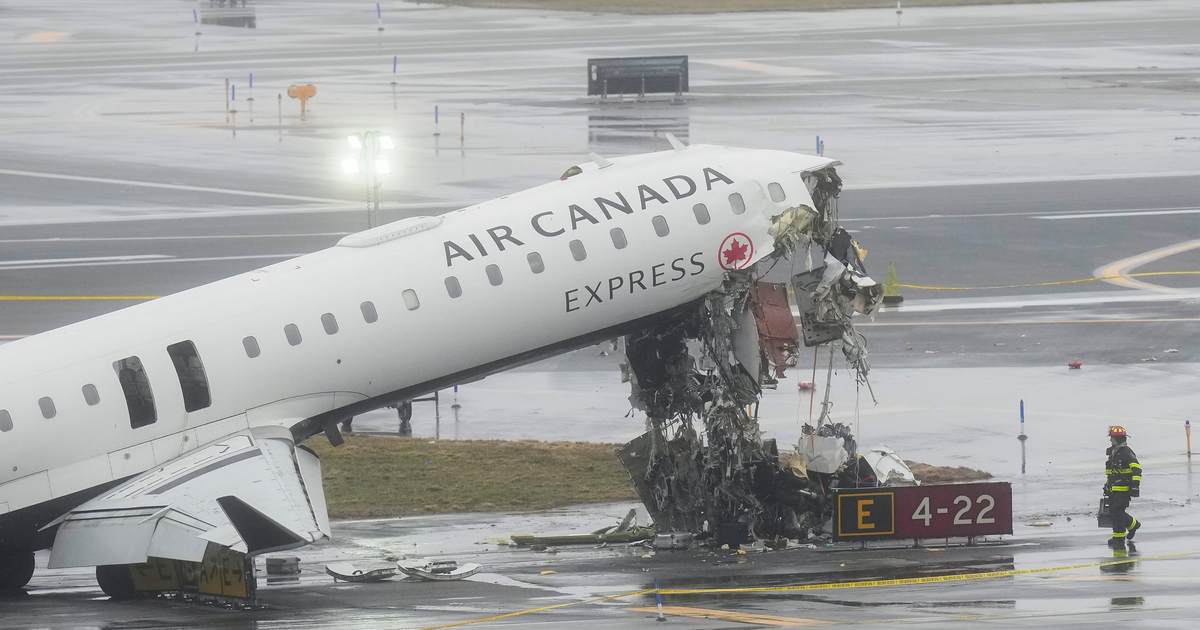
The March 22 crash at LaGuardia, involving an Air Canada Express flight and a fire truck, left two pilots dead and many injured, and set off an ugly aftermath that has less to do with the crash itself and more to do with corporate messaging. What followed was a mix of legitimate questions about safety and a louder chorus focused on whether the CEO used enough French in his public statement. That debate has become the main story in some circles, even as the aviation investigation and the victims’ families continue to deal with the tragedy.
On March 23, Michael Rousseau, Air Canada’s CEO, released a video message that was largely in English with only brief French salutations, and that choice drove politicians and activists to demand accountability. Corporate directors later said they would consider the ability to communicate in French when choosing his successor, and Rousseau announced he would retire by the end of the third quarter. For many observers this sequence feels like a case study in misplaced outrage and performative politics at the expense of substance.
🚨#BREAKING: New video has just been released showing security footage of the exact moment an Air Canada plane collided with a fire truck at LaGuardia Airport in New York City last night, leaving two pilots dead and multiple other passengers injured. pic.twitter.com/lM3gcH4Bg7
— R A W S A L E R T S (@rawsalerts) March 23, 2026
There are real questions about runway safety, emergency procedures, and how an emergency vehicle came to be crossing an active landing strip. Those operational failures deserve thorough, public answers and systemic fixes so the same error cannot happen again. Instead, much of the public commentary veered toward language politics, which sidelines the technical and regulatory issues that directly affect flight safety.
Air Canada’s chief executive, Michael Rousseau, said on Monday that he would step down, days after criticism over his condolence message, delivered almost entirely in English, after a fatal accident involving an Air Canada plane at New York’s LaGuardia Airport.
The airline said in a statement that Mr. Rousseau, who was appointed chief executive in 2021, would retire by the end of the third quarter. Company directors would evaluate candidates to succeed him on several factors, “including the ability to communicate in French,” according to the statement.
Canada has two official languages, English and French. Air Canada, whose headquarters are in Montreal, is required to offer services in both languages.
On March 22, an Air Canada Express flight from Montreal collided with an airport fire truck after landing at LaGuardia, killing both pilots and injuring dozens. One of the pilots, Antoine Forest, was from Quebec.
Mr. Rousseau, 68, faced backlash after releasing a video primarily in English and little French — he said “bonjour” and “merci” — that was criticized as dismissive of French-speaking Canadians. Politicians quickly voiced their frustrations, arguing that Mr. Rousseau’s inability to speak French showed a disconnect from a significant portion of the country.
In Quebec, lawmakers voted unanimously in favor of a motion calling for Mr. Rousseau’s resignation. Canada’s prime minister, Mark Carney, said he was “very disappointed.”
From a practical standpoint, corporate leaders should be judged on crisis response, transparency, and competence, not solely on which language they happened to use in a short video. If bilingual communication is a formal requirement for Air Canada executives, that can and should be set by the board as a clear policy for hiring and succession planning. But using a social-media storm to force a resignation over a brief language choice sends the wrong signals about accountability.
The families of the dead and injured deserve more than a public debate about semantics and symbolism. They need answers about how an emergency vehicle ended up on a runway as a passenger jet landed, and they need confidence that regulators and operators will fix whatever went wrong. Focusing energy on substantive safety reforms would do far more for future passengers than rebuking a CEO for an awkward moment in a condolence video.
Political leaders and media outlets can call for bilingual communication while also pressing for technical fixes, but the balance has been off here. When optics replace oversight, the incentives for companies and regulators shift away from preventing the next disaster and toward managing headlines. That weakens public trust in both industry and government at a time when confidence should be rebuilt through action.
There is a nuance worth noting: Canada’s bilingual requirements are real and rooted in law and culture, especially in Quebec. Respect for language and identity matters, and companies based in bilingual regions should have clear policies to serve all customers. Still, language competence can be set as a criterion for leadership without letting that single criterion obscure investigations into how the crash actually happened.
At the end of the day, families and first responders deserve clearer answers and better safety standards, not a spectacle about a short statement. The conversation should pivot back to preventing runway incursions, improving emergency coordination, and ensuring accountability where it affects lives. That is the measure of responsible leadership, and it is what colleagues, customers, and citizens should demand now.