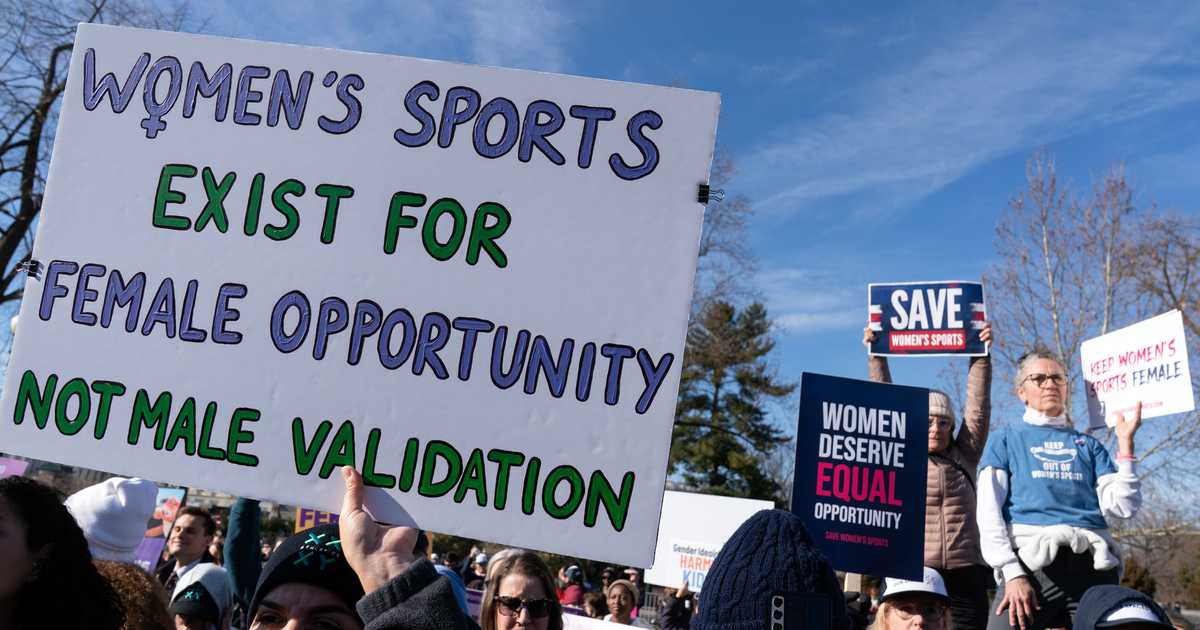
Marie Harf’s remarks on men competing in women’s sports sparked a blunt exchange on a panel with Kayleigh McEnany, laying bare a clash over safety, fairness, and party priorities.
Marie Harf, once an Obama staffer and now a Democratic commentator, joined a panel with former White House Press Secretary Kayleigh McEnany to debate men competing in women’s sports. The conversation quickly centered on the practical effects of policy choices and whether questions about competition and safety are framed in bad faith. Both panelists traded sharp lines that reveal how this issue divides opinion even within the same national conversation.
“I do think that Donald Trump used this to great effect by preying on people’s fears of trans people,” Harf said. “Look, I think sometimes people have questions: who should play what sport? Who should get married? I don’t think all the questions are necessarily coming from a bad place.” That quote captures Harf’s attempt to paint concerns as politically manipulated rather than grounded in safety concerns.
MUST WATCH: Marie Harf: “Wait, why are we so scared of tr*ns people?”
Kayleigh McEnany: “We’re scared of biological men competing against women. Pummeling young women.” ⁰⁰“Do you want a biological man wrestling a woman? Do you want a biological man spiking a ball at a woman?”… pic.twitter.com/SpAaFQarRy
— RedWave Press (@RedWavePress) March 30, 2026
“This is an 80-20 issue,” McEnany said, “but remain on the 20 percent and see how it works out.” McEnany pushed back that even a smaller slice of cases can have serious consequences for athletes and parents who expect fairness and protection in women’s sports.
“Why are we so scared of trans people?” Harf asked, framing the debate around fear and stigma. The panel then heard a direct rebuttal: “We’re scared of biological men pummeling young women, pummeling young women. Do you want a biological man wrestling a woman? Do you want a biological man spiking a volleyball at a woman?” That exchange made the core disagreement obvious: empathy versus practical harm.
“Honestly, I don’t care,” Harf replies. “I genuinely don’t care.” Those lines shocked many viewers because they appear to dismiss the real-world consequences parents and coaches see on playing fields and in locker rooms. Critics say that kind of indifference leaves girls and women to absorb the risks.
Responding from a Republican-leaning perspective, this is not about demonizing anyone; it’s about protecting girls and preserving fair competition. Voting records and policies matter here, because lawmakers decide whether biology-based categories will be defended or erased. When political elites shrug, families and young athletes shoulder the fallout.
Harf’s tone and some progressive stances treat the debate as abstract or symbolic, but the outcomes are concrete. We’re not talking about a playground tiff; we’re talking about high school and college athletics, where physical advantages can be decisive and injuries can be severe. Those realities drive calls for clear rules that protect biological girls’ chances to compete on a level field.
There are real incidents people point to when they demand change. Payton McNabb suffered a traumatic brain injury after a “trans girl” spiked a volleyball into her face, an event that left her and many observers alarmed. At the 2024 Paris Olympic Games, Algerian boxer Imane Khelif fought against women at an international level and only later acknowledged being male, a development that fueled global debate about fairness in elite competition.
Speaking of McNabb, she blasted Harf, too. Public testimonies like McNabb’s and other athletes’ complaints have pushed state legislatures and school boards to take action, reflecting a broader push from families who want transparent, enforceable rules rather than shifting definitions imposed from above.
Plain truth: many parents and coaches feel dismissed by statements that prioritize ideology over safety. That dismissal is why this issue keeps showing up on ballots and in statehouses across the country, and why Republican lawmakers frame their proposals as common-sense protections rather than partisan attacks.
They do not care. When leaders say that harm to girls is acceptable collateral in a cultural experiment, it reveals a gap between rhetoric and responsibility. Republicans argue policy should follow physical reality and protect vulnerable competitors, not override protections for the sake of ideological purity.
Harf may represent a vocal strand of the progressive movement, but she does not represent the majority of parents who want safe, fair sports for their daughters. The debate will keep playing out at school board meetings, in legislatures, and at the ballot box as Americans weigh priorities about privacy, safety, and equal opportunity.