President Trump led a brash, wide-ranging briefing about a daring rescue and used the moment to mock Joe Biden, relaying a lurid nickname reportedly used by North Korea’s leader and delivering his usual punchy commentary during a lively Q&A.
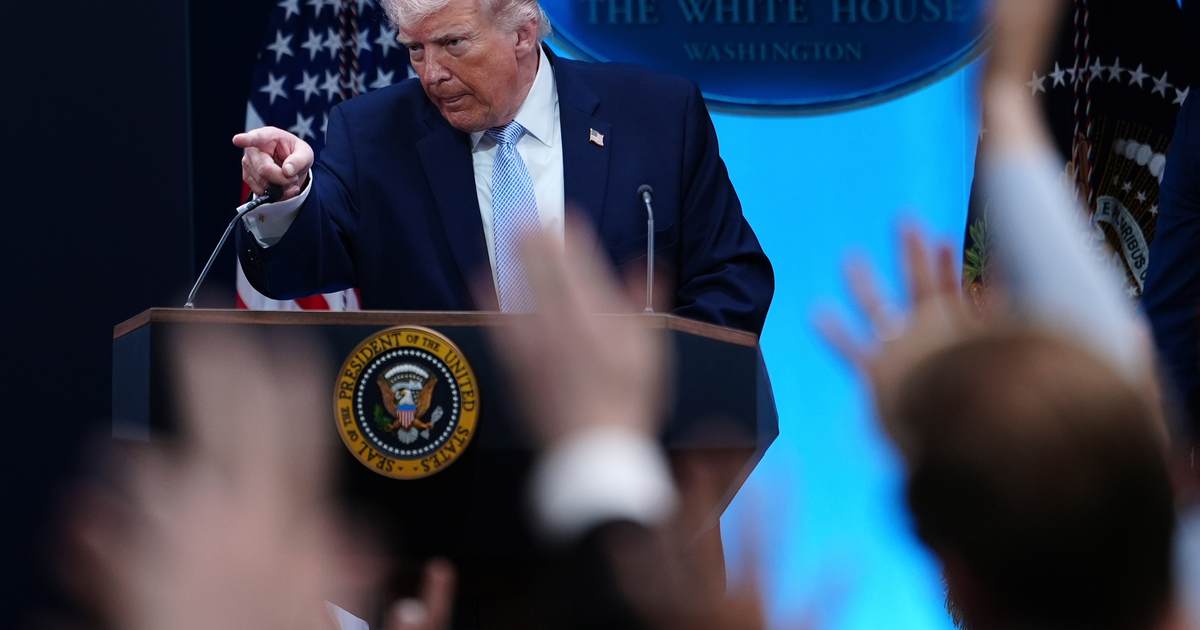
The briefing brought together President Trump, Secretary of War Pete Hegseth, CIA Director John Ratcliffe, and Chairman of the Joint Chiefs Dan Caine to discuss the rescue of the downed F-15 weapons systems officer in Iran. From the start the tone was brisk and unapologetic, the kind of public session that quickly shifts from policy to personality. When it moved into a question-and-answer stretch, everyone knew it would get colorful.
Trump didn’t hold back a dig at Joe Biden, picking up on a moment from the previous day’s Easter Egg Roll where he’d been coloring with kids and ribbing the president. He revealed that the North Korean dictator used to call him “mentally retarded.” “He was so nasty to Joe Biden. It was terrible,” said the president.
The reaction was immediate: supporters laughed, opponents bristled, and the press spun. To many conservatives, the label lined up with other public gaffes and weaknesses they’ve longcribed to Biden, and the punchline landed as both blunt and true in their view. The broader point was less about clever phrase-making and more about contrasting styles — decisive, energetic leadership versus what critics call indecision and fatigue.
The rescue itself was central to the briefing and to Trump’s lines of attack. He and his team highlighted the complexity and speed of extracting a downed F-15 weapons systems officer from hostile territory in Iran, then used that operation to argue competence and operational nerve. Trump insisted that such an operation required the kind of command presence and follow-through he says Biden lacks, and he pointed to historical examples to make the argument.
.@POTUS: "We have 45,000 soldiers in South Korea to protect us from Kim Jong-un, who I get along with very well… He used to call Joe Biden a mentally retarded person." pic.twitter.com/GiM3yxUu3Z
— Rapid Response 47 (@RapidResponse47) April 6, 2026
One sharp rhetorical moment was the claim that Biden “didn’t even want Obama to go into Pakistan to kill bin Laden,” a charge aimed at painting him as risk-averse on national security. The administration’s line was clear: when it comes to tough, far-reaching missions, an America that hesitates loses lives and leverage. That argument plays well with audiences who favor a muscular, direct approach to threats abroad.
There was also an unmistakable thread about stamina and focus. Trump suggested Biden might not have had the energy or bandwidth to keep pace during high-pressure operations, and he warned that a fatigued commander-in-chief creates vulnerabilities. “We’re lucky no major terror attack occurred because Joe was cooked from day one of his presidency,” the president said, and the line was delivered as both a rebuke and a rallying cry.
Beyond the policy points, the exchange offered classic Trump theater — part roast, part briefing, and part campaign stump speech slipped into a government meeting. He leaned into the moment, trading barbs and anecdotes, and relishing the contrast between the day’s operational successes and what he painted as the opposition’s chronic weakness. For his base, that combination of toughness and mockery is exactly the tone they want from a leader.
While critics pointed to the choice of language and the crude flavor of some remarks, supporters argued that blunt talk can be useful when it exposes foreign leaders’ contempt or when it underscores a point about national security posture. The disclosure about what Kim Jong Un reportedly called Biden fed both the outrage machine and the comedy circuit, and it kept the story circulating across social and broadcast channels long after the microphones were turned off.
The briefing also underscored the administration’s narrative about capability and consequences, with Hegseth, Ratcliffe, and Caine framing the rescue as evidence of a restored operational edge. Officials used the event to highlight coordination across agencies and the ability to act decisively in hostile environments, a message intended to reassure allies and warn adversaries. That framing is central to the conservative case for a tougher, more proactive foreign policy.
Trump wrapped much of his messaging in clear contrast: decisive action on the field versus perceived indecision in the other camp. He used the anecdote about the North Korean insult to make a point about respect and deterrence, arguing that showing strength gets results and invites less scorn from adversaries. The crowd reactions and media spin that followed were as predictable as they were intense.
In short, the briefing was part policy roll call and part political theater, with Trump using the spotlight to both promote an operational win and land hard on a rival. The disclosure about the nickname from Pyongyang and the president’s punchy delivery ensured the episode would remain a talking point for supporters and a provocation for critics. Trump also had other vintage moments here: