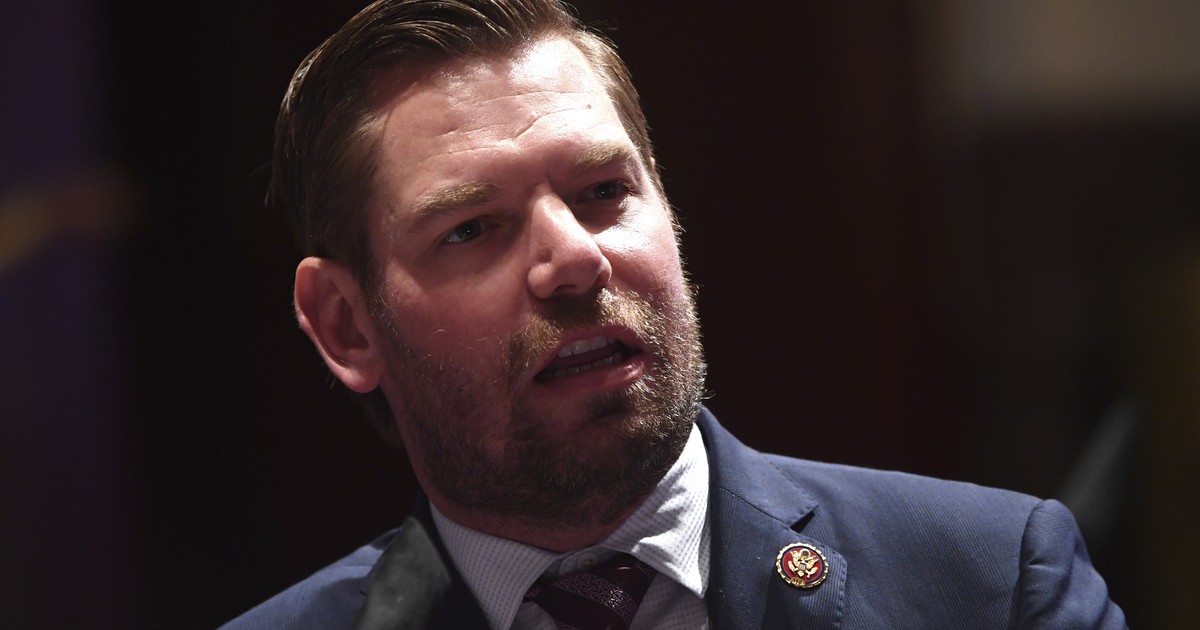
Rep. Eric Swalwell announced he will resign from Congress amid recent allegations and videos of sexual misconduct, saying the looming expulsion process has distracted him and that he must take responsibility for past mistakes.
Representative Eric Swalwell made a public announcement on Monday via social media that he plans to step down from Congress after a string of allegations and circulating videos alleged to show sexual misconduct. The decision follows intense scrutiny from opponents and calls for accountability that have dominated headlines and congressional attention. Republicans and conservatives have pushed for consequences, arguing that the matter undermined his ability to serve effectively.
Swalwell framed his move as a response to the toll the scrutiny has taken on his work, saying the impending expulsion vote had “distracted [him] from [his] duties,” and he intends to resign before the proceedings unfold. He described the process as lacking due process and suggested that the political theater itself was interfering with the day-to-day needs of constituents. That explanation did little to calm critics who say elected officials must face transparent investigations when serious claims arise.
— Rep. Eric Swalwell (@RepSwalwell) April 13, 2026
In his statement Swalwell also issued an apology, while insisting he will contest some of the accusations against him. “I am deeply sorry to my family, staff and constituents for mistakes I’ve made in my past,” Swalwell said in his announcement. “I will fight the serious, false allegations made against me. However, I must take responsibility and ownership for the mistakes I did make.” Those words acknowledge wrongdoing without clarifying which claims he disputes and which he accepts.
Observers on the right have seized on the resignation as evidence that the system can still hold powerful politicians to account when evidence is made public. Republican lawmakers have argued Swalwell’s conduct — and the party’s handling of it until now — raised questions about ethics and judgment. Conservatives note that voters deserve representatives who are focused on policy and not consumed by scandals that distract from governing.
It remains unclear which allegations Swalwell calls false and which he acknowledges, leaving many questions about the timeline of events and the evidence behind them. That ambiguity fuels partisan debate: Democrats are inclined to caution against rushing to judgment, while Republicans point to the accumulation of videos and reports as sufficient cause for removal. The absence of a full, transparent accounting has only deepened calls for clearer standards and faster accountability mechanisms in Congress.
Swalwell’s departure will add another vacancy to California’s delegation, a development that has political consequences beyond his district. Governor Gavin Newsome has been slow to schedule a special election in California’s First District to fill a prior vacancy, a delay that critics say has affected the balance of power and the House majority math. Republicans claim such strategic delays show how Democratic officials sometimes prioritize political advantage over timely representation for constituents.
Before this announcement Swalwell had already paused his campaign in California’s gubernatorial primary, signaling a retreat from higher-profile statewide ambitions. He offered no firm date for when his resignation will take effect, leaving the timing and transition plan open-ended. That uncertainty raises practical questions for staffing, constituent services, and the mechanics of calling and running a special election.
The episode highlights the intersection of personal conduct and public trust in elected office, and how quickly political careers can be altered when allegations surface and spread online. For Republicans, the case reinforces arguments about vetting and standards for elected officials; for Democrats, it is a reminder that party unity can fray when high-profile members face serious accusations. Either way, the outcome will shape conversations about accountability in Washington.
As Washington watches how the resignation and any subsequent proceedings unfold, lawmakers and voters will be parsing the record, statements, and available evidence to draw their own conclusions. The practical fallout includes a vacant House seat, potential shifts in committee assignments, and renewed debate over how Congress handles misconduct claims. The coming weeks will determine how quickly the seat is filled and how long the political reverberations persist.