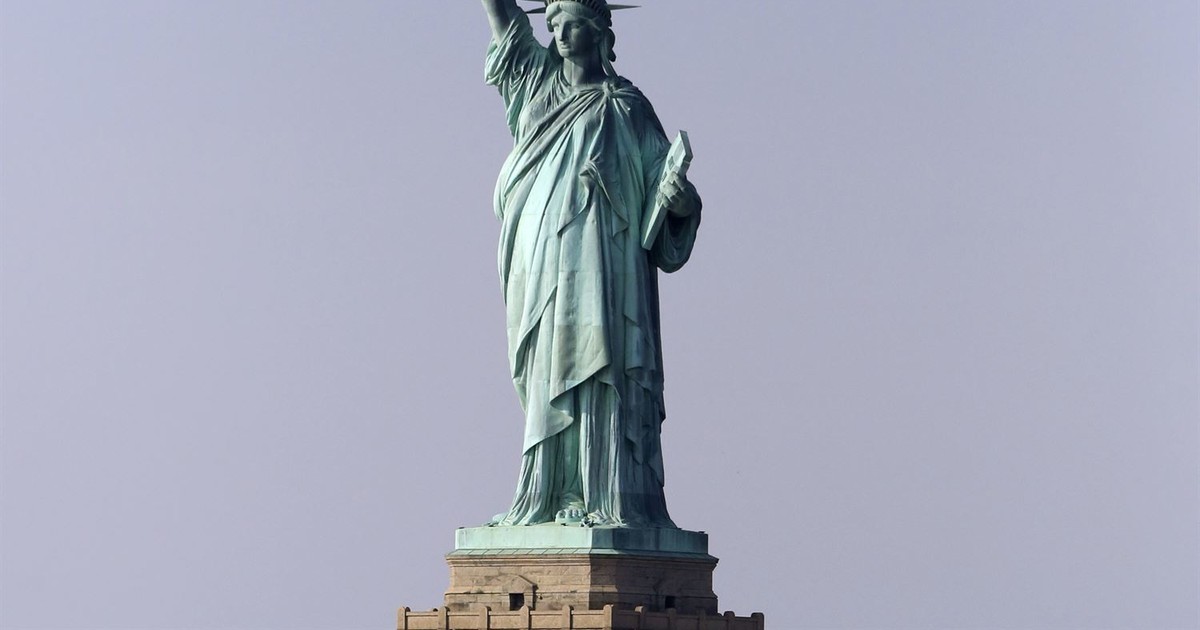
A New Jersey congressional nominee sparked attention after a campaign photo showed her wearing a sweatshirt that pictured the Statue of Liberty in handcuffs, touching off debate about symbolism and immigration as a special election approaches.
Analilia Mejia was photographed at her campaign headquarters wearing a sweatshirt that depicts the Statue of Liberty in handcuffs, and the image quickly circulated online. The sweatshirt is bold and unmistakable, and it has people arguing about what Democrats intend with that imagery. This moment landed at a sensitive time with the district focused on who will replace Rep. Mikie Sherrill.
Mejia is running to fill the seat left empty when Rep. Mikie Sherrill became Governor, and the election is on April 16.
What does self-described socialist Mejia do at campaign HQ? Apparently wear clothing depicting the arrest of the Statue of Liberty. Our nation's symbols of freedom can't be represented like this in Congress. Share before Election Day, 4/16 – so voter's choose @HathawayForNJ11 pic.twitter.com/6EjkDK2q5p
— Nikki L (@NikkiLRules) April 14, 2026
The shirt is politically charged, with people interpreting it as either a statement on the Trump administration’s immigration enforcement or a commentary on how Democrats really view freedom and liberty. For many conservatives, the image reads as an admission that open-border policies and relaxed enforcement come at the cost of national sovereignty. Supporters will say it highlights compassion or the need to reform immigration, but the optics matter in a tightly watched contest.
They also use the poem on the Statue of Liberty as basis for our immigration law instead of our actual immigration laws.
That line of argument points to a recurring problem: aesthetics and slogans are not substitutes for statutes and border security. Voters want clear plans and enforceable policies, not apparel that invites confusion or celebration of weakened rules. The district will decide whether symbolism is enough to win a seat that could affect national balance.
It was not. A poem is not a public policy.
Observers on the right emphasize that statutes, enforcement mechanisms, and budget priorities shape how borders operate, not a turn-of-the-century poem. Campaign imagery that elevates poetry over policy can leave ordinary voters asking which comes first: culture or control.
Correct.
That reaction captures how many conservatives read the scene — not as artful protest but as an indicator of priorities that would reshape law and order. The shirt became a shorthand in discussions about whether some Democrats prioritize a particular narrative more than practical governance.
They run for office to change America.
Democratic candidates may argue they’re offering a different vision, and that claim is part of what drives turnout and fundraising. From a conservative perspective, though, the choice isn’t just rhetorical; it’s about whether elected officials will protect borders, enforce existing laws, and put American citizens first.
It’s not just New Jersey that will be impacted by her election win.
And it looks like she’s going to win, with polling placing her well ahead in the race.