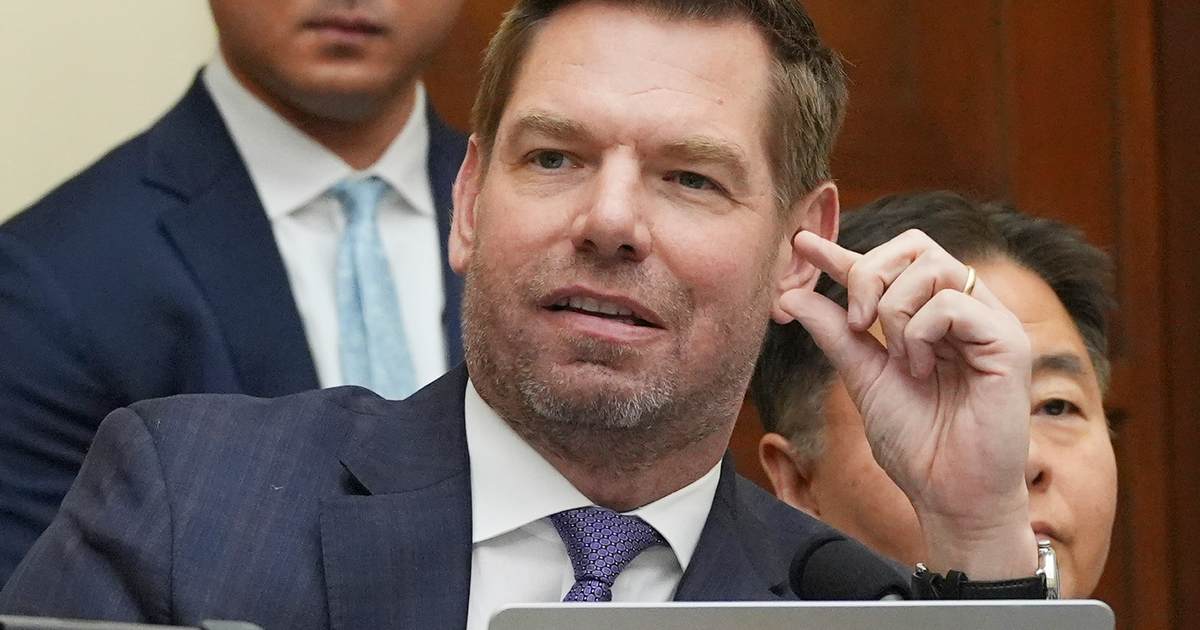
A fast-moving scandal pushed Rep. Eric Swalwell out of Washington and out of the California governor’s race, triggering a scramble among Democrats for his seat and forcing party leaders to pick through the wreckage.
Representative Eric Swalwell announced his resignation from Congress after a cascade of allegations and political fallout that ended his campaign in under 72 hours. He also withdrew from the California gubernatorial contest on Sunday, and while an exact exit date was not initially set, the resignation was made official shortly afterward. New accusations surfaced in quick succession, including a recent allegation that he raped a woman in 2018, which intensified pressure on him and his allies. The net result was abrupt: he’s gone… now.
Conservative lawmakers wasted little time pointing out the obvious consequence of the allegations: accountability matters and Congress should not shelter members facing serious accusations. Rep. Anna Paulina Luna publicly pressed for swift action to make sure Swalwell did not linger in the House, arguing that the institution needed to move on. That pressure reflected a broader consensus that credibility and public trust were at stake for the House as a whole. Voters and donors reacted quickly as endorsements evaporated and support dried up.
I have just been notified that Eric Swalwell has officially submitted his resignation to the House Clerk.
Effective immediately.
— Rep. Anna Paulina Luna (@RepLuna) April 14, 2026
The allegations that knocked Swalwell off his perch include claims from a former staffer that she was assaulted twice, once in 2019 while on his staff and again at a 2024 charity event in New York after she had left. Those allegations, combined with an earlier claim about 2018, prompted scrutiny from prosecutors and renewed calls for independent review. The Manhattan District Attorney’s office opened an inquiry, and power players who had been lining up behind his campaign started to withdraw their backing. A candidate under investigation for sexual assault is an untenable liability, and the fundraising stopped almost overnight.
The aftermath is messy for California Democrats, who now face a short window to replace a high-profile figure and defend a reliably blue district. Party operatives are already vetting options and sizing up potential successors, while unions and consultants reevaluate where to put their resources. The immediate priorities for Democrats are damage control and shoring up a pathway to keep the seat in friendly hands. For Republicans, the rapid collapse underlines the payoff of holding politicians to account and keeping pressure on standards in public office.
Tuesday’s Politico’s California Playbook covered the latest about Dems jockeying to fill the power vacuum:
California Democrats are maneuvering quickly in the aftermath of Swalwell’s precipitous fall.
Even before he announced his resignation from Congress on Monday, the race to succeed him was underway …. Contenders to fill his solidly blue Bay Area seat include state Sen. Aisha Wahab and Bay Area Rapid Transit board president Melissa Hernandez.
Meanwhile, Swalwell’s collapse is forcing California’s political establishment to reassess who to support for governor. Powerful labor unions, interest groups and consultants had lined up behind Swalwell’s campaign in recent weeks as his campaign appeared to gain momentum.
Within hours of his resignation, there were at least five new polls funded by outside super PACs underway to assess the remaining field, strategists told Playbook. As one prominent Sacramento power player, granted anonymity to speak freely, quipped, those powerful interests are now “picking through the trash bin to see what’s salvageable.”
That quoted snapshot captures how quickly political math changes when a front-runner collapses under scandal. Funders, operatives, and allied organizations all pivot once a candidate becomes a liability, and that domino effect reshapes primary dynamics in real time. For California, it means a sudden rearrangement of endorsements and a flurry of polling to see who can consolidate support. The vacuum also gives challengers a chance to claim momentum simply by staying steady while others flounder.
On the legal front, investigators will sort through the claims while political figures decide whether to run for the open seat or wait for a safer opportunity. The Manhattan inquiry adds a layer of seriousness that makes a quick political comeback improbable. Democrats now must balance loyalty, electability, and optics while choosing a successor who can hold the district and mend reputational damage. That triage will predetermine how much energy national groups pour into what was expected to be a straightforward hold.
Republicans see a lesson in the speed of accountability: sustained pressure and swift public scrutiny can remove a problem before it metastasizes. The episode also underscores the fragility of political alliances built on momentum alone, especially when serious misconduct allegations appear. As the party machinery moves to fill the seat and recalibrate for the governor’s race, one immediate fact remains clear: the collapse cost Democrats a vehicle they had been polishing, and the fallout will shape a number of contests going forward.