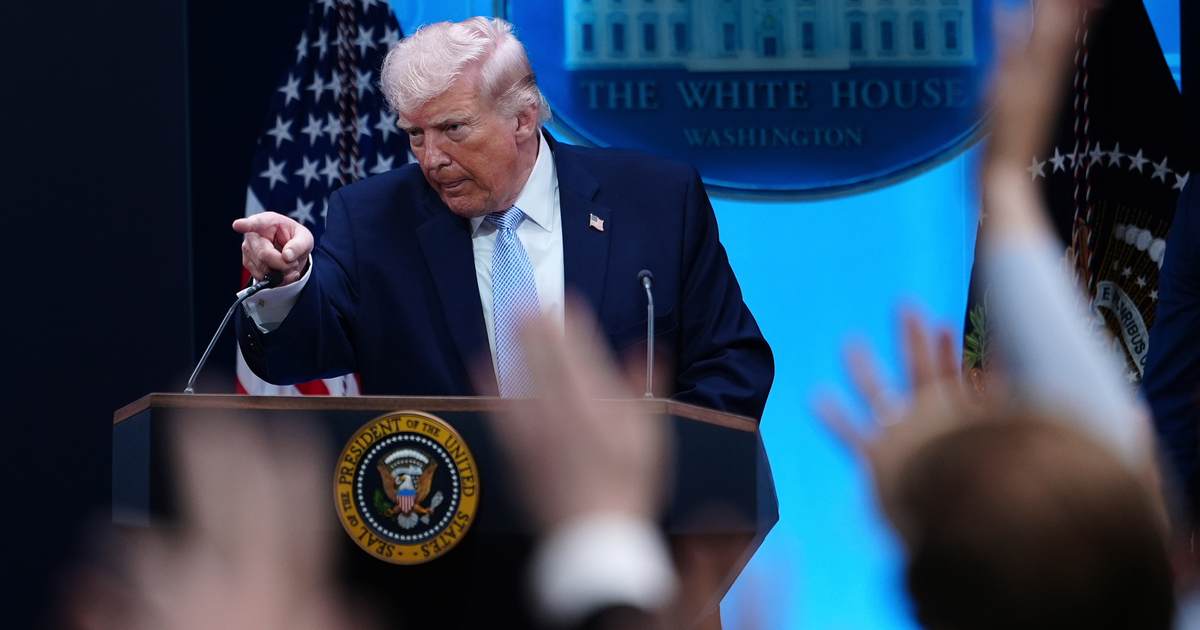
President Trump has declared Operation Epic Fury finished, saying the major mission objectives were achieved and announcing an end to the sustained air campaign in Iran.
That’s it, folks. It’s over. Operation Epic Fury has ended, and while isolated strikes might continue, the large-scale aerial effort that ramped up in March is finished. President Trump announced on Fox News that this war is over, and the White House is treating this as a pivot from sustained combat to targeted operations.
Senior officials have been consistent for days: the core tasks set at the start of the campaign were completed. Military planners and administration spokespeople framed the effort as surgical and goal-driven rather than open-ended. The tone from the top has been that measured force delivered decisive results.
U.S. President Donald J. Trump tells Fox News that the Iran War is over. pic.twitter.com/etRbSzMzic
— OSINTdefender (@sentdefender) April 14, 2026
The president and his officials have said for days that the core objectives of the operation were met:
- Iran’s navy was annihilated
- Its ballistic missile arsenal and manufacturing base have been degraded
- Tehran’s nuclear ambitions have been obliterated
- The nation’s regional proxies cannot wreak havoc on the region
The administration insists those outcomes changed the balance in the region and reduced the immediate threat to U.S. forces and allies. Officials argue that by removing Iran’s central command and much of its launch capability, proxy groups lost the backing they needed to strike effectively. This was meant to neutralize a network that had been expanding its reach for years.
Reports from the campaign claim heavy damage: over 130,000 targets were struck, Supreme Leader Ayatollah Ali Khamenei was killed, and the core of Iran’s political and military leadership was eliminated. These are the figures and results being circulated inside the government, and they help explain the decision to scale back visible operations. In Washington, the view is that the immediate strategic threats were successfully met.
The Strait of Hormuz was effectively blocked by the United States Navy during peak operations, forcing many tankers to reroute to the Gulf of America. That maritime control was used to compress Iran’s maneuver space and disrupt its ability to project power. Naval interdiction was paired with air and cyber efforts to pinch supply lines and degrade military industry.
Iran long pursued an expanded military footprint in the region with the stated aim of threatening U.S. forces and allies. According to administration messaging, Tehran was alarmingly close to weapons-grade capability and had been the globe’s largest state sponsor of terror by many metrics. The operation sought to break that trajectory before it produced a direct attack on American soil or forces abroad.
Some of the campaign’s critical moves were kept from the public, officials say, because a partisan press was unlikely to report them accurately. That point reflects ongoing frustration in conservative circles about classified operations and media skepticism. The administration’s communications team argued secrecy was necessary to preserve tactical surprise and protect lives.
Domestically, the decision to end the main phase of the campaign is being pitched as a win: objectives met, forces preserved, and the region reshaped in a way more favorable to U.S. interests. Republican voices in and out of government emphasize that a finite campaign with clear aims is preferable to an aimless occupation. That framing will be central to political messaging as policymakers shift to stabilization and deterrence.
There are still questions about the long-term picture. Iran’s ideological currents and residual capabilities won’t vanish overnight, and diplomacy will play a role in reducing future risks. The administration says it will maintain pressure and hold the line while other instruments of national power are applied to prevent a resurgence of the threats that prompted Epic Fury.
On the ground and at sea, U.S. commanders will now recalibrate forces to a post-major-operations posture while keeping rapid-reaction options available. Planning cycles will emphasize intelligence, surveillance, and readiness rather than massed bombing sorties. The goal, as stated by senior officials, is to preserve gains without inviting unnecessary escalation.
International partners will watch closely as Washington moves into a new phase. Allies’ reactions mattered during the campaign and will influence the follow-through: logistical cooperation, sanctions enforcement, and regional security pacts will determine whether the operation’s effects persist. The administration claims it has set conditions for a less aggressive Iran and a more secure neighborhood.
Public debate will continue over whether the strategy and the reported outcomes truly deliver lasting security. Critics will question the human and fiscal costs, while supporters argue the operation removed an existential risk. For now, the narrative from the White House is clear: the primary mission is done, and American leadership intends to convert battlefield gains into strategic advantage.
Editor’s Note: Do you enjoy Townhall’s conservative reporting that takes on the radical left and woke media? Support our work so that we can continue to bring you the truth.
Join Townhall VIP and use promo code FIGHT to receive 60% off your membership.