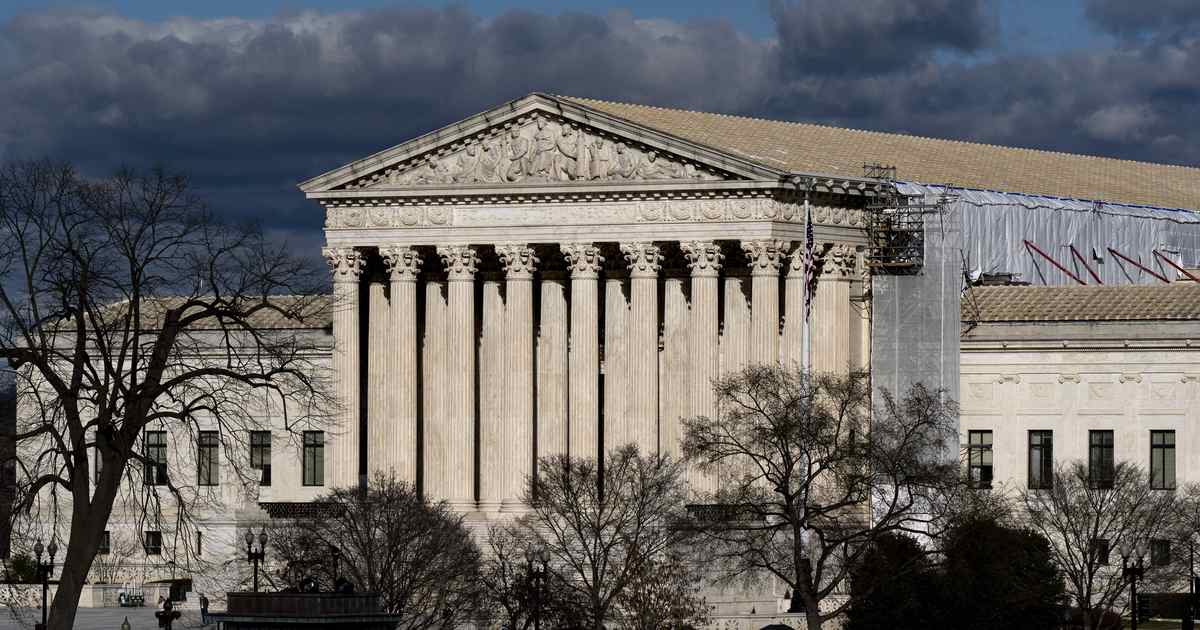
The Supreme Court’s delay in releasing its opinion on Louisiana v. Callais has sparked sharp debate, with Republican voices suggesting the hold-up is strategic to limit redistricting and blunt political fallout if the Voting Rights Act is narrowed or overturned.
Where is the decision on the case tied to the Voting Rights Act, and why is it taking so long? Louisiana v. Callais is the center of attention because it could reshape how majority-minority districts are treated under federal law. On one side, conservatives argue the delay is deliberate; on the other, defenders of the status quo warn of chaotic consequences.
The stakes are clear: a ruling that weakens the Voting Rights Act could change political maps across the South and shift power in Congress for years. Republicans see this potential outcome as a corrective to decades of race-based districting rules, while Democrats fear widespread losses if courts retreat from existing VRA standards. That clash helps explain why any opinion in a case like this would be handled carefully by justices mindful of both law and political fallout.
Democrats in South face wipeout if Supreme Court guts Voting Rights Act — NYT pic.twitter.com/goHof93AS3
— NewsWire (@NewsWire_US) October 15, 2025
Sean Spicer told listeners on The Huddle that the opinion exists but that some justices are deliberately slow-walking dissents to leave little time for states to redraw lines. The assertion feeds a straightforward theory: if dissents arrive late, states cannot react quickly enough to redraw districts before upcoming elections. Whether that is accurate or merely political chatter, it frames how many conservatives view the timetable coming out of the Court.
“I have been told by reliable sources that the decision is done and the minority is slow walking the dissent so that states do not have time to redistrict,” said Spicer.
Does Spicer’s claim mean the Voting Rights Act will be struck down? Not necessarily; the Court could issue a narrow ruling, a broader decision, or an opinion that remands parts of the case to lower courts. Still, the suspicion among Republican observers is that any meaningful curtailment of VRA enforcement will be phased in through cautious opinions and carefully timed dissents.
The Callais dispute turns on whether drawing a majority-minority congressional district in Louisiana violates the 14th and 15th Amendments, and whether such districting remains protected under the modern VRA framework. If the Court narrows protections for race-based district creation, states would gain more latitude to rely on traditional redistricting criteria. Conservatives argue that restoring neutral districting principles ends a long-running judicial preference for race as a dominant factor.
Timing matters because redistricting is a fast-moving political process tied to election calendars. If dissents are delayed until after states must finalize maps, the practical effect is to freeze current districts in place and prevent the immediate political consequences of a new ruling. From a Republican perspective, that kind of judicial choreography benefits one side of the aisle and frustrates those who expect courts to enforce their rulings promptly.
Legal resolution in a case like Callais will not end the politics or the litigation; it will refocus both. Expect fresh rounds of lawsuits, quick legislative countermoves in affected states, and intense public debate over how race, representation, and the Constitution interact. Conservatives will push for interpretations that emphasize neutral principles and state control, while opponents will stress protections intended to guard minority voters from dilution.
For now, the Court’s calendar and the pace of opinions are part of the story as much as the legal questions themselves. Observers on the right are watching closely, convinced that the longer the wait, the likelier it is the Court is managing the fallout from a decision that could reshape electoral politics in the South and beyond.