Washington, D.C.’s violent crime figures have shifted sharply since the National Guard arrived in August 2025, producing a dramatic drop in homicides and broad declines across several major crime categories while some violent offenses rose.
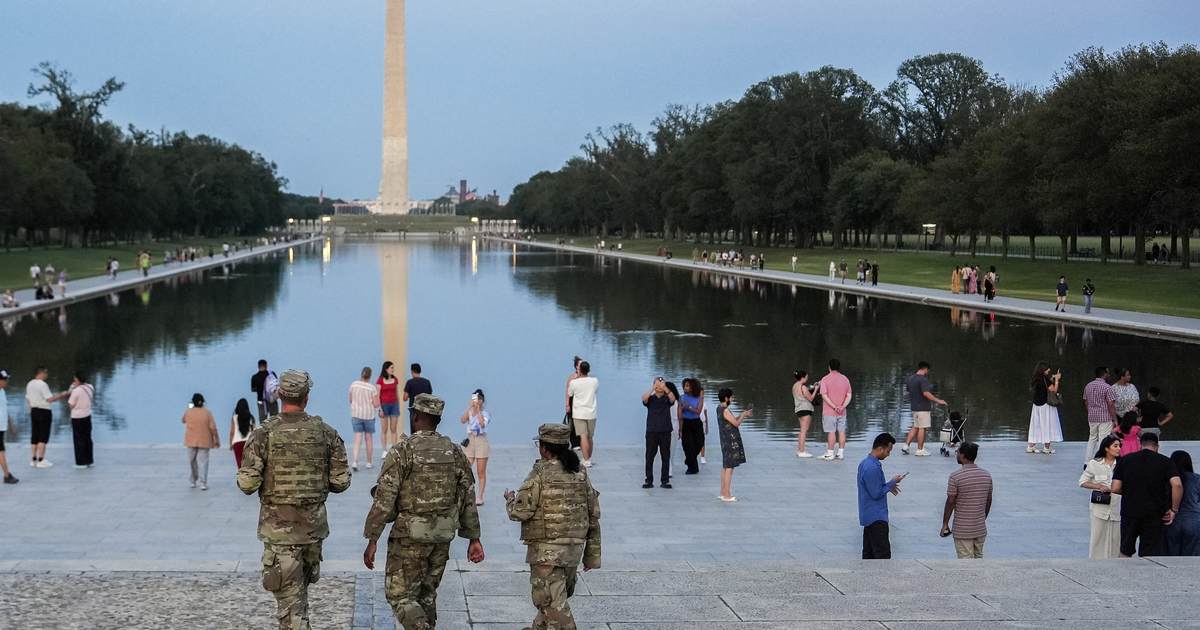
The arrival of the National Guard in August 2025, ordered by President Donald Trump, changed the operational picture on D.C. streets and prompted a measurable fall in killings and other violent crimes. That intervention has been credited with restoring a level of deterrence that had been missing amid rising disorder. Local law enforcement statistics show the most immediate results.
Through the first months of 2026 the capital recorded 20 homicides, a figure that represents a 52 percent decline from the 42 homicides recorded in the same period in 2025, according to D.C. police statistics. Those numbers point to a rapid shift from a year earlier when violence was more frequent and public confidence was eroded. Officials and residents alike have noticed fewer deadly incidents in neighborhoods that once felt unsafe.
Looking at full-year totals, the city recorded 127 homicides in 2025 after a much higher toll of 187 in 2024, reflecting a longer trend of fluctuation that now seems to be bending downward. The pullback in homicides is the headline number, but it sits alongside drops in several other serious offenses. That combination suggests the change is not confined to one type of crime.
Data compiled for the early months of 2026 show steep decreases across multiple categories: homicides down 52 percent, sex abuse down 48 percent, robbery down 23 percent, and motor vehicle theft down 56 percent. Overall crime is reported to be down 25 percent, a broad improvement that challenges the narrative of ever-growing urban chaos. Those percentage shifts are substantial enough to affect daily life and policing priorities.
At the same time, not every metric improved; assaults with a dangerous weapon are by 40 percent.
The presence of the National Guard brought legal authority, visible uniformed personnel, and logistical support that helped police focus resources on hot spots and transit corridors. That added capacity made it easier to clear encampments, secure transit hubs, and create a predictable law enforcement posture that discourages opportunistic offenders. From a Republican perspective, the intervention shows how decisive action and federal backing can restore order when local systems are overwhelmed.
Beyond boots on the ground, data-driven policing and cooperation between federal and local agencies played a role in reallocating patrols and investigations. Officers were able to close more cases and push deterrence into areas that had been neglected, while the Guard handled logistics that freed up patrol capacity. That operational shift is something city administrations can study if they want sustained improvements without perpetual federal deployments.
Key results from our investments in public safety in Washington, DC:
1. Drove down crime to lowest level in decades
2. 97% of 911 calls answered in 20 seconds or less
3. Closed homicide cases at highest rate in 13 years— Mayor Muriel Bowser (@MayorBowser) April 14, 2026
The political fallout is already visible: some local leaders praise the drop in killings, and critics who warned about militarizing the streets have been forced to reckon with the results. Voters will remember which officials supported aggressive steps to reduce violent crime and which resisted them. For many residents who felt besieged in recent years, the contrast is the most persuasive argument.
Still, the spike in assaults with weapons signals that public safety gains are fragile and uneven, and that tactics which suppress one set of crimes can leave other problems to fester. Targeted enforcement, community partnerships, and focused interventions around weapons possession and interpersonal violence will be necessary to build on the early wins. The situation calls for continued attention and adaptive policy choices rather than complacency.
As the capital moves forward, the balance between federal assistance and local control will remain a central debate. The immediate fallout from the Guard deployment gives conservative policymakers an example to point to when arguing for firm action to protect citizens. Meanwhile, residents and officials must weigh the short-term reductions in harm against long-term strategies that keep neighborhoods safe without permanent extraordinary deployments.
Editor’s Note: Do you enjoy Townhall’s conservative reporting that takes on the radical Left and woke media? Support our work so that we can continue to bring you the truth.
Join Townhall VIP and use promo code FIGHT to receive 60% off your membership.