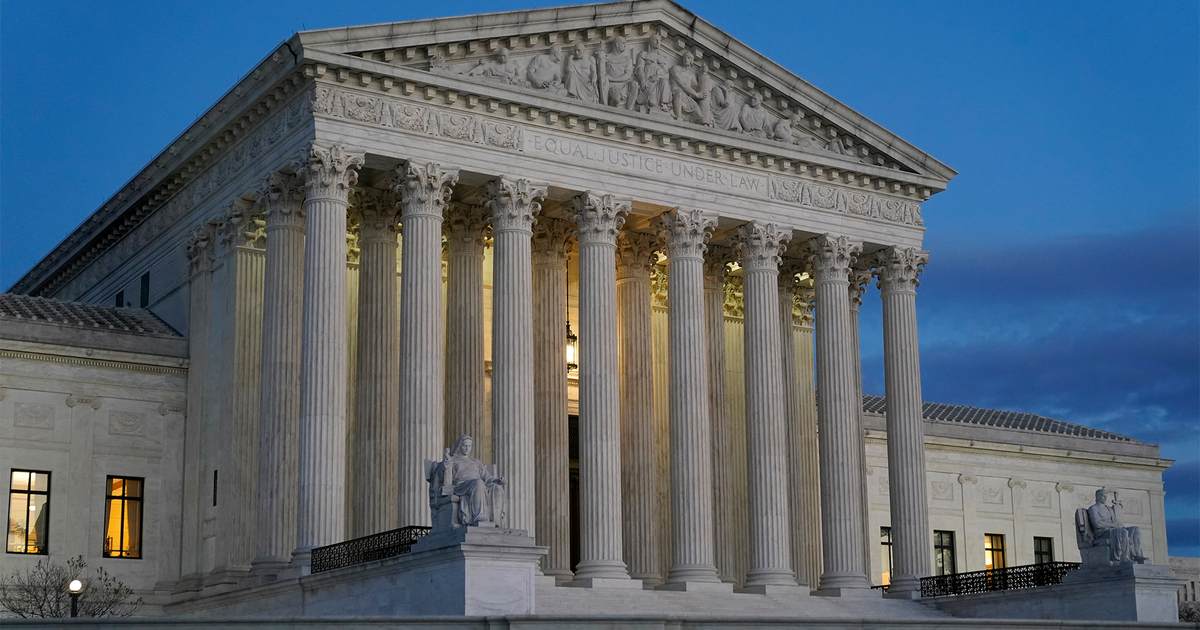
The Supreme Court leak story has reopened old fights about who runs the country, why the court acts the way it does, and which staffer might have slipped internal memos to the press.
Conservatives have long warned that parts of the left see institutions as obstacles when policy doesn’t go their way, and recent leaks out of the Supreme Court fit that pattern. The leak that revealed internal memos touches on deep questions about legitimacy, procedure, and political strategy inside the high court. It also raises a practical question: who had access to nonfinal or off-letterhead memos and why were they passed to reporters?
The brouhaha connects back to 2016 and a terse, one-paragraph order that blocked President Barack Obama’s Clean Power Plan. That 5-to-4 move, issued before other courts weighed in, is widely credited with birthing the modern “shadow docket.” The result was swift and partisan, and it remains a cautionary tale about rushed emergency orders in politically charged cases.
The reaction on the left has been predictable: attack the court’s legitimacy and demand reforms that would neuter judicial review. Court packing, procedural change, and constant delegitimization are tools some activists push when they lose on policy and the law stands in the way. The leak campaign fits this playbook by trying to portray normal judicial process as secretive and unfair.
The documents themselves shed a different light: they show a majority worried that without a stay the Environmental Protection Agency would force utilities into expensive compliance before litigation resolved. That concern echoes past rulings, like Michigan v. EPA, and reflects a legitimate institutional worry about agencies outpacing the courts. What’s striking is not the worry but the method of response, which some argue established a precedent the court now regrets.
Just after 6 p.m. on a February evening in 2016, the Supreme Court issued a cryptic, one paragraph ruling that sent both climate policy and the court itself spinning in new directions.
For two centuries, the court had generally handled major cases at a stately pace that encouraged care and deliberation, relying on written briefs, oral arguments and in-person discussions. The justices composed detailed opinions that explained their thinking to the public and rendered judgment only after other courts had weighed in.
But this time, the justices were sprinting to block a major presidential initiative. By a 5-to-4 vote along partisan lines, the order halted President Barack Obama’s Clean Power Plan, his signature environmental policy. They acted before any other court had addressed the plan’s lawfulness. The decision consisted of only legal boilerplate, without a word of reasoning.
At the time, the ruling seemed like a curious one-off. But that single paragraph turned out to be a sharp and lasting break. That night marks the birth, many legal experts believe, of the court’s modern “shadow docket,” the secretive track that the Supreme Court has since used to make many major decisions, including granting President Trump more than 20 key victories on issues from immigration to agency power.
Since that night a decade ago, the logic behind the Supreme Court’s pivotal 2016 order has remained a mystery. Why did a majority of the justices bypass time-tested procedures and opt for a new way of doing business?
🚨 JUST IN: Outrage is erupting after the Supreme Court suffers ANOTHER LEAK, now to the liberal New York Times
And the leaks tend to go AGAINST CONSERVATIVES. Imagine that.
Who is doing this?! FIRE THE LEAKER.
"There are disgruntled people, that elections have… pic.twitter.com/YDtX7IvnJX
— Eric Daugherty (@EricLDaugh) April 20, 2026
Leaks like this don’t just expose internal memos, they weaponize them. The media narrative has been to treat the leak as proof of secret wrongdoing rather than a symptom of political warfare. Conservative readers should note how selectively outraged the same outlets are when leaks help their preferred side.
Behind the headlines, the memos also offer a tangible clue about the source of the documents. One memo stands out: the Justice Sotomayor memo appears not to be on letterhead, lacks initials, and may bear an incorrect date. That oddity suggests whoever leaked material had access to a nonfinal or uncirculated draft. That is a specific, testable detail rather than broad innuendo.
The documents confirm what a few of us suggested at the time: The Court’s majority was concerned that, without a stay, the Environmental Protection Agency would get away with imposing unlawful regulatory burdens on electric utilities, as has occurred with the mercury regulations held unlawful by the Court in Michigan v. EPA.
As a memo by the Chief Justice notes, the EPA had crowed that the Court’s Michigan decision was effectively irrelevant because utilities had been forced to spend billions of dollars to comply while waiting for the litigation to resolve, and there were reasons to fear history would repeat itself.
[…]
The NYT does not reveal where the memos came from, but the memos contain one potential clue. All of the memos appear to be photocopies of the original documents on letterhead with the authoring justice’s initials or signature–save one. The memo from Justice Sonia Sotomayor’s chambers is not on letterhead, has no signature or initials, and (the NYT notes) appears to have the wrong date (likely a typo–“16” instead of “6”)[Alternatively, the 16 could have been autodated when printed later on plain paper.] This suggests the source had access to a non-final or non-circulated version of the Sotomayor memo, but the NYT gives no indication of why that might be.
That fingerprint narrows the field: the source had internal access and either a motive or a vendetta. Conservative observers should welcome any transparent investigation into how confidential internal papers were handled and why they were shared with friendly reporters. Accountability is a two-way street.
For now, the political effect is the more obvious result: the court’s critics will claim vindication and push reforms to limit judicial independence. Meanwhile, the court must reckon with its own role in creating the conditions — like emergency one-paragraph orders — that reporters turned into a scandal. Both the institution and the press share responsibility for how this story unfolded.
Leaks are an attack on institutional trust whether they come from the left or the right, but here the pattern matches a repeated strategy: when the policy loses, undermine the institution. That approach weakens the safeguards the Constitution set up to protect citizens from overreach. I mean, it was going to be someone from that side of the aisle. The question now is whether anyone in a position to stop this will actually do so.