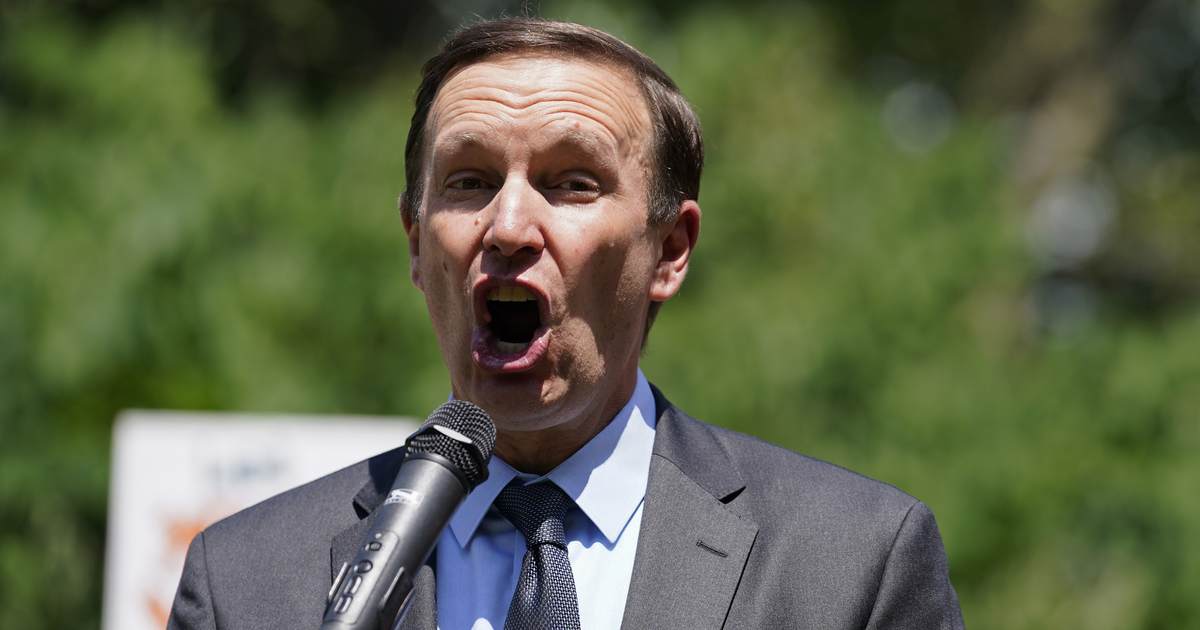
Sen. Chris Murphy was publicly criticized after a social post appeared to celebrate shadow vessels slipping past a U.S. blockade, and the response exposes a sharp divide over how Democrats are talking about Iran and U.S. military action.
Over the weekend, Governor Tim Walz traveled overseas and told audiences Iran posed “no threat” to the world, even calling the strikes against Iran “fascism.” That rhetoric landed as American forces conduct Operation Epic Fury and enforce a naval blockade, and critics say it undercuts U.S. leverage. When Senator Chris Murphy reacted to news that shadow vessels bypassed the blockade, his post drew quick condemnation from conservatives.
Many Republicans see Murphy’s reaction as a broader pattern of Democrats siding rhetorically with Iran rather than supporting U.S. strategy and our troops. The charge is that this kind of commentary weakens resolve at a time when firm action is necessary to deter further aggression. Critics argue that public officials should avoid comments that can be read as cheering adversaries during an active operation.
awesome https://t.co/nRj1trI3rF
— Chris Murphy 🟧 (@ChrisMurphyCT) April 20, 2026
The political motive is simple, opponents say: anything that undermines President Trump’s foreign policy will be seized as political advantage. Voters watching from the home front expect elected officials to put national security ahead of partisan scoring. When that expectation isn’t met, frustration spills into sharp critiques across the right-of-center media and social feeds.
Republicans also pointed to a preserved screenshot of Murphy’s post as evidence of intent, noting that social media posts can be deleted but rarely erased from public memory. The internet keeps records, and opponents saved the content to show voters what was posted. That record fuels a narrative that some Democrats prioritize political positioning over national unity in a crisis.
From this perspective, Murphy’s audience appears to be the international critics of U.S. policy rather than everyday Americans who want security and stability. Critics accuse him of aligning more with Iranian interests and open-border rhetoric than with concerns about national defense and border security. That charge combines foreign policy disagreement with domestic political grievances to paint a picture many Republicans find troubling.
The reaction goes beyond a single post, drawing on past statements to question judgment and priorities. In 2022, Murphy reportedly suggested he would consider removing Iran’s Revolutionary Guard from the terrorist list if it advanced a deal, a position conservatives say would reward a brutal regime. For critics, that history means current comments fit a pattern, not a one-off misstep.
Accusations also target the nature of the Iranian regime itself, with commentators pointing to the IRGC’s history of brutal repression and mass killings as reason for a hardline stance. Republicans argue the Revolutionary Guard has slaughtered tens of thousands of Iranians and remains responsible for severe human rights abuses, and they find it unacceptable to treat that organization as anything but a terrorist force. Those facts shape how conservatives interpret calls for accommodation or softer language from U.S. officials.
Supporters of tougher measures say the current approach is what actually protects Americans and regional stability, noting that decisive action changes the calculations of hostile actors. They frame recent strikes and blockades as effective tools for degrading Iran’s capacity to threaten shipping and allies. In that view, public commentary that downplays the threat or celebrates breaches of a blockade is not just tone-deaf but dangerous.
Republican commentators point to Murphy’s record as proof of consistent skepticism toward pressure-based tactics, arguing his stance has been more about bargaining and concessions than deterrence. That assessment fuels a broader argument that Democrats have long favored diplomacy framed as appeasement. For critics, the right mix of words and actions matters: strong language and firm enforcement together deter aggression; equivocation invites it.
Among conservatives, there is a clear demand for elected officials who back the troops, enforce the law, and prioritize national security over partisan theater. When officials appear to do otherwise, activists and voters respond loudly. The current debate over words, deeds, and whom leaders seem to side with is reshaping how people evaluate lawmakers heading into the next election cycle.
Editor’s Note: For decades, former presidents have been all talk and no action. Now, Donald Trump is eliminating the threat from Iran once and for all.