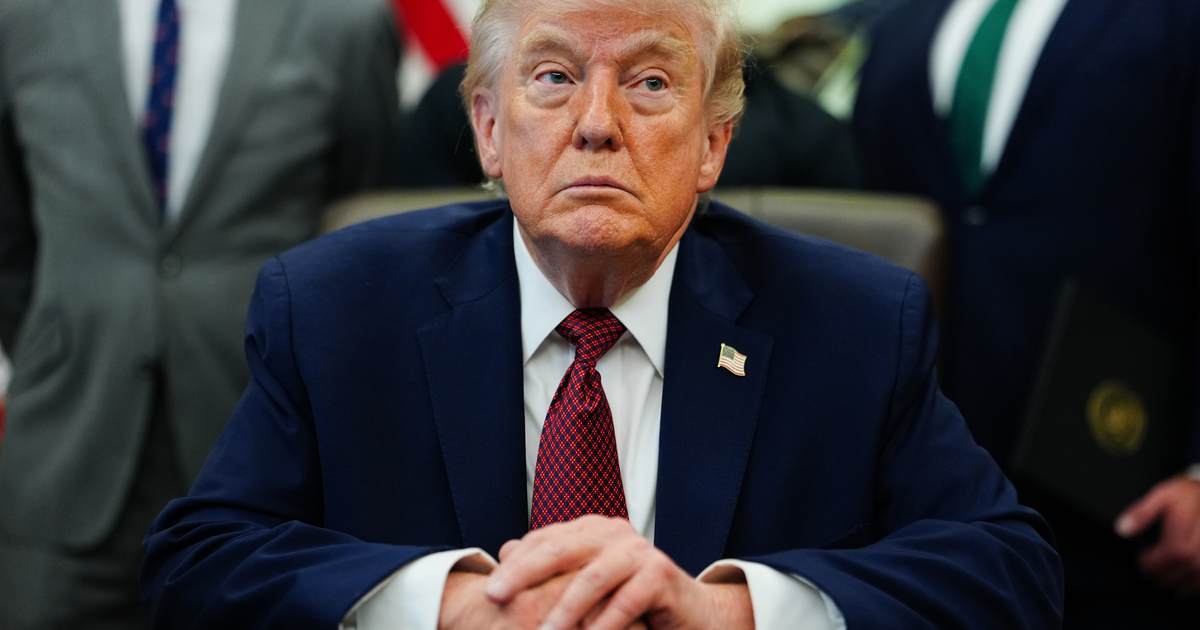
President Trump used an Oval Office event to announce a healthcare deal and pushed back hard when a PBS reporter asked whether he would ever use nuclear weapons against Iran, turning a routine announcement into a headline-making confrontation.
President Trump held an Oval Office event to unveil a Most Favored Nation agreement with Regeneron that aims to shake up drug pricing. What should have been a straightforward policy moment narrowed quickly when PBS’ White House Correspondent Liz Landers asked about the use of nuclear weapons in Iran. The question set up a tense exchange that revealed more about the press pool than about policy.
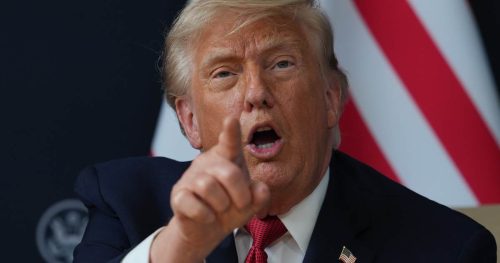
Trump’s answer was immediate and blunt, cutting the pretension out of the exchange and calling the line of questioning out for what he saw it as. “Why would a stupid question like that be asked?” he replied, refusing to play along with a hypothetical designed to provoke. The president then steered the conversation back to the reality of modern warfare and American capabilities.
.@POTUS to Jim Acosta's girlfriend (@ElizLanders) when she asks one of the dumbest questions ever — if he'd use a nuclear weapon on Iran:
"Why would a stupid question like that be asked?… No, I wouldn't use it. A nuclear weapon should never be allowed to be used by anybody." pic.twitter.com/U235920fwD
— Rapid Response 47 (@RapidResponse47) April 23, 2026
He described how he relied on conventional munitions to degrade adversaries and argued nuclear weapons were unnecessary in that context. The president emphasized restraint and the practical use of force rather than flirting with mutually assured destruction. That practical stance framed the rest of his remarks about deterrence and military strength.
“A nuclear weapon should never be allowed to be used by anybody,” he said, making a clear and absolute line against nuclear use. That sentence landed in a room full of reporters who often prefer hypothetical scenarios to hard facts, and it was delivered with the kind of certainty Trump favors. It served both as policy statement and a rebuke to sensationalist questioning.
Liz Landers, the reporter who raised the issue, represents a media class that too often chases fear-based hypotheticals instead of asking concrete policy questions. The press learned long ago that dramatic hypotheticals make headlines, but they rarely clarify strategy or provide useful information to the public. The exchange illustrated the gulf between press theater and presidential messaging on national security.
At the same time, the Most Favored Nation announcement mattered on its own terms, promising to leverage federal purchasing power against high drug prices. Trump framed the deal as part of a broader push to deliver value to American patients and hold pharmaceutical companies accountable. His administration continues to lean on market-based tools and agreements to force better pricing outcomes.
Amid the posturing, one eyebrow-raising aside circulated through the press corps: Landers is reportedly Jim Acosta’s girlfriend. It all makes sense now. That kind of insider context helps explain why certain outlets keep circling the same angles instead of covering the substance of policy announcements.
The episode underscoresthat tough talk and tough questions are different things; one tests resolve, the other stokes panic. From a Republican viewpoint, there is a clear need for reporters to distinguish between legitimate oversight and gotcha moments that serve cable ratings more than national security. Trump’s reply was meant to shut down the latter without ceding the field on seriousness.
Onlookers watching the exchange saw a president unwilling to be shunted into abstract hypotheticals, and a media class that still favors spectacle. The administration’s position on nuclear weapons remains absolute and public, and Trump used the moment to remind everyone that America’s strength does not require escalation to the unthinkable. That clarity is precisely what allies and adversaries need to hear.
Critics will call the president’s response brash, while supporters will say it was refreshingly honest and firm. Either way, the incident exposes the persistent friction between an administration focused on policy outcomes and a media landscape chasing provocative headlines. The dynamic plays out every time a serious policy announcement is interrupted by a showpiece question.
The takeaway for anyone paying attention is that national security discussions deserve sober, accountable journalism rather than theatrical hypotheticals. Trump answered directly, anchored policy in concrete actions, and refused to dignify a speculative trap with a long explanation. The Oval Office event ended with the administration advancing a health care move and restating a clear anti-nuclear stance that left little room for ambiguity.