The House has passed a Department of Homeland Security funding bill that ends a 75-day partial shutdown while leaving funding for ICE and CBP to be decided separately, and senior officials and leaders reacted strongly to the outcome.
The 75-day partial government shutdown tied to DHS funding finally ended when the House approved a bill that covers most DHS agencies while excluding funding for Immigration and Customs Enforcement and Customs and Border Protection. Lawmakers framed the vote as a targeted approach: keep essential homeland functions running now, and settle contentious border enforcement funding through a separate legislative vehicle. The move clears the immediate logjam for agencies like FEMA and the U.S. Coast Guard, but it deliberately punts the most politically explosive pieces to another fight.
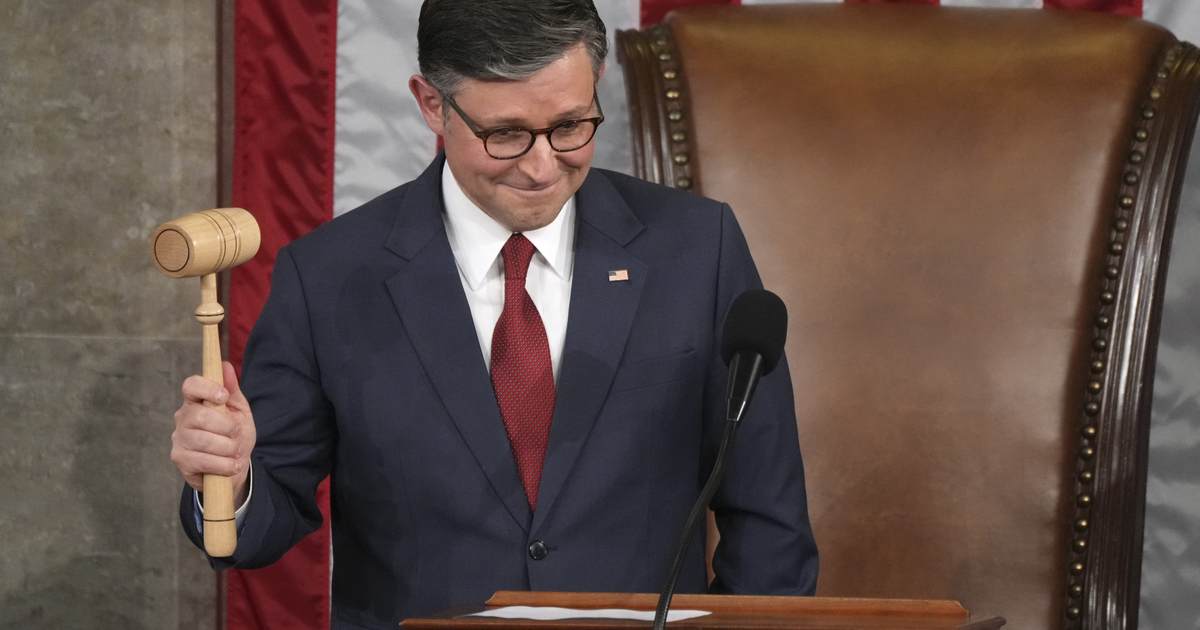
“Now I just want to say that sometimes the process around here is cumbersome, that’s the way this works, but in spite of our razor-thin, historically small majority, House Republicans continue to deliver for the American people,” Speaker of the House Mike Johnson told reporters after the bill was passed. “We will continue to do that for the remainder of the year, and that is a large reason why we are going to win the midterms, so that the grown-ups can stay in charge here.” His remarks stressed conservative control and the argument that steady governance requires holding firm on priorities.
BREAKING: The House has voted to fund most of the Department of Homeland Security, ending a 75-day shutdown and sending the measure to President Trump. The bill reopens DHS but excludes new funding for Immigration and Customs Enforcement (ICE) and Border Patrol, with Republicans… pic.twitter.com/nTBZCKFFJf
— Breaking911 (@Breaking911) April 30, 2026
Johnson then pressed the political fault line directly, accusing Democrats of opposing basic enforcement. He said, “The sad and actually shocking truth is, there’s not a Democrat in the House or the Senate that believes border security and immigration enforcement should exist at all. By word and deed, Democrats have made clear their desire to defund both of those critical functions of our government.” That language frames the coming separate ICE and CBP funding fight as an existential choice about enforcement.
House leaders say they will take up ICE and CBP funding in a separate bill so members can vote on those components without threatening funding for other DHS responsibilities. Among the DHS units expected to get immediate appropriations are the U.S. Coast Guard, FEMA, the Secret Service, and the Cybersecurity and Infrastructure Security Agency (CISA), which handles threats to critical infrastructure. The split approach aims to keep emergency services and national security operations funded while isolating the border debate for a focused showdown.
“After 76 days, the longest government shutdown in history is over,” DHs Secretary Markwayne Mullin wrote in a statement. “DHS is back open, @ICEgov and @CBP will be funded through reconciliation (with NO Democrat votes) so liberals can’t play games with federal law enforcement funding.” Mullin’s statement ties funding for ICE and CBP to reconciliation processes and underscores an expectation of partisan division on the next steps.
“To be clear, this Democrat shutdown NEVER should have happened,” he added. “To our great, patriotic employees who have continued to protect the homeland every single day without a guaranteed paycheck—thank you. President Trump and I are very grateful to be in the fight with you to Make America Safe Again.” Those words were meant to signal solidarity with rank-and-file DHS employees who worked through the impasse and to tie the resolution to broader Republican priorities on security.
Practical pressures drove the compromise: unfunded essential services would have harmed disaster response, maritime safety, and counterterrorism operations, and Republicans emphasized that keeping those functions intact was nonnegotiable. At the same time, conservatives insisted on a separate, visible vote on border enforcement so there would be no ambiguity about who supports detention, deportation, and patrol operations. That tactical split aims to preserve operational readiness now and force a cleaner political choice later.
The result leaves the next phase squarely political. Expect intense negotiation and high-stakes messaging as the separate bill for ICE and CBP funding moves forward, and expect both sides to cast the outcome as a test of who will protect the country. For now, most DHS agencies are back to work, but the broader debate over border security and immigration enforcement is set to dominate the weeks ahead.
Editor’s Note: Democrats continue to put our nation’s national security at risk simply because they want to keep illegal aliens from being deported.