Quick summary: A disputed exchange between President Trump and ABC reporter Jonathan Karl over who called whom after the White House Correspondents’ Association dinner shooting has erupted into a public spat, with social media clips and differing accounts fueling questions about who is telling the truth.
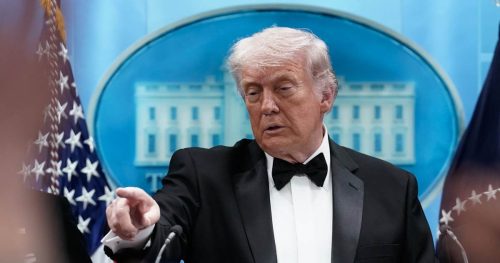
President Trump took to social media to blast ABC reporter Jonathan Karl after an alleged phone call that Karl said happened the morning after the attack at the White House Correspondents’ Association dinner. The report said Karl reached out to check on the reporter after what officials are calling the third assassination attempt tied to that event. The president disputed the account and labeled the coverage dishonest, turning what should be a simple fact check into another media confrontation.
The incident at the WHCA dinner involved a suspect, Cole Allen, who has since been charged in connection with the attempt to storm the event and target the president and top officials. Security sources say the situation was chaotic and frightening for attendees, underscoring the real danger behind the headlines. That context matters because it’s the kind of moment when accuracy matters most and when journalists should be careful not to insert themselves into the story.
Jonathan Karl reportedly said the president called him to see if he was ok the day after the attack, and a clip of that claim circulated on social platforms through outlets like Rapid Response 47. The president denies having made such a call and says Karl actually called him first and that Trump did not answer. The conflicting narratives went public quickly, and the social media clip only opened the argument to more viewers and partisan takes.
🚨 NOW: President Trump CALLS OUT Jon Karl for saying 47 called him "early in the morning" to ask if "HE was OK" after the assassination attempt
"Jonathan Karl, of ABC Fake News, made a statement that I called him early in the morning, the day after the assassination attempt, to… pic.twitter.com/8JQX1bPZYS
— Eric Daugherty (@EricLDaugh) May 4, 2026
Jonathan Karl, of ABC Fake News, made a statement that I called him early in the morning, the day after the assassination attempt, to ask whether or not HE was OK. No, this was a hit on ME, not HIM, and I didn’t make such a call, why would I do that? He called me, but I didn’t take his call — He just confirmed that to me when he called again. I would say that’s very dishonest reporting. He’s trying to make himself look important but, I’m not surprised, because it comes from ABC Fake News! President DONALD J. TRUMP
That exact statement from the president landed with people who already distrust mainstream outlets, and it fed into a broader narrative about media credibility. From a Republican point of view, the quick leap to the reporter-as-source narrative looks convenient for journalists eager to be part of the drama. When a reporter’s version of events elevates their own role, it invites scrutiny and skepticism, especially amid a national security scare.
Look at how fast the story spread: a clip, a claim, and then a presidential denial — all before any traditional, slow-motion verification process could sort out who called whom. In high-stakes situations, timing and communication logs matter more than impressions. If Karl did make the claim without solid confirmation, that’s a journalistic problem; if the president misremembered, that’s noteworthy too, but right now the media reaction seems lopsided.
The security angle of the WHCA dinner should be front and center, not who got a call and who didn’t take it. The attempt on the president’s life is the actual crime here, and the suspect being charged is the critical fact that requires follow-through and accountability. Yet headlines and social posts focused on the call narrative, and that choice of emphasis reveals media priorities to many conservatives: personality beats procedure.
Public reaction split along predictable lines, with partisan audiences interpreting the exchange to fit their view of the press. Some saw the president’s denial as confirmation of a hostile media that will embellish to stay relevant. Others held to the reporter’s version, insisting that Trump’s statement was a defensive pushback. Because both sides are loud and certain, neutral verification becomes harder to hear above the noise.
What matters going forward is a clear look at phone records, timestamps, and any available video or audio that can settle the basic question of who placed the first call. Republicans will argue for rigorous proof before accepting a narrative that elevates a reporter’s role in an assassination attempt story. For now, this remains a public disagreement with real implications for trust in institutions and coverage choices during crises.