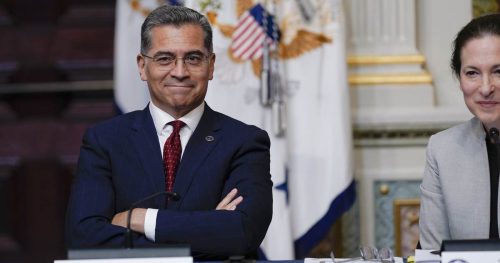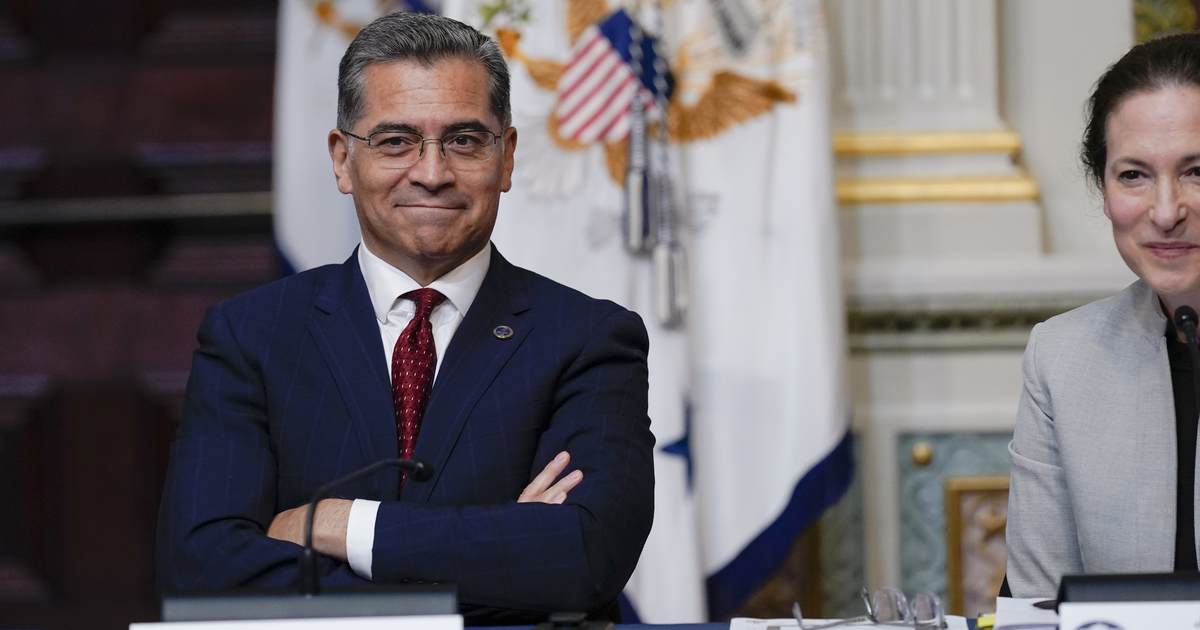
Xavier Becerra insisted there were no missing migrant children and labeled the claims a “Trump lie,” even though official counts and recovery efforts under the previous administration documented hundreds of thousands affected and numerous rescues.
During a recent debate, Xavier Becerra dismissed assertions that thousands of migrant children went missing, framing the whole issue as a political narrative recycled from President Trump’s 2024 campaign. He repeated a talking point that painted reports of missing children as partisan fiction, despite public figures and agency tallies indicating a much larger problem. That contradiction landed squarely in the middle of a fierce argument over accountability at the border and who is owed the blame. The exchange underscored how sharply divided the conversation remains.
Becerra’s words were blunt and repeatable: “Using Trump lies to try to damage your opponents is worse,” Becerra said. “Everyone knows that Trump campaigned in 2024, talking about lost kids when there were no such thing as lost kids. To hear these candidates now talk about that, if they’re so concerned, why haven’t they taking any action to find these ‘lost kids’?” The air quotes are a nice touch, Xavier. “I think it’s shameful for people to use Trump lies to try to gain favor with voters.”
The factual record he was pushing back against is stark: a Department of Homeland Security Inspector General count put the number of unaccounted-for migrant children in the hundreds of thousands. Multiple public statements and rescue tallies from the prior administration report large numbers of recoveries. Those figures, announced at different times, show a sustained effort by federal authorities to locate and remove children from dangerous situations. The scale of the problem is why the language in the debate felt more like denial than rebuttal.
Becerra: "The Trump campaign in 2024 talked about 'lost kids' when there were no lost kids."
The Biden DHS' own Inspector General found that over 300,000 migrant children went missing under their watch. pic.twitter.com/jyrNSzQs2n
— Greg Price (@greg_price11) May 6, 2026
Officials at the time reported various totals as rescues unfolded, and those numbers kept changing as operations continued and new cases emerged. In July 2025 DHS announced it had found 13,000 children thought to be missing. Border Czar Tom Homan later said 62,000 had been rescued, while another senior official cited locations for 172,000 children. In subsequent statements the rescue totals were adjusted again, with figures like 145,000 circulated publicly as teams continued sweeps and investigations.
Some independent reports suggested the total of missing or unaccounted-for children could be significantly higher, with estimates approaching 450,000 in certain analyses. That range reflects both the chaotic flow across the border under the prior administration and the complexity of tracking children moved through informal and illicit networks. It also highlights how official counts, media reports, and advocacy research can produce different snapshots of a sprawling problem. The discrepancy feeds political arguments, but it doesn’t erase the human toll.
Many of the kids recovered by federal efforts endured horrific abuse, including sexual exploitation and forced labor, and those rescue operations exposed criminal networks that profited off vulnerable children. The public statements about rescues were not just numbers; they represented cases of trafficking, abuse, and neglect that law enforcement was forced to confront. That reality sits at odds with a blanket dismissal that insists no children were ever lost or harmed. For advocates and victims, the numbers translate to graves avoided and trauma uncovered.
Becerra’s insistence that the topic is simply a recycled Trump talking point sidesteps the operational reality on the ground and the officials who worked to locate children. By calling it a “Trump lie,” he effectively shames colleagues who acknowledged the numbers and the rescues, and he pressures Democrats to stay in lockstep with a political line rather than press for answers. That tactic frustrates those who want straightforward accountability and a clear explanation of what happened during a chaotic period at the border. Political theater is not a substitute for results when children are at stake.
Mainstream journalists, meanwhile, rarely pressed Becerra with follow-ups that connected his rhetoric to the reported rescues and the public statements listing recovered children. The lack of persistent questioning left a gap between dramatic debate claims and the messy trail of agency reports and rescue tallies. Observers on the right argue that those gaps allow officials to rewrite the record with little consequence. When coverage doesn’t probe, accountability suffers and the public gets soundbites instead of answers.
The whole episode is a reminder that border policy and human trafficking are policy issues wrapped in partisan dispute, and that messaging sometimes outpaces facts. Republican voices point to the rescues and the numbers as proof that the previous administration acted to find and extract children from dangerous situations. Democrats like Becerra choose to cast those claims as political smears, leaving voters to choose which version of events to trust. What can’t be disputed is that children were harmed and that finding them was, and remains, a moral and operational imperative.