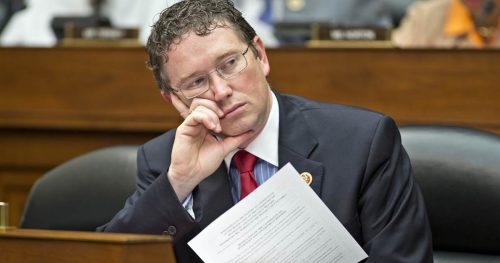
Rep. Thomas Massie lost his primary last night, and a single thread from The Federalist captured why many voters turned on him — they saw a shift from consistent libertarian to someone chasing headlines, and that change cost him his seat.
Thomas Massie’s concession made it painfully clear the campaign was over, and his behavior in the speech suggested he won’t leave quietly. His district is staunchly pro-Trump, and many locals wanted a representative who would actively advance the MAGA agenda. Massie’s record — including votes against the Trump tax cuts and certain border measures — put him at odds with those voters.
Republicans will debate motives, but the practical takeaway is simple: voters noticed a different Massie than the one they once trusted. He had previously fought off Trump-backed challenges and survived attacks, but something changed between then and now. Well, he changed, and the voters took notice [emphasis mine]:
🔴 Trump endorsed Ed Gallrein won 19 of 21 Kentucky counties, leaving anti Trump Rep. Thomas Massie with just 2, including his home county.
— Political Polls (@PpollingNumbers) May 20, 2026
The Federalist’s Sean Davis had a tweet that perfectly summed up Massie’s loss. Davis reminded readers that Massie had beaten Trump’s operatives before, which underscored that this defeat wasn’t inevitable. The gist was that Massie’s own apparent transformation, not just outside forces, turned off the base.
Why did Massie lose tonight?
Massie went from principled libertarian during COVID, to GOP leadership lapdog under McCarthy, to anti-Trump Epstein obsessive in 2025 after tweeting about that issue a whopping three (3) times in the decade prior. The nail in the coffin for him was voting against OBBB in 2025 because, according to Massie, it did too much to secure the border.
Trump mercilessly trashed Massie in 2020–calling him a “disaster” for America and Kentucky and saying he should be thrown out of the GOP entirely—but Massie easily swatted that away and won 81-19, so you can’t say he only lost because of Trump. He went toe-to-toe with Trump on COVID in 2020 and won overwhelmingly.
Massie lost because he went from being perceived as a quirky but lovable nerd who seemed to genuinely believe everything he said, to looking like a clout-chasing influencer who cared more about getting TV time with Democrats on an issue he clearly never cared about until five minutes ago than he did about representing his voters.
We’ll never know what caused the apparent personality change—maybe it was the death of his wife, maybe it was the McCarthy race followed by McCarthy’s ouster, or maybe it was a desire for notoriety or media acclaim and a lucrative podcasting career outside of Congress—but the drastic change was undeniable, as was the seeming lack of interest in much of anything happening in Kentucky.
Blame Trump, blame Israel, blame Epstein, blame the tragic death of a spouse, I don’t care. But you cannot just wave away 2020 Massie going face-to-face with the Trump machine and winning in a rout only to get smoked six years later.
Massie’s voters didn’t really change all that much, but he did, and they noticed.
At his watch party, supporters were heard chanting “2028,” a pointed reminder that losing a congressional primary raises doubts about broader political ambitions. If an incumbent can’t hold a base in a red district, it sends a message about viability at the national level. Other examples, like Liz Cheney’s defeat after she ignored her party’s voters, show that party loyalty and local alignment still matter.
Congrats again, Ed Gallrein.