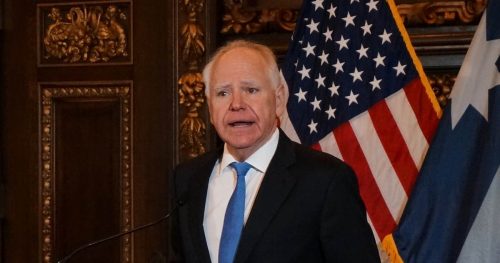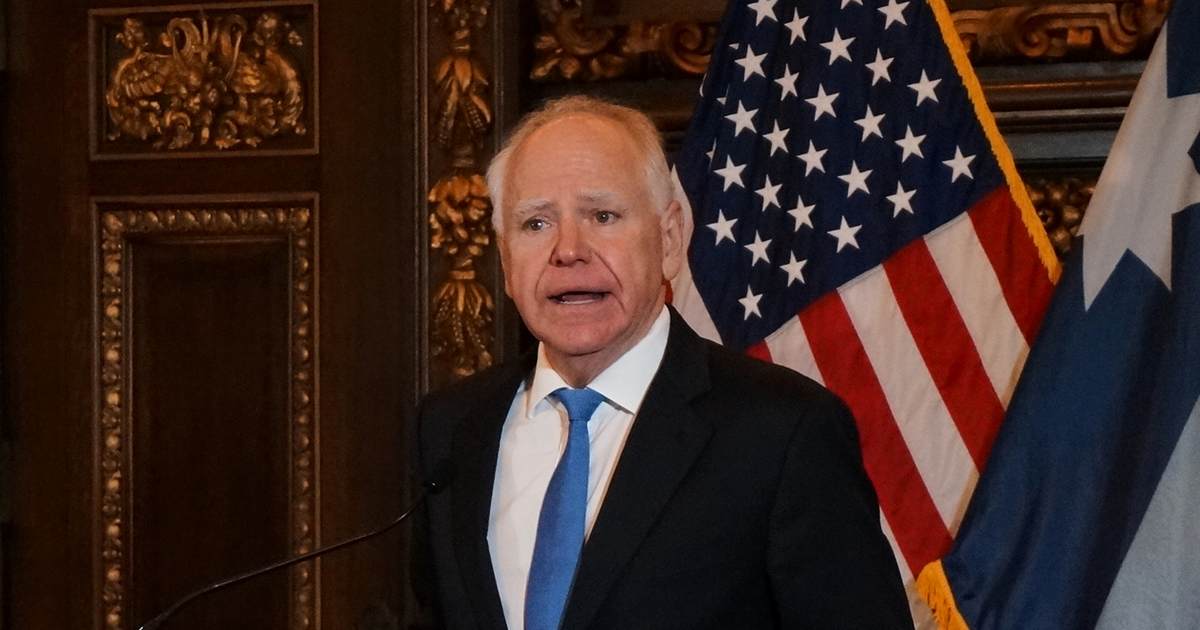
Minnesota Governor Tim Walz has escalated his opposition to federal immigration enforcement by intervening to halt the deportation of a convicted offender, pardoning a man set for removal and signaling a wider political conflict over ICE and border security.
Governor Tim Walz has been openly hostile to ICE and Border Patrol for months, using rhetoric and policy signals that encourage resistance to federal enforcement. His actions are now more than talk; he granted a pardon intended to prevent deportation, a move that critics say undermines law and order. This is happening as Republican voters demand stronger border control and clearer accountability.
The specific case involves Jai Vang, who was convicted as a teenager in a 1994 armed robbery case and later faced deportation to Laos. Walz convened the Board of Pardons ahead of its next scheduled meeting, and the pardon was granted after a unanimous recommendation by the Clemency Review Commission. That decision effectively interrupts the standard deportation timeline and raises questions about executive discretion in immigration matters.
Jai Vang was arrested, tried and convicted of aiding and abetting armed robbery in an October 1994 incident in Hennepin County, when he was 18 years old.
https://x.com/FOX9/status/2059715070762815583
Walz on Wednesday held a special meeting of the Board of Pardons, joined by Natalie Hudson, chief justice of the Minnesota Supreme Court, and Attorney General Keith Ellison.
Walz said his office was notified on May 14 that Vang was taken into ICE custody and set to be deported in June, before the next meeting of the Board of Pardons.
Vang had applied for a pardon to avoid deportation, which was unanimously recommended by the Clemency Review Commission.
That move has infuriated conservatives who see it as partisan theater aimed at resisting federal immigration enforcement and scoring political points. Critics argue Walz prioritized ideology over the safety and legal expectations of Minnesota residents by sparing someone who faces removal. From a Republican perspective, this is part of a pattern where Democrats put party goals ahead of public safety.
There are other routes the Department of Homeland Security could take to pursue deportation if it chooses, and critics say DHS should explore those options aggressively. The federal government has tools to enforce immigration law even when state-level actors object, but coordination breaks down when governors intervene. That friction is intentional in some jurisdictions, and Minnesota’s recent pardon is a striking example.
Democrats have made their stance clear over time: they prefer sanctuary-style policies that limit cooperation with federal immigration enforcement. In practice, that often means fewer removals and more legal hurdles for deportation cases, which frustrates citizens who expect consistent enforcement. Republican voters see these policies as an invitation to illegal migration and a reward system that encourages further lawbreaking.
Walz’s political calculations are obvious to his critics, who point out that protecting noncitizens with criminal histories plays well with certain constituencies. That calculus, however, comes at a cost to ordinary Americans who want secure communities and a fair immigration system that respects both law and due process. The argument from the right is straightforward: pardons should not be used to shield individuals from lawful deportation when they pose potential risks.
This episode also highlights a broader clash over federalism and the separation of responsibilities between states and the federal government on immigration. Governors can influence local cooperation, but they cannot rewrite federal immigration statutes, and aggressive state-level interventions can complicate enforcement. For Republican policymakers, the solution is clear: restore stronger border control, back ICE and Border Patrol, and stop using pardons as a political shield.
Walz’s actions are a reminder that immigration policy is increasingly a partisan weapon, with real consequences for communities. When pardons are timed to block deportation, it shifts the debate from legal standards to political theater, and that shift is dangerous. Republicans will continue to press for policies that prioritize citizen safety and the rule of law.