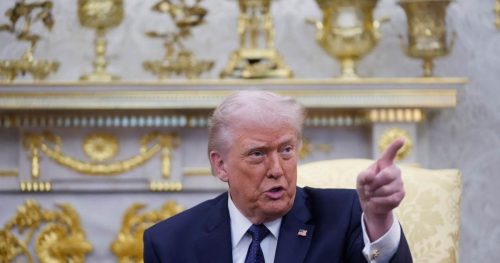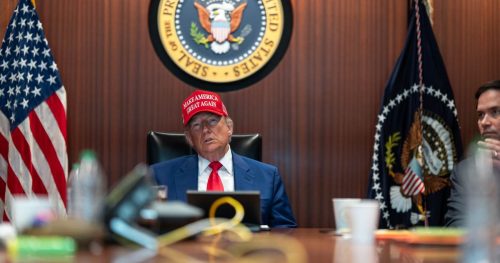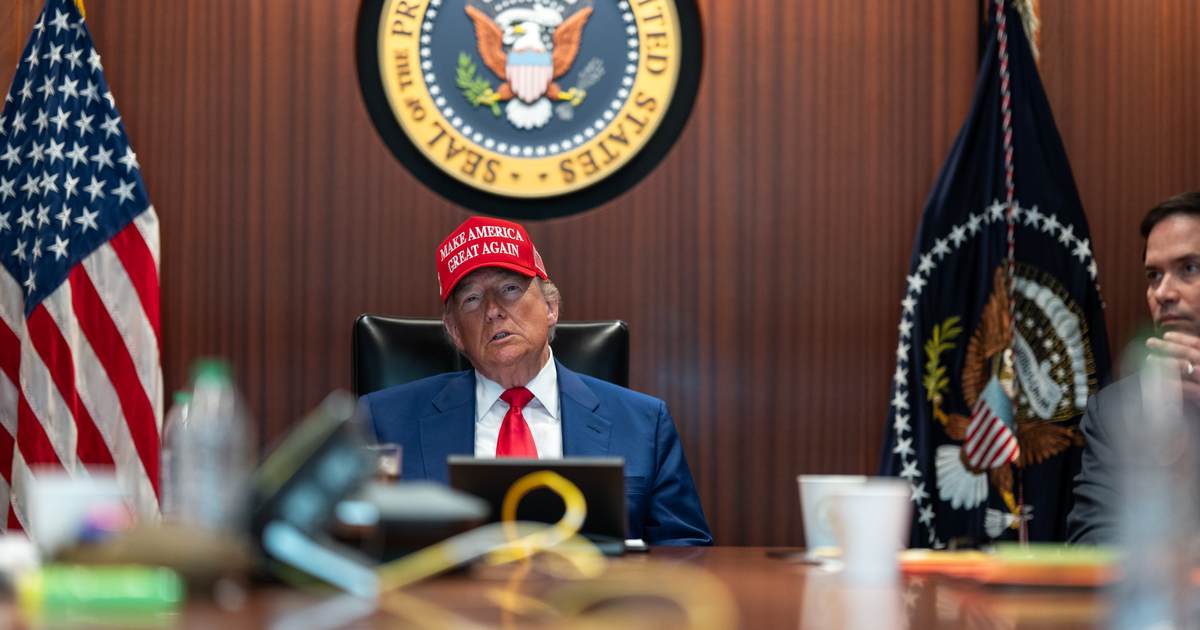
President Trump is in the Situation Room preparing to make a final decision on U.S. action regarding Iran, weighing a proposed 60-day pause to negotiate limits on Iran’s nuclear program, while insisting on strict conditions for the Strait of Hormuz and nuclear materials.
President Donald Trump has been reported in the Situation Room, ready to “make a final determination” about the next steps on military involvement with Iran. Talks circulated about a possible additional 60-day ceasefire window to pursue diplomatic measures, but the president is holding firm on several nonnegotiable points. This moment looks like a test of whether tough posture and credible force can be paired with a diplomatic pause. Republicans see this as classic America-first decision-making: secure our interests, then talk.
On his Truth Social feed the president made clear demands for Iran’s future behavior, writing that “Iran must agree that they will never have a Nuclear Weapon or Bomb” and that there must be no restrictions on passage through the Strait of Hormuz. He also insisted that there will be no “exchange” of cash, “until further notice.” The language is blunt and deliberate, meant to remove wiggle room and force verifiable outcomes rather than optimistic promises.
https://x.com/FoxNews/status/2060069581813629432
Part of the administration’s pressure play is a naval posture around the Strait of Hormuz, the artery for a large share of global oil shipments. The president referenced handling of mines and underwater hazards directly, saying “All water mines (bombs), if any, will be terminated (we have removed, through detonation, numerous such mines with our great underwater mine sweepers,” which signals willingness to neutralize threats that jeopardize commerce and military freedom of navigation. That approach is intended to protect American economic and strategic interests while deterring escalation.
Later remarks from the president doubled down on the plan to clear remaining mines and ease disruptions to shipping: “Iran will complete the immediate removal and/or detonation of any mines that are left, which will not be many!). Ships caught in the Strait due to our amazing and unprecedented Naval Blockade, which will now be lifted, may start the process of “heading home!” Say HELLO to your wives, husbands, parents, and families from me, your favorite President!” The tone mixes military resolve with a personal touch, underlining the human stakes of keeping shipping lanes open.
The administration is also pushing for a coordinated effort with international partners to locate and destroy sensitive nuclear materials. The president stated that “enriched material […] will be unearthed by the United States” alongside Iran and the International Atomic Energy Agency for destruction. That phrasing signals a hands-on verification step: not merely promises, but physical removal and elimination of material that could be weaponized.
From a Republican perspective this is the right mix: show strength, demand verifiable disarmament, and keep diplomacy on a leash. Negotiations without teeth produce bad outcomes, and a 60-day window ought to be a pressured opportunity to deliver tangible results. The alternative—allowing Iran to inch closer to a bomb while cash flows or restrictions persist—would be unacceptable.
Critics will call for more caution or immediate détente, but the administration is betting that clear consequences and forward-positioned forces offer the best chance to force Tehran to choose. Naval blockades and mine-clearing operations are costly moves, but they protect global commerce and American credibility. Republicans will argue that credibility is not an abstract asset; it’s what keeps rivals from testing us.
Operational realities matter here: mine clearance, inspection chains, joint operations with the IAEA, and active naval escorts all require planning and resources. The president’s public statements compress complex logistics into a few pointed lines, signaling intent rather than spelling out each technical step. That ambiguity can be strategic, leaving opponents uncertain about the timing and shape of U.S. actions.
Domestically, the move gives Republican lawmakers and voters a clear posture to support: defend maritime commerce, prevent nuclear proliferation, and demand real verification. It also reframes diplomacy as something earned through actions on the ground, not handed over in quiet backroom deals. If Iran agrees to genuine, verifiable steps, a pause can buy time; if not, the administration has already laid groundwork to respond.
What comes next is a short, intense period where measured force meets rigid demands for compliance. The president has placed a premium on concrete outcomes: no bomb, cleared mines, no cash transfers, and the removal and destruction of enriched material. That checklist of conditions sets a high bar, and the consequence of failure will determine whether diplomacy or deterrence takes the lead.