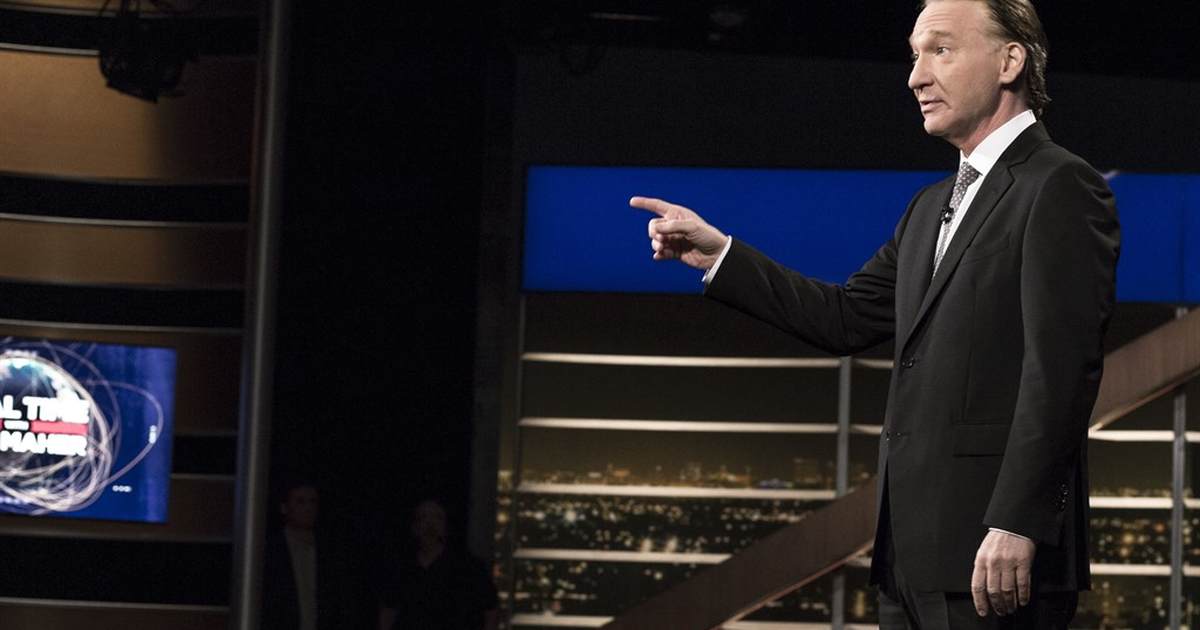
Bill Maher squared off with Sen. Chris Murphy over claims that CBS News and 60 Minutes are bending to pro-Trump pressure, calling the senator’s assertions overblown and arguing that the evidence doesn’t match the rhetoric.
Sen. Chris Murphy (D-CT) publicly warned that CBS News and 60 Minutes are on the front lines of a supposed censorship fight, pointing to management shake-ups and firings as proof. He cast the network’s personnel moves as part of a broader effort to silence critics of the president, a charge he framed as a regulatory and political threat.
That’s where Bill Maher stepped in and pushed back hard. Maher noted that Bari Weiss is not a MAGA operative but a classical liberal, and he questioned whether the firing of Scott Pelley amounted to the end of independent journalism. He framed the argument plainly: big claims need concrete proof, and the proof wasn’t there.
Maher’s tone was skeptical and blunt; he said he’s watched 60 Minutes since childhood and wouldn’t have noticed a radical shift if he hadn’t read the headlines. He also called out the idea that every executive shuffle is an existential threat to press freedom, pointing out that shows and casts change all the time. For Maher, the question was whether this was a real pattern of censorship or political overreach in the narrative.
The specifics matter. Scott Pelley’s departure was framed in coverage as a clash with new leadership, not a firing tied to content suppression, and Bari Weiss’s role was cited as a factor in the newsroom shake-up. Maher emphasized that negative stories about the president still run on mainstream outlets, which undercuts the claim that critics are being systematically removed from the air.
Maher also made a cultural point: network change isn’t new and shouldn’t be fetishized. He compared 60 Minutes to other long-running shows that evolve and replace talent, like Saturday Night Live, reminding viewers that turnover is normal and not necessarily sinister. The underlying Republican take here is simple—trim the hysteria and demand real evidence when people accuse institutions of being weaponized.
https://x.com/VigilantFox/status/2063108891471130724
MURPHY: “You’re watching a censorship state… Trump is using regulatory powers to punish people who oppose him.”
MAHER: “That’s a big charge that you just made, that 60 Minutes itself and CBS itself is now completely MAGA. I don’t see it that way.”
MURPHY: “It’s not completely MAGA.”
MAHER: “Well, it’s kind of what you said.”
MURPHY: “But he is clearly intent on installing people who will tell his story and will keep his critics off the air.”
MAHER: “But let me ask you this question. I watch 60 Minutes every week. I have since I was a kid. If I didn’t hear all the buzz in the media… would I ever notice that it was any different? I don’t think I would.”
MURPHY: “Part of what the allegation is, is that they are killing stories that would be embarrassing for the president. So it’s hard to know what you’re missing in a censorship environment.”
MAHER: “But I’ve seen ones that are not very favorable to the president… I don’t know if I would have noticed anything different if I hadn’t been reading about it.”
“Companies change hands all the time… ‘Oh my God. 60 Minutes has a new cast!’ So does Saturday Night Live.”
Maher made the practical point that if the content itself hasn’t shifted dramatically, then the claim of a censorship apparatus is weak. He urged people to look at what actually airs instead of relying on rumor and ideological talking points. That line of questioning landed in the Republican playbook: cut through the narrative and examine reality.
Senator Murphy’s argument relied on a neat, alarming storyline—regulatory power used as a cudgel to punish critics—but Maher treated that as a big, specific accusation requiring specific evidence. From a conservative perspective, hyperbolic claims about the erosion of press freedom should be handled with caution; they can erode trust in institutions without revealing anything substantive.
This exchange highlights the growing fight over how media change is interpreted. One side sees corporate moves as political takedowns; the other sees ordinary turnover and personality clashes. The correct approach, kept simple and direct, is to demand clear examples of suppressed reporting, not to assume conspiracy every time a familiar face leaves a show.