Oregon’s Democratic leadership has decided not to pursue mid-decade redistricting, a move shaped by the fallout from the Callais decision, recent primaries, and the political math that makes a risky fight unattractive right now.
Oregon will not redraw its congressional maps this year, a choice likely to frustrate some progressives in the Democratic base. The state’s leaders point to legal constraints and political realities after the Callais decision tightened limits on race-based apportionment. Republicans have leaned into that ruling and used it to push back against mid-decade map changes.
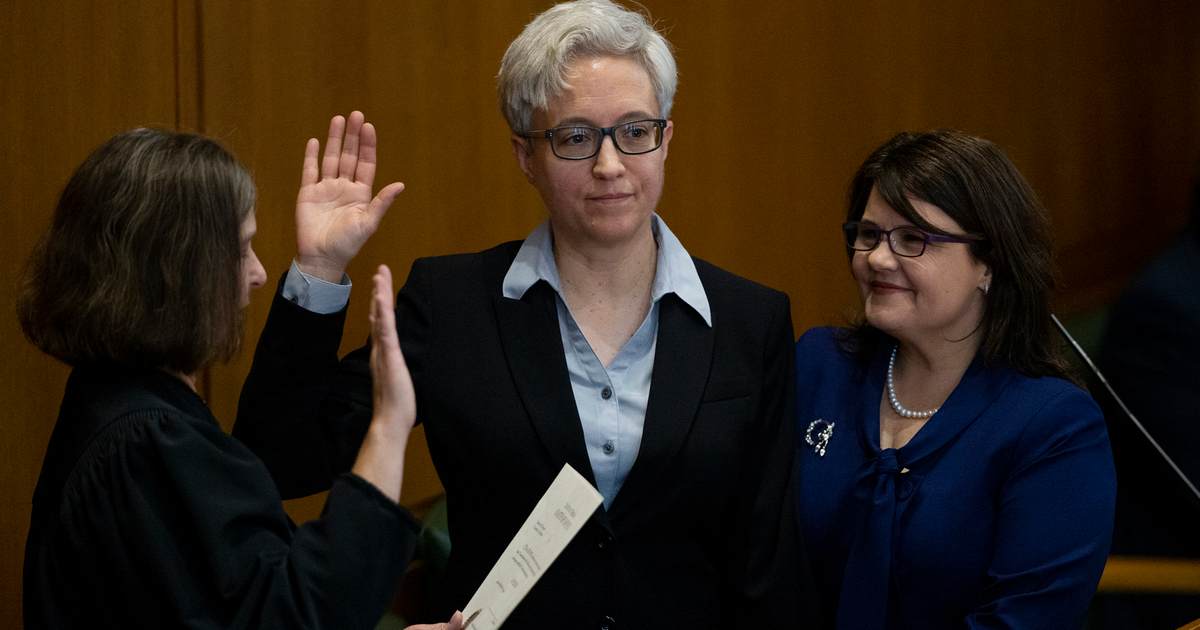
Governor Tina Kotek’s press office announced the decision earlier this month, and that settles the immediate question even though the state is controlled mainly by Democrats. There was talk that a mid-decade map could help pick up a seat, but the practical hurdles and the timing after primaries made the idea less appealing. With the May 19 primary now behind them, scrambling to redraw lines would have meant disrupting voters and creating a legislative showdown few want.
Oregon, where Democrats control the governor’s mansion and both chambers of the State Legislature, is theoretically one state where Democrats could possibly aim to pick up a House seat via a mid-decade redistricting effort. The state’s House delegation currently includes one Republican, Rep. Cliff Bentz, whose district covers Eastern Oregon.
https://x.com/NewsWire_US/status/2065824748248936472
Despite pressure from national Democratic Party figures and groups, that effort hasn’t happened so far. Oregon Democrats have not yet made any public move to redraw the congressional map, and Luke Harkins, Gov. Tina Kotek’s press secretary, wrote in an email to the Mercury that the governor is not considering redistricting “at this time.”
[…]
“If [Democrats] decide to do this, it’s almost certain Republicans would walk out—and they would really have to ask themselves, is the juice worth the squeeze? And I kind of doubt that they would think that it is for one district,” John Horvick, senior vice president at DHM Research, said.
What does seem clear is that Oregon will not redraw its congressional districts this year. The state’s May 19 primary is over, and unlike in Louisiana, the state made no effort to interrupt the primary to redistrict.
That means that, even if the state’s Democratic power structure was interested in redistricting, the earliest new congressional district lines could take effect would be for the 2028 election.
The practical takeaway is blunt: even sympathetic strategists admit the political cost could outweigh the potential gain. For many Democrats, the risk of a walkout, procedural chaos, and public backlash for chasing a single seat looks unattractive. Republicans have signaled they would oppose such a maneuver strongly, and that deterrent appears to have carried weight.
Republicans currently hold one House seat from Oregon, with Rep. Cliff Bentz representing Eastern Oregon, and the state’s geography makes a lot of the map advantage tough to engineer. Rural districts are hard to flip through map-drawing alone, and any attempt to redraw lines now would invite litigation and national attention. The clock matters: new lines could not realistically affect elections until 2028, so the payoff would be delayed and uncertain.
The Callais decision plays a central role here by narrowing the circumstances under which race can drive apportionment decisions. That legal change has handed Republicans a clearer argument against aggressive mid-decade redistricting and given courts a firmer basis to scrutinize race-centered maps. Democrats weighing a mid-cycle redraw must now factor in both legal risk and political optics.
Other blue states have made similar choices or faced the same dilemma; Maryland avoided a mid-cycle overhaul recently, though its post-primary plans could change. In Oregon’s case, leaders chose stability over a fight that could fracture their caucus or alienate voters. For now, the map stays, and any redistricting conversation is deferred until the long game in 2028.